

A Homegrown African Innovation Transforming Cooking, Communities, and the Environment
Across much of Africa, cooking remains one of the most overlooked challenges affecting health, education, and environmental sustainability. Millions of households still rely on traditional three-stone fires and inefficient charcoal stoves, exposing families to harmful smoke while contributing to deforestation and climate change.
In Uganda, however, a remarkable innovation is demonstrating how indigenous knowledge, local resources, and modern technology can come together to create practical solutions. Sustainable construction and renewable energy innovator John Lee Seto has developed a clean cooking stove that combines volcanic magma rocks, solar power, and locally available materials to provide a cleaner, safer, and more efficient way of cooking.
The innovation is more than just a stove. It is a community-centered ecosystem that creates green jobs, protects forests, improves public health, and offers a glimpse into what Africa’s sustainable future could look like.
A Childhood Experience That Sparked a Mission
For Seto, the inspiration behind the project is deeply personal.
Growing up in rural Uganda, he witnessed firsthand the realities of traditional cooking methods. Like millions of African children, he watched his mother and sisters cook over open fires supported by three stones. Smoke-filled kitchens were normal. Red eyes, coughing, and discomfort were accepted as part of everyday life.
As he grew older and gained exposure to alternative technologies, he began to reflect on the hidden costs of traditional cooking. Women and girls spent countless hours gathering firewood. Children missed school. Forests disappeared. Respiratory illnesses became common.
Rather than accepting these realities, Seto began asking a simple question: Could there be a better way?
That question eventually led to years of experimentation and innovation, culminating in a clean cooking solution designed specifically for African conditions.
The Power of Magma Rocks
At the heart of the stove is one of Uganda’s most underutilized natural resources: volcanic magma rocks.
Western Uganda, particularly around the volcanic regions near Kisoro, contains abundant deposits of solidified magma left behind by ancient eruptions. For years, these rocks had little economic value.
Seto and his team saw something different.
They discovered that the rocks possess excellent heat retention properties. By integrating them into a cooking system, the rocks can store and distribute heat efficiently, significantly reducing the amount of charcoal required.
The stove uses approximately 85 percent magma rocks and only 15 percent charcoal or charcoal dust.
This dramatic reduction in fuel consumption not only lowers cooking costs but also decreases pressure on forests that are continually harvested for charcoal production.
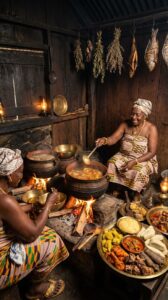
Women cooking in a traditional kitchen with firewood
Solar-Powered Efficiency
What makes the technology particularly unique is its integration of solar energy.
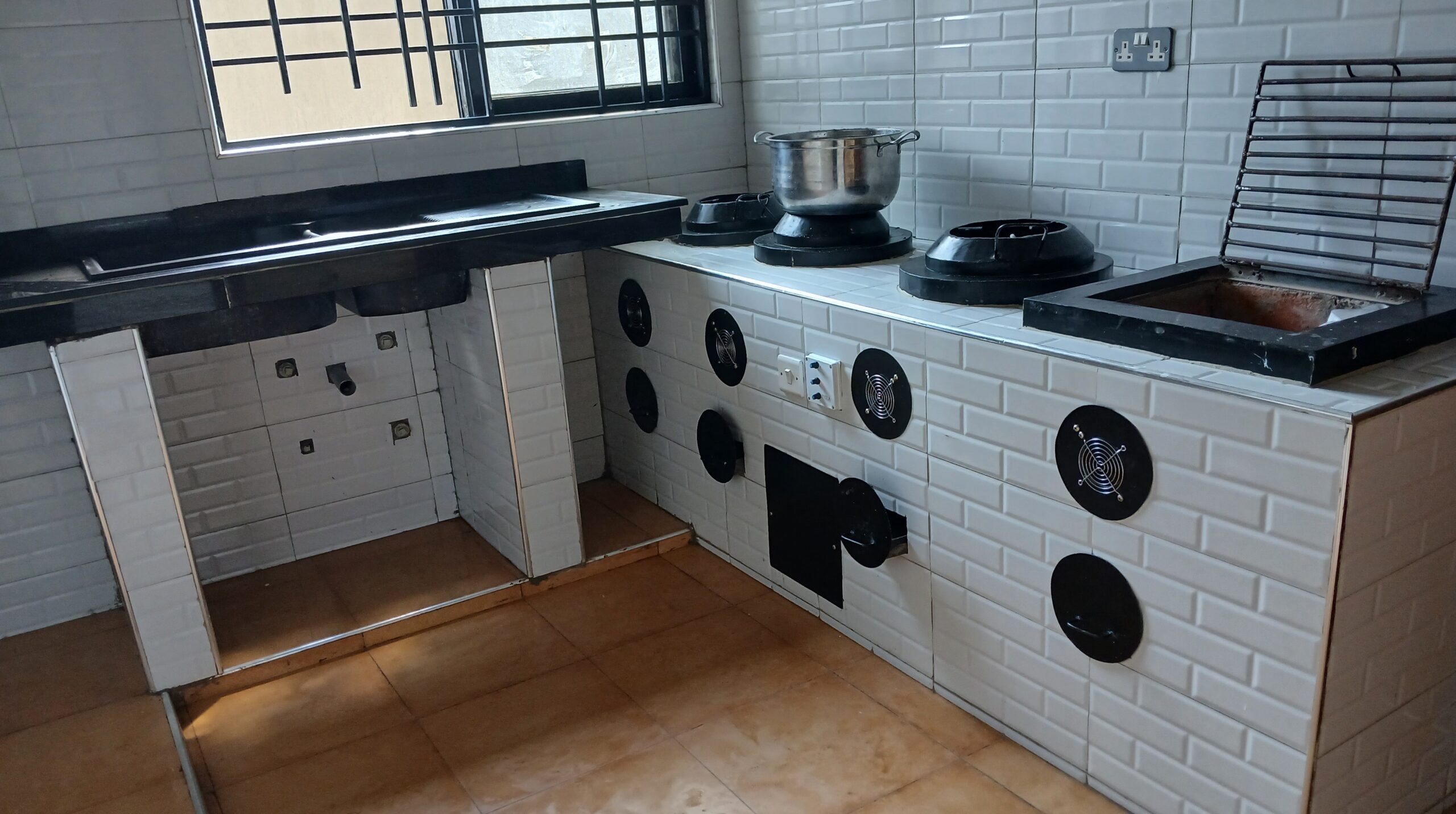
The stove incorporates solar-powered fans and adjustable controls that regulate airflow and heat intensity. Users can increase or decrease the temperature much like they would with a gas stove.
This feature bridges the gap between traditional cooking methods and modern convenience.
Instead of forcing communities to abandon familiar cooking practices, the stove maintains the cooking experience people already know while improving efficiency, cleanliness, and comfort.
The result is a cooking system that feels familiar while delivering modern performance.
A Smokeless Kitchen Revolution
One of the most transformative benefits of the stove is its ability to virtually eliminate smoke.
Traditional kitchens often become coated with soot, blackening walls and exposing families to harmful indoor air pollution. According to global health studies, indoor smoke from cooking remains one of the leading environmental health risks in many developing countries.
The magma-rock stove addresses this problem through its heat-retention design.
Built with clay-based heat absorbers and efficient combustion systems, the stove traps and utilizes heat rather than allowing it to escape as smoke. Unlike many conventional biomass systems, it requires no chimney and produces virtually no soot inside the kitchen.
For households accustomed to smoke-filled cooking spaces, the difference is dramatic.
Creating Green Jobs Through Local Resources
Perhaps the most compelling aspect of the project is its community-centered design.
The innovation creates opportunities at every stage of the value chain.
Women and youth collect the magma rocks. Local transporters move them to urban markets. Artisans fabricate components. Builders install the systems. Local suppliers distribute materials.
The entire ecosystem is rooted in local participation.
Instead of importing expensive technologies from abroad, the project generates employment using resources already available within communities.
For Seto, this community impact is more important than profit margins.
Success is measured not by how much money is earned, but by how many stoves are installed, how many trees are saved, and how many girls remain in school rather than spending hours gathering firewood.
Protecting Africa’s Forests
Deforestation remains one of Africa’s most pressing environmental challenges.
Across many countries, charcoal and firewood account for the majority of household energy consumption. As populations grow, pressure on forests continues to intensify.
Every reduction in fuel consumption translates directly into environmental benefits.
By reducing charcoal dependence and improving combustion efficiency, the magma-rock stove helps preserve forests while lowering greenhouse gas emissions.
For larger institutions such as schools and community centers, Seto’s team also develops industrial clean-cooking systems capable of reducing firewood consumption by up to 65 percent.
These institutional systems offer enormous potential for schools, hospitals, and other facilities where cooking costs consume significant portions of operational budgets.
Sustainability Begins with Local Resources
A key lesson emerging from the project is that sustainability is most effective when it builds upon local realities.
Seto emphasizes that true sustainability does not involve importing solutions from distant places. Instead, it means understanding and utilizing resources that already exist within local environments.
This philosophy explains why the magma-rock stoves are currently most practical in regions with volcanic resources such as Uganda and Rwanda.
Where the rocks are unavailable, other clean cooking technologies may be more appropriate.
The principle remains the same: communities should seek solutions that align with their unique environmental and cultural contexts.
A Vision for Africa’s Energy Future
The clean cooking movement is gaining momentum across Africa as governments, entrepreneurs, and communities search for alternatives to polluting fuels.
Innovations like the magma-rock solar-aided stove demonstrate that Africa possesses the creativity, knowledge, and resources needed to develop its own solutions.
Rather than importing every answer from elsewhere, African innovators are proving that local wisdom can drive global innovation.
By combining renewable energy, indigenous resources, and community participation, the magma-rock stove offers more than a technological breakthrough. It offers a blueprint for sustainable development—one that improves lives today while protecting the future for generations to come.