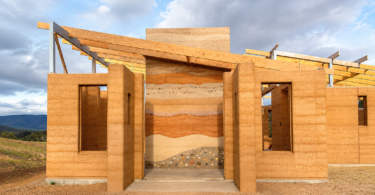



For Ugandan civil and environmental engineer Sekitoleko John, sustainability is more than a professional interest. It is a commitment to building with the earth, developing practical
alternatives to conventional construction, and creating solutions that respond to the everyday needs of communities.
Growing up, Sekitoleko John Lee was familiar with building with earth. Across many African communities, soil has long been used to construct homes, drawing on knowledge passed from one generation to another. Yet people often associate earth construction with poverty rather than engineering, design, or environmental responsibility.
John is working to challenge that perception.
A civil and environmental engineer who graduated from Uganda Christian University in 2017, he has built his professional path around sustainable construction, natural building materials, and clean-cooking technologies. Through his work and his company, Megcom Eco Build International, he is exploring how traditional materials and contemporary engineering can contribute to more climate-conscious ways of living.
For John, the question is not simply whether people can build with earth. It is how earth can be used responsibly, tested carefully, and designed to meet the demands of modern buildings.
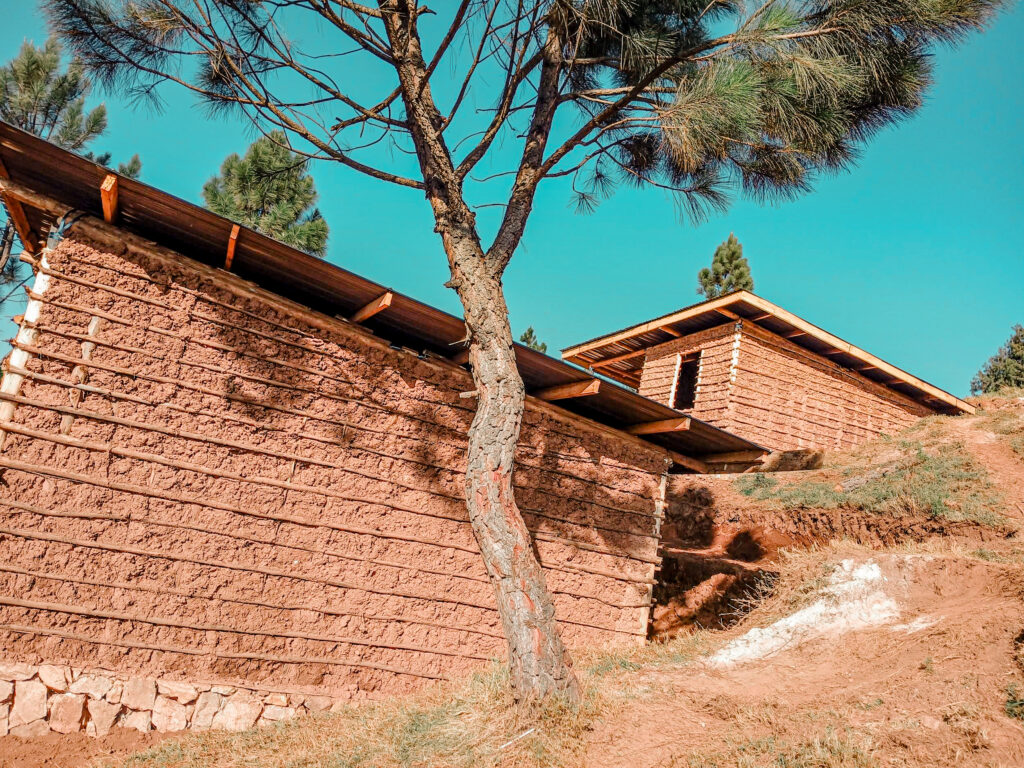
Giving earth construction the attention it deserves
Rammed earth is a construction technique in which suitable soil is placed in formwork and compacted in layers to create solid walls. Depending on the soil composition, structural
design, stabilization, workmanship, and protection from moisture, these walls can offer durability, thermal mass, and a distinctive natural appearance.
However, successful rammed-earth construction requires more than putting soil into a mould. Soil selection, particle-size distribution, moisture content, compaction, wall detailing, and protection against water all influence the final result.
John’s experience includes research and development work at Earth Enable, where he worked on earthen construction finishes and material systems. This included investigating clay- and sand-based materials, lime applications, and other locally relevant finishes.
The experience reinforced an important lesson: natural materials deserve the same seriousness, testing, and quality control applied to other construction materials.
His work later extended to the Maasai Mara Conservation and Visitor Centre project in Kenya, where he contributed as a rammed-earth construction consultant. His responsibilities included developing the earth mix design, preparing mock-up walls and carrying out material and quality checks against project requirements.
The work required attention to the relationship between soil composition, compaction, strength and the construction process. It also demonstrated the importance of communication between engineers, contractors and artisans when introducing a building method that may be unfamiliar to some project stakeholders.
For John, these experiences are part of a wider effort to demonstrate that earth construction can be approached as a technical discipline rather than treated as an inferior alternative to conventional materials.
Building with communities, not just materials
John’s work also connects sustainable construction with community development.
Through Megcom Eco Build International, he is involved in a housing and water, sanitation, and hygiene (WASH) project serving the Batwa community in Kanaaba, Kisoro District, southwestern Uganda. The project is supported by Fight for the Forgotten and includes rammed-earth wall construction.
The project brings together questions of housing, appropriate materials, workmanship, and basic services. It also highlights the importance of considering local conditions when choosing how buildings should be constructed and maintained.
In such settings, the value of a building cannot be measured by its appearance alone. It must also be considered in relation to durability, indoor comfort, maintenance, water management and the needs of the people who use it.
John believes natural building has a role to play in expanding the options available to communities, provided that designs are appropriate to their context and construction is guided by sound technical practice.
This approach does not mean that every building should be made from earth. Rather, it means assessing available materials and construction methods carefully, instead of assuming that one material is automatically the best choice for every situation.
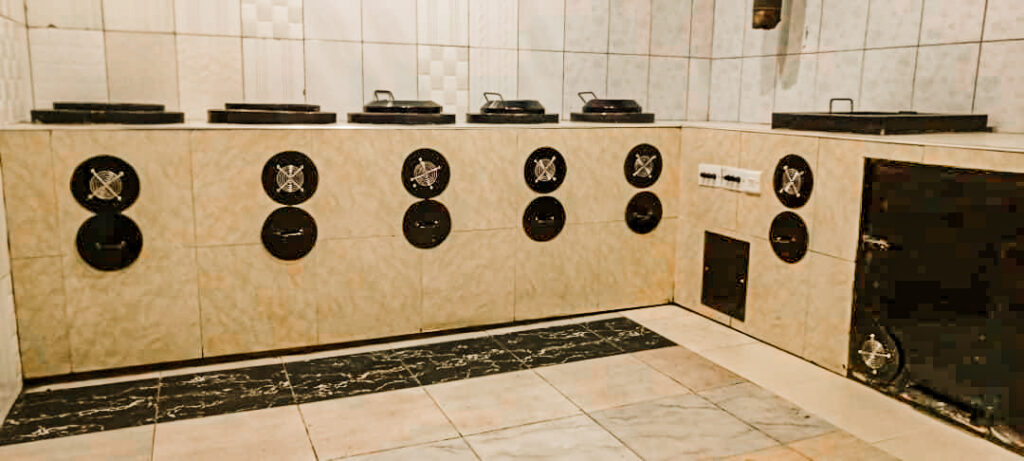
Clean cooking stove that uses molten rock and solar energy
Connecting buildings to the wider environment
Natural building is only one part of John’s sustainability work.
Through Megcom Eco Build International, he is also developing solar-aided smart cooking solutions intended to reduce reliance on conventional cooking fuels. The systems use volcanic or magma rocks as part of the heat-storage approach, alongside a smaller charcoal component. A solar panel, battery, controls, and fans support airflow and combustion management. The design aims to improve cooking performance and reduce fuel consumption, while allowing the fan system to operate from stored electricity when sunshine is limited. Actual performance depends on the system configuration, cooking practices, maintenance, and operating conditions.
The motivation behind this work is closely connected to the everyday experience of cooking. In many households and institutions, cooking fuel is a recurring expense, and smoky kitchens can create uncomfortable and potentially harmful indoor conditions.
John sees clean cooking as an area where practical engineering can respond to household needs while contributing to wider environmental goals. He is particularly interested in solutions that consider the needs and experiences of the people who use them, including women, who often carry much of the responsibility for cooking.
His work in construction and clean cooking may appear to involve different technologies, but both address the same underlying question: how can essential activities such as building a home and preparing a meal be carried out with less environmental impact and greater attention to human well-being?
Building a Ugandan enterprise around sustainability
As Co-founder and CEO of Megcom Eco Build International, John is working to bring these interests together through an enterprise focused on sustainable construction and practical environmental solutions.
The company’s work includes rammed-earth consultancy, natural building materials, technical project support, construction supervision, and solar-aided cooking technologies.
For a growing enterprise, the challenge is not only to develop ideas. It is also to demonstrate their performance, earn the confidence of clients, establish reliable supply chains, and make services accessible to people who can benefit from them.
Natural building, in particular, requires continued engagement with architects, engineers, contractors, clients and regulators. Questions about standards, structural performance, moisture protection, maintenance and long-term durability must be addressed through evidence and appropriate design.
John’s experience across Uganda, Kenya and other project settings has helped shape his interest in strengthening technical knowledge around earth construction and improving its acceptance in the built environment.
He sees opportunities for collaboration among practitioners, researchers, educational institutions and construction professionals to advance this work. Sharing practical lessons from projects can help build a stronger knowledge base and support more informed decisions about where and how natural materials should be used.
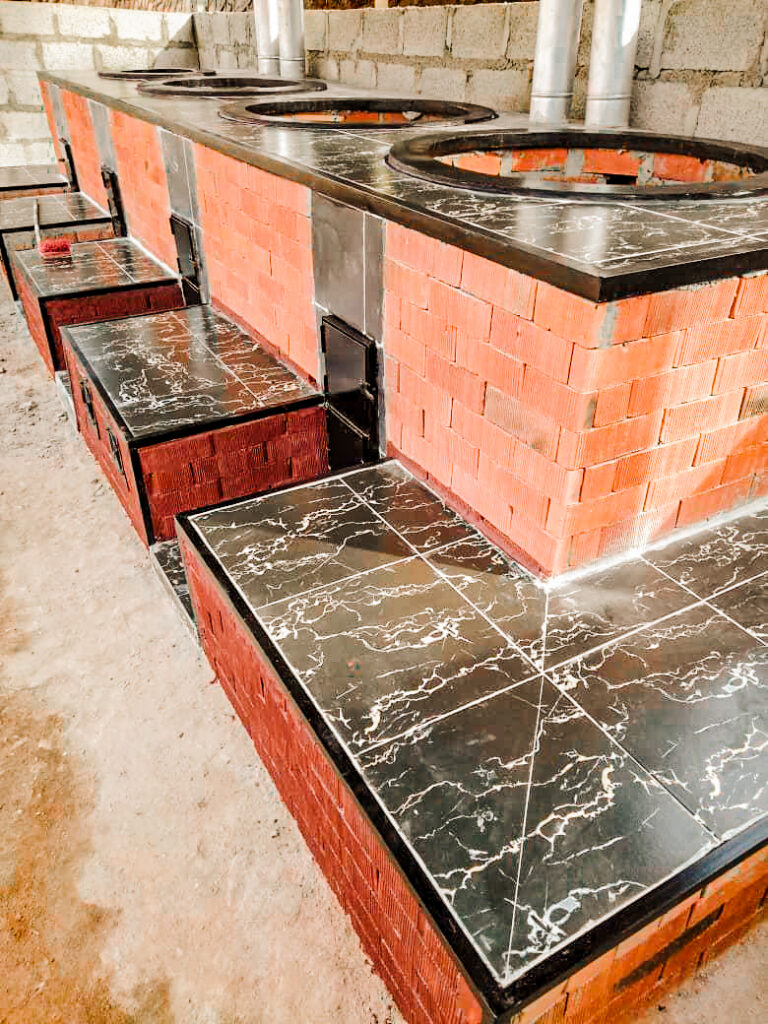
Clean cooking stove innovated by John Lee
Recognition and the work ahead
In 2026, John received a Certificate of Participation from the Earth Steward Awards, presented by Africa Horticultural Circle in recognition of his contribution and commitment to greening Africa.
The certificate forms part of his wider journey in sustainability, but the work ahead extends beyond recognition. For Megcom, the priorities include strengthening technical practice,
developing its services, improving its cooking technologies and contributing to projects that respond to real community needs.
John’s approach reflects a belief that sustainability should be practical and grounded in place. Soil, stone, sunlight and other locally available resources can provide valuable starting points, but their responsible use depends on knowledge, appropriate design and careful implementation.
Africa’s future will require many different responses to environmental and development challenges. No single material or technology will provide every answer. Yet local knowledge, engineering expertise and community participation can work together to create solutions that are better suited to particular places and people.
For John, reimagining earth construction and improving cooking technologies are two ways of pursuing that future. His ambition through Megcom Eco Build International is to help make sustainable choices more practical, technically credible, and relevant to everyday life.
The larger lesson is that innovation does not always begin with an entirely new material. Sometimes it begins by looking again at what is already around us—and asking what careful engineering, thoughtful design and respect for people and nature can make possible.
Sekitoleko John Lee, Co-founder & CEO, Megcom Eco Build International.
Email: megcom356@gmail.com. Telephone: +256 783 139 458
LinkedIn: https://www.linkedin.com/in/sekitoleko-john-lee-5a679975/