

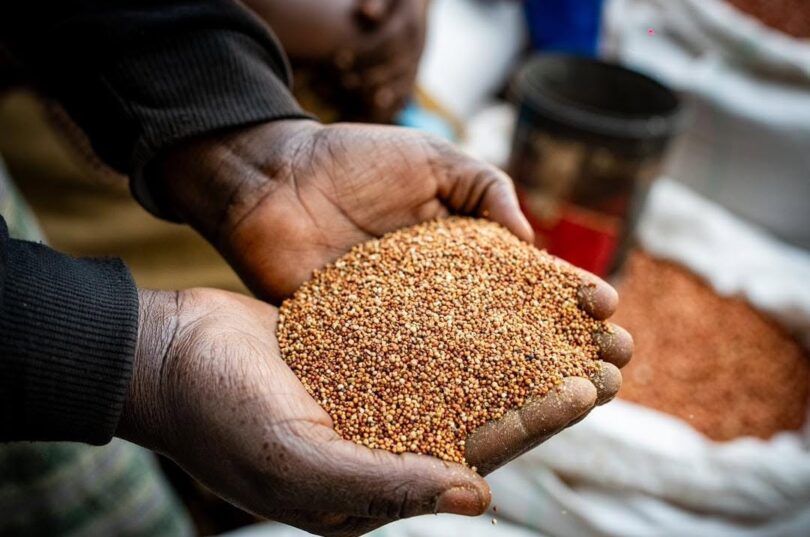

The story of seeds, especially indigenous seeds, has many faces. In indigenous cultures across the world, including throughout Africa, seeds mean life. Seeds mean livelihood. Seeds carry culture, memory, identity, and even storytelling.
In some Kenyan cultures, when a young woman gets married, she is given seeds to symbolize the continuation of the lineage. Seeds, therefore, are deeply rooted in culture and community.
Lablab beans also carry cultural meaning. In some communities, they are used in the celebration of a newborn baby. When an elder says they are going somewhere to eat njahe, or lablab beans, it can mean that a child has been born and a family is celebrating new life.
Before colonial borders, before corporations, before climate change had a name, and before anyone imagined creating food in laboratories, Africa had healthy farmlands and farming systems shaped by generations of knowledge.
Africa had food. Africa had seeds—seeds that survived drought, changing climates, and the many transformations the continent has experienced. Africa had seed-saving traditions and regenerative farming systems. These seeds fed millions of people and sustained generation after generation.
They helped build civilizations in some of the harshest environments on Earth. Africans were not ignorant of seed diversity, its importance to healthy food production, or its role in maintaining balanced ecosystems.
Today, many of those seeds are disappearing, threatened by laws, policies, changing food systems, and agricultural agendas that often undermine Africa’s food sovereignty and food health.
But what if the future of food is not new technology?
What if it has little to do with the noise surrounding the Green Revolution?
What if the future of food in Africa—and perhaps even the world—is ancient?
What if it is sitting behind your grandmother’s kitchen? What if it is already in your hands?
European demand for ancient grains and crops such as amaranth and quinoa has grown in recent years as gluten-free diets have become more popular and consumers search for alternatives to widely consumed modern cereal crops. But should older foods, deeply rooted in history and proven over generations, really be called “alternative”? Something to think about.
In Ethiopia, protecting the domestic market for teff by policymakers is deemed important because of the crop’s significance to food security, rural incomes, and the diets of urban consumers.
In an effort to keep domestic prices affordable, Ethiopia banned the export of unprocessed teff in 2006. Yet despite such measures, teff prices have continued to rise, making this traditional staple increasingly difficult for some households to afford.
With Ethiopia accounting for the vast majority of global teff production, an important question arises: Will Ethiopian teff increasingly appear on breakfast tables in Europe and elsewhere—and, if so, at what cost to Ethiopians themselves?
Removing export restrictions could create opportunities for farmers, traders, and processors by increasing access to international markets and potentially raising incomes. At the same time, greater export demand could contribute to higher domestic prices and put pressure on food security.
Perhaps the answer lies in policies that create a genuine balance between export opportunities and domestic food needs. Dedicated production for export could be considered alongside strong protections and incentives for farmers producing teff for local consumption. The Ethiopian government can establish teff farms for export only, leaving local teff farmers to supply local needs. Balance is key.
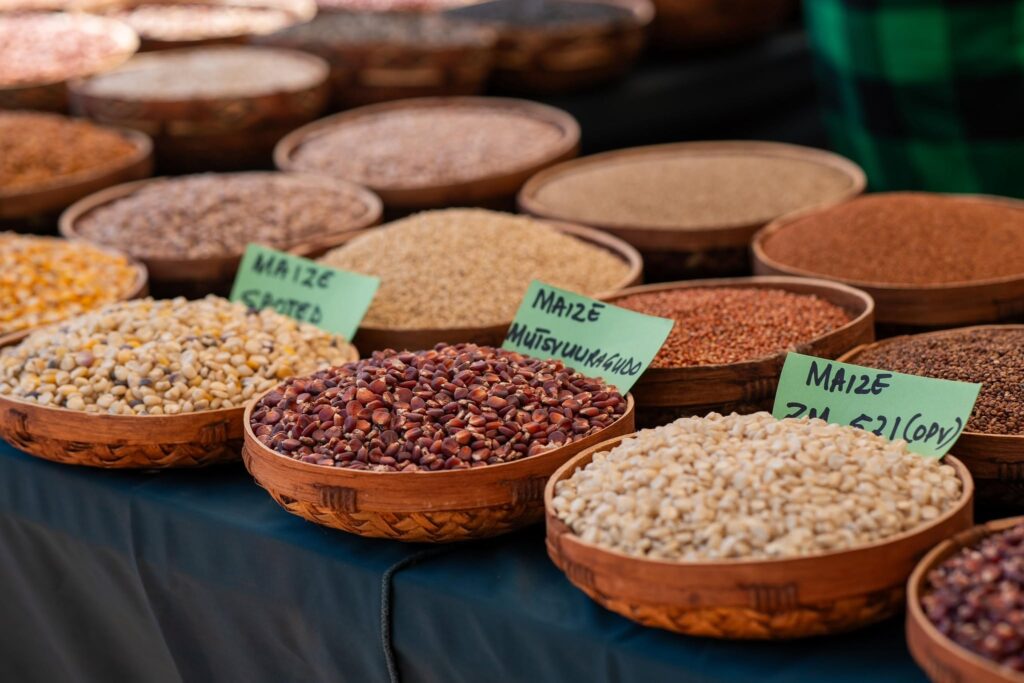
But why the constant talk about Africa’s indigenous seeds
And although it may sometimes sound as though we keep hammering on the issue of African seeds, we must continue talking about it. Why? Because the repeated use of words, ideas, and narratives played a major role in convincing many Africans to abandon parts of their ancient heritage. In the same way, consistent reminders may be necessary to help our people understand the importance of growing, protecting, and eating indigenous foods again.
The Subtle Battle Against Millet
For generations, millet has been a core food across much of West Africa and the Sahel. Yet in many countries, its consumption and cultivation are declining in favor of crops such as maize and rice.
Many factors have contributed to this decline.
One important factor is that government agricultural programs and donor-supported initiatives have often placed greater emphasis on crops such as maize than on millet. Compared with other major crops, millet has frequently received less investment, promotion, research, infrastructure, and institutional support.
What is particularly painful is that, along the way, we are losing valuable crop varieties. Some are no longer being planted in parts of the Sahel, even though crops such as millet sustained communities and civilizations for centuries.
Across Africa, the story is the same
Across the continent, indigenous crops demonstrated extraordinary resilience. Millet supported societies across West Africa and the Sahel. In the Ethiopian highlands, teff and other traditional grains thrived in environments where many crops struggled.
In West Africa, African rice fed communities for thousands of years, long before Asian rice became dominant. Bambara groundnut, often cultivated and preserved by women, provided families with a highly nutritious and resilient source of food, especially during difficult seasons.
These seeds were not random.
They were carefully selected, saved season after season, and adapted over generations to soil, rainfall, wind, drought, pests, and time.
This was not primitive farming; it was ecological intelligence.
It was ancient knowledge refined through observation, experience, survival, and relationship with the land.
The awakening
Something, however, is awakening in the hearts of our people.
More Africans are returning to their roots. Farmers are reclaiming indigenous seeds. Young people are learning farming systems that were nearly forgotten. Communities are reviving seed exchanges and community seed banks. At the same time, more conversations are taking place around natural building, regenerative agriculture, herbal remedies, sustainable development, and the value of indigenous knowledge systems.
It is encouraging to see African seeds and knowledge systems returning—not simply as nostalgia, but as necessity. In a world facing increasing climate uncertainty, survival may depend greatly on what humanity remembers.
Africa does not simply need new seeds. Africa needs to remember.
The future of food is not necessarily locked away in laboratories. Much of it is already buried in the soil, carried in the memories and hands of older farmers, and waiting to be given new life by a younger generation of African growers.
Africa’s indigenous seeds are not relics of the past. They are blueprints for the health, resilience, and wealth of the future.
Yet the challenges facing smallholder farmers remain enormous. From climate change and limited access to finance to inadequate infrastructure, equipment, markets, and agricultural support, many of the farmers responsible for producing much of the continent’s food continue to work under extremely difficult conditions.
Protecting indigenous seeds, therefore, cannot be separated from protecting the farmers who grow them and also the land and the environment on which the seeds are planted.
Seeds may carry the memory of generations, but they must also be planted. And for that to happen, the people who hold them in their hands must be supported.