


Mombasa was one of the first places I visited when I moved to Kenya. Not long afterward, Mombasa and some of the other counties along Kenya’s coast became my home for many years. So, for me, travelling to Mombasa eventually stopped being a tourist trip and became more of a journey back home.
There is so much I love about Mombasa: its rich history, ancient cultural traditions, particularly Swahili culture, early morning and evening walks along the breezy white-sand beaches, and, of course, the coastal cuisine, which is distinctly different from what you would find in Nairobi.
But the heat and humidity in Mombasa will quickly humble you. You can hardly wear the same piece of clothing more than once in a day, and a hot shower is hardly necessary. In fact, a cold shower is far more enjoyable and refreshing in Mombasa.
I recently visited Mombasa for a brief engagement and decided, as I always do, to take a walk along one of the beaches on Mombasa’s North Coast. My favorite stretch has always been around the PrideInn and Sarova hotels. There are plenty of boats, people, camels, and just about everything that makes a beach experience fun.
Having been away from Mombasa for a couple of years, I immediately noticed how much had changed along the beach. New beachside restaurants had sprung up, more boats dotted the shoreline, and a massive new hotel, which some locals said belonged to the current Kenyan resident, had also been almost completed. It was quite a display of wealth along the seaside.
But the changes along this popular beach were not limited to new buildings and other developments. The tourism landscape itself had changed in ways I had not anticipated.
As I walked along the beach, I came across a couple of camels resting while their handlers called out to tourists interested in camel rides. I approached one of the handlers and asked if I could photograph the camels. He agreed but quickly informed me that I would have to pay for the photos.
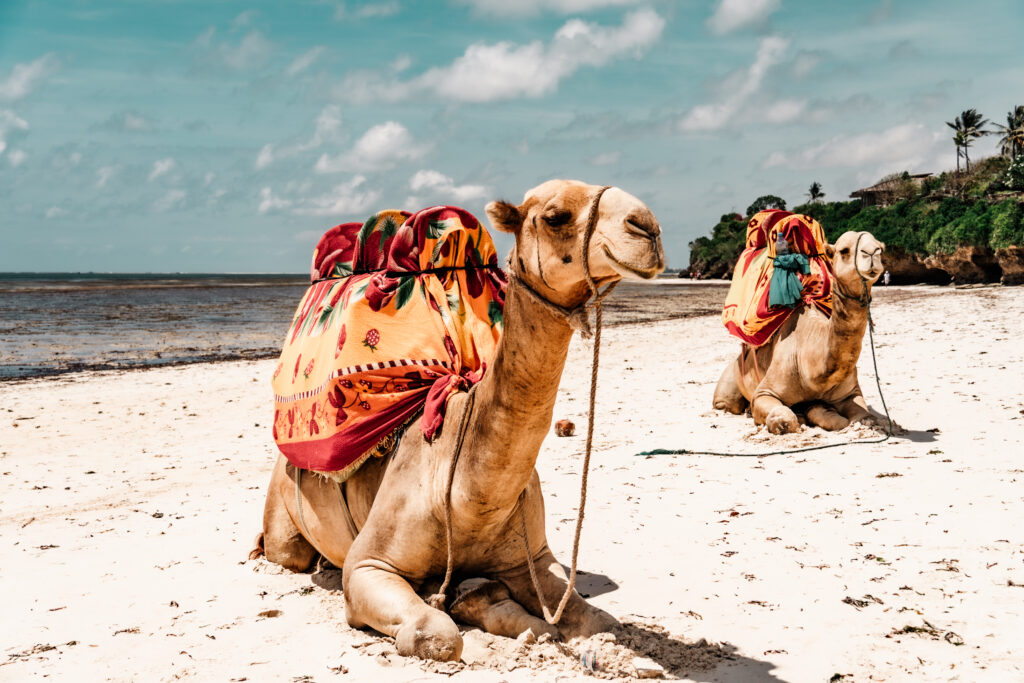
Came ride on the Mombasa beach is common site
That surprised me because, having lived around that same beach area before, I had photographed camels several times without anyone asking me for money. Nevertheless, I took a few shots and paid him 100 Kenyan shillings.
I continued walking along the beautiful white sand before deciding to sit under a huge tree that provided generous shade by the beach. It was one of my favorite spots, even during the years I lived in Mombasa.
Just as I settled down, an elderly woman approached me and pointed to a small sign planted in the white beach sand. It read: 100 for sitting. In other words, I was expected to pay 100 Kenyan shillings just to sit on a chair or bench under the tree.
That made absolutely no sense to me.
Initially, I was upset with the elderly woman for asking me to pay simply to sit under a tree by the beach. After a brief exchange, however, I quickly realized that there was something more important I needed to hear from her.
My argument was simple. Four or five years earlier, when I lived in that same area of Mombasa, I regularly visited the spot to sit, take photographs, or simply enjoy a walk along the beach. Nobody ever asked me to pay for sitting under a tree.
But this was no longer the Mombasa I remembered.
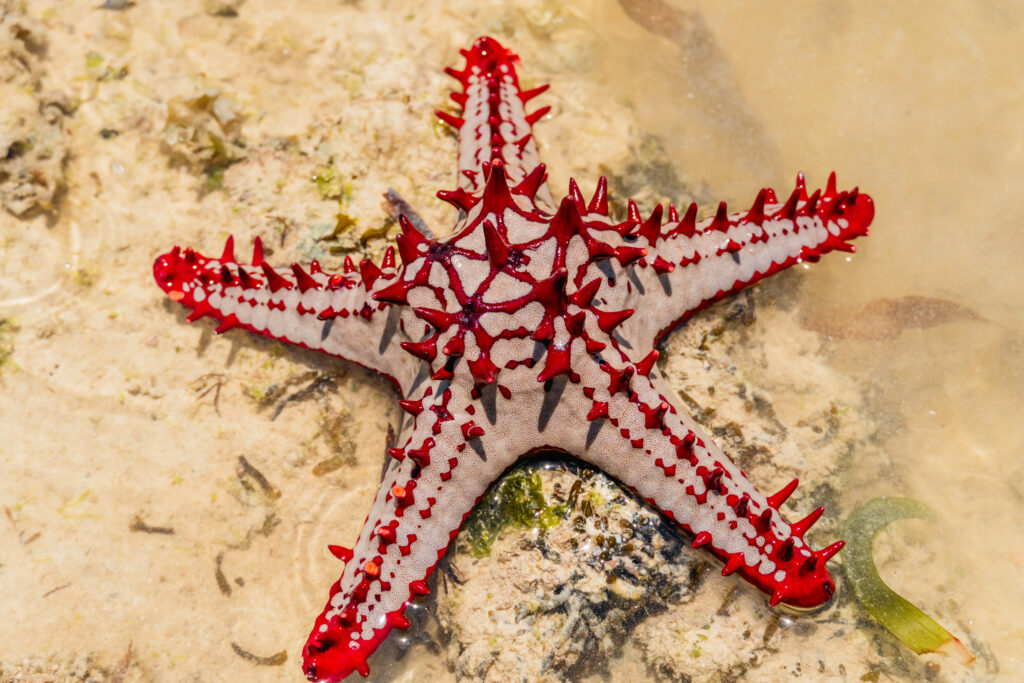
A starfish Shaka Zulu showed me
I stood up from the bench and listened as the elderly woman began explaining how much had changed since the current administration came to power. She spoke about the increasing financial pressures facing small traders along the beach, particularly the taxes and other charges they were expected to pay to the government just to sell souvenirs and earn a modest living.
She went on to describe how life had changed for her personally since the Ruto-led government came to power and how increasingly difficult it had become for her, as an elderly woman, to make ends meet.
Listening to her, I began to understand that what had initially seemed like an unreasonable demand for money was, for her, part of a much larger struggle for survival.
With little else to say in response to her pain, I decided to pay her the money, even though I was no longer going to sit there. I still had photographs to take anyway.
I handed her the 100 Kenyan shillings, thanked her, and continued walking in the direction I had planned.
But her words stayed with me.
The pain in her voice was a reminder of how government policies and decisions can affect ordinary people in their own communities, particularly when those policies are economically unfriendly to people who already struggle to make ends meet.
In the same way, thoughtful, compassionate, and economically friendly policies can make a tremendous difference in the lives of low-income earners.
Meeting Shaka Zulu
I continued walking farther down the white-sand beach until I met a man who later introduced himself as Shaka Zulu.
Shaka Zulu turned out to be quite a hilarious local tour guide with an interesting knowledge of the marine creatures found along the coastline.
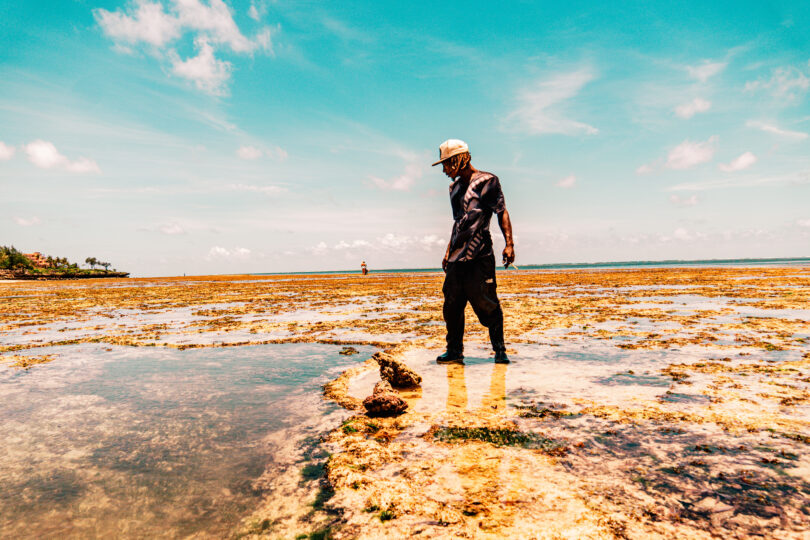
The tide was out at the time, exposing a vast stretch of the beach and creating plenty of space to walk and explore.
As we walked, he began showing me different sea creatures, identifying them by name and explaining some of their characteristics.
Among the creatures he showed me were the hermit crab, zebra crab, baboon crab, sea cucumber, seaweed, and a marine organism he called the sea potato, which he said sea turtles feed on.
He also showed me several natural pools scattered along the exposed beach, which he referred to as sea aquariums. These are small or large pools of water left behind when the tide recedes, creating temporary habitats where small marine creatures can be found.
Interestingly, one of these aquariums had been nicknamed Kasongo Wantam, a popular street nickname associated with Kenya’s President William Ruto.
Then he showed me a beautiful fish in one of the pools and told me its name was Obasanjo, after Nigeria’s former president, Olusegun Obasanjo.
The entire naming experience was hilarious. I found myself laughing at the creativity and humor behind it all.
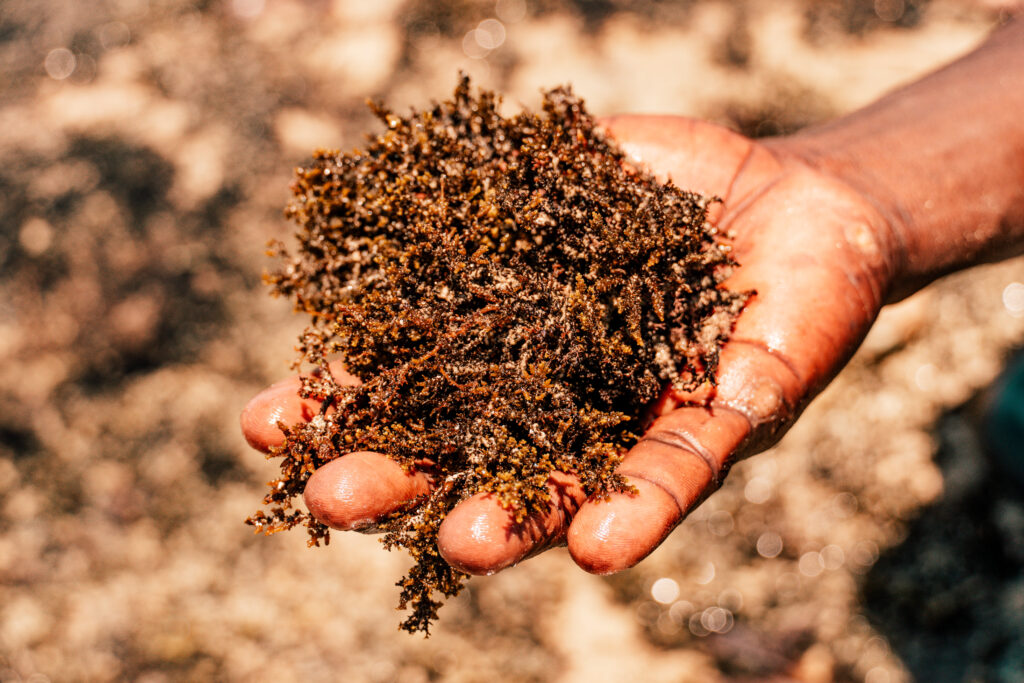
Seeweed
As we continued exploring, Shaka Zulu explained which of the creatures he considered edible and which he said were poisonous or unsafe for humans.
For instance, he described the zebra crab and baboon crab as poisonous, while the sea cucumber, he explained, is edible and widely consumed in China. He spoke about using ground dead corals for skin beauty and how nutritious seaweeds are for human consumption.
Then came an interesting story about the sea potato and its supposed effect on the reproductive cycle of sea turtles.
According to Shaka Zulu, when a female sea turtle feeds on sea potatoes, it can lay its eggs much faster. He claimed that the process could take as little as thirty minutes after consuming sea potatoes, compared with as long as four hours without them.
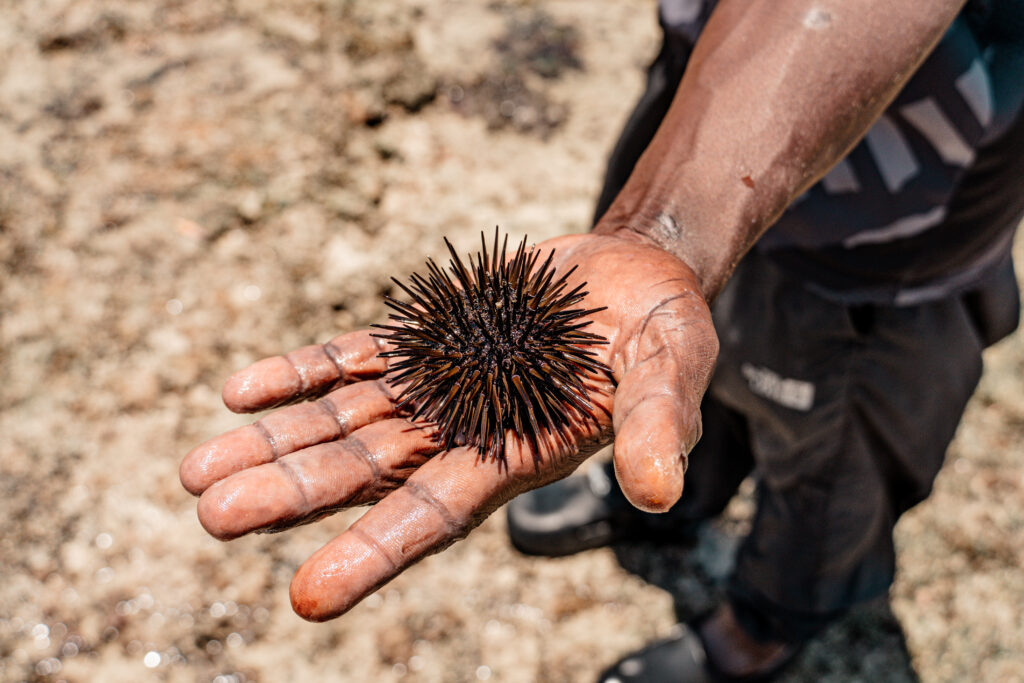
Sea orchin
I found that story particularly fascinating. It made me wonder whether the sea potato might also have properties that could be beneficial to human reproductive health. Of course, that would be something worth investigating scientifically, but the thought itself was intriguing.
Shaka Zulu also shared something else that caught my attention. He explained how African ancestors traditionally used dried seaweed as an insect repellent. According to him, they would place dried seaweed over burning charcoal, allowing the smoke to repel insects such as mosquitoes.
I found that piece of indigenous knowledge equally fascinating.
There is something beautiful about learning how people have traditionally interacted with their natural environment, observing its properties and developing practical ways to use what nature provides.
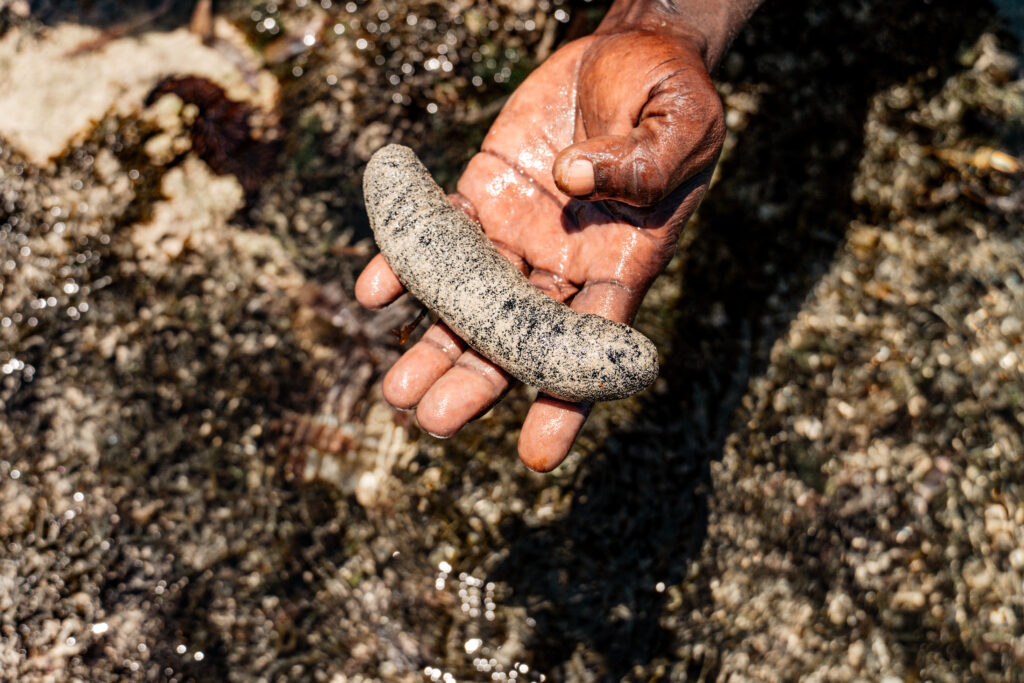
Sea cucumber
Sex Tourism
I certainly wasn’t prepared for the next topic.
As Shaka Zulu and I continued walking along the beach, exploring the various natural aquariums, I noticed several foreign tourists moving around with local guides.
Among them was a white woman accompanied by two local guides, a man and a woman.
They were walking in a direction that made me wonder whether it was safe for her to be heading that way. Interestingly, my immediate concern was for her safety. But before I could even ask Shaka Zulu whether she was safe with the people accompanying her, he pointed towards her and said something that caught me completely off guard.
“I know that woman. She is among the many foreign women who come here for sex tourism.”
I was surprised. Sex tourism!
I asked him what he meant.
He explained that some foreign women visit the Kenyan coast specifically to spend time with young African men. According to him, a visitor might pay a young man to accompany her for two weeks, during which they spend time together, have fun, and engage in sexual relationships before she returns to her home country.
To these visitors, he suggested, it was simply a matter of money, pleasure, and sex.
Although I was surprised by what Shaka Zulu shared, I remember that my immediate reaction was not one of judgment. Instead, something else struck me.
While I had instinctively been concerned about the safety of the foreign woman, I had not given a single thought to the safety or vulnerability of the young African men who might be involved in such arrangements with her and the other women who come for sex tourism.
I had automatically imagined the foreign tourist as the person who might need protection, without considering that the locals involved in these relationships could also be vulnerable to exploitation, infectious diseases, and other things.
Of course, I had no way of independently knowing whether Shaka Zulu’s description of that particular woman was accurate or not, but the conversation itself challenged something in my thinking.
And that brings me to another observation.
Have you ever noticed how often we, as Africans, are quick to see a fellow African as a potential danger while instinctively viewing the foreigner as the vulnerable person who needs protection?
It is a strange thing to reflect on.
I am not suggesting that this should become another narrative of “white” versus “black”. That is not my point. Rather, I am questioning the assumptions we sometimes carry about ourselves and others, often without even realizing it or what is shaping the assumptions.
Such perceptions can shape how we treat one another, how we interpret situations, and how we assign innocence, suspicion, or blame. They can also feed the prejudices and false narratives that contribute to xenophobia in different parts of Africa.
Perhaps we need to become more conscious of these subtle ways of thinking and begin questioning the narratives that have shaped how we see ourselves and other people.
Anyway, before parting ways with Shaka Zulu, I promised him that I would write an article about his work. And here I am, keeping that promise.
So, the next time you find yourself along Mombasa’s North Coast, particularly around the PrideInn Flamingo Beach Resort area, look out for a local tour guide called Shaka Zulu.
Beyond his humour and entertaining stories, you might just learn something interesting about the marine environment, the creatures that inhabit it, and the importance of conserving the life beneath the waters of Kenya’s beautiful coastline.
