

There is an interesting contradiction that many of us rarely stop to think about. Millions of people happily begin their mornings with a cup of tea or coffee without ever considering that both drinks originated as herbal remedies. Yet mention the words herbal medicine and many immediately dismiss it as primitive, outdated, or even unsafe.
That irony came to life during a conversation I had in Nairobi with one of Kenya’s most respected herbal practitioners, Dr. Jack Githae, who has spent more than five decades working with medicinal plants.
As we sat together in his clinic discussing Africa’s rich heritage of natural medicine, he shared a story that has stayed with me ever since.
He had once spoken with a group of young Kenyans about herbal remedies. Their reaction surprised him. Some insisted that they would never take herbal medicine under any circumstances. To them, it represented something old-fashioned and backward.
Rather than arguing, Dr. Githae simply asked them a question.
“Do you drink tea?”
“Of course,” they replied.
“And coffee?”
“Every day.”
He smiled and asked another question.
“Then do you realize that both tea and coffee are herbal medicines?”
The room suddenly became quiet.
Sometimes all it takes is one simple question to expose how deeply our perceptions have been shaped. We readily accept certain plants because they have become part of modern culture, while rejecting countless others that have served communities for generations.
That conversation reminded me of a personal experience that completely changed the way I looked at one particular tree—the neem tree.
Living Among the Neem Trees of Malindi
Several years ago, my family and I were living in Malindi on Kenya’s beautiful Indian Ocean coast. If you have spent time in Malindi or Mombasa, you know how common neem trees are. They line roads, fill compounds, and stretch high into the coastal sky.
At the time, I developed a painful toothache.
It wasn’t just ordinary discomfort. My gum became swollen, my cheek ached, and even sleeping became difficult. The pain lingered for days.
Like most people, my first thought was to visit a dentist. But after discussing the likely costs, I decided to wait a little longer while I considered my options.
Around that same period, something else was happening.
I had begun questioning many of the products I used every day, including commercial toothpaste. I found myself becoming increasingly interested in natural alternatives and less comfortable relying solely on manufactured products.
One morning, as I stood preparing to brush my teeth, a suggestion came to my spirit:
“Why not use a neem branch?”
The idea didn’t seem strange to me at all.
Growing up in Nigeria, herbal remedies were simply part of everyday life.
Whenever children developed fever, malaria, or flu, parents and grandparents would gather leaves and bark from various trees—often neem, mango, guava, and other medicinal plants. These would be boiled together into a herbal preparation used for bathing or drinking. The mixtures were incredibly bitter, and as children we often dreaded drinking them, but they were trusted household remedies passed down through generations.
So using neem was already familiar.
I simply had never considered it for a toothache.
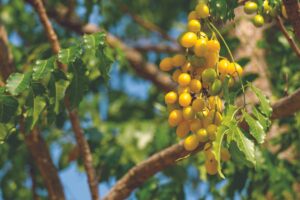
Neem tree with ripe fruits
Turning a Branch into a Toothbrush
Our apartment in Malindi happened to overlook several tall neem trees. In fact, some of the branches stretched close enough to our third-floor balcony that I could simply reach out and snap off a fresh twig.
That small branch became my toothbrush.
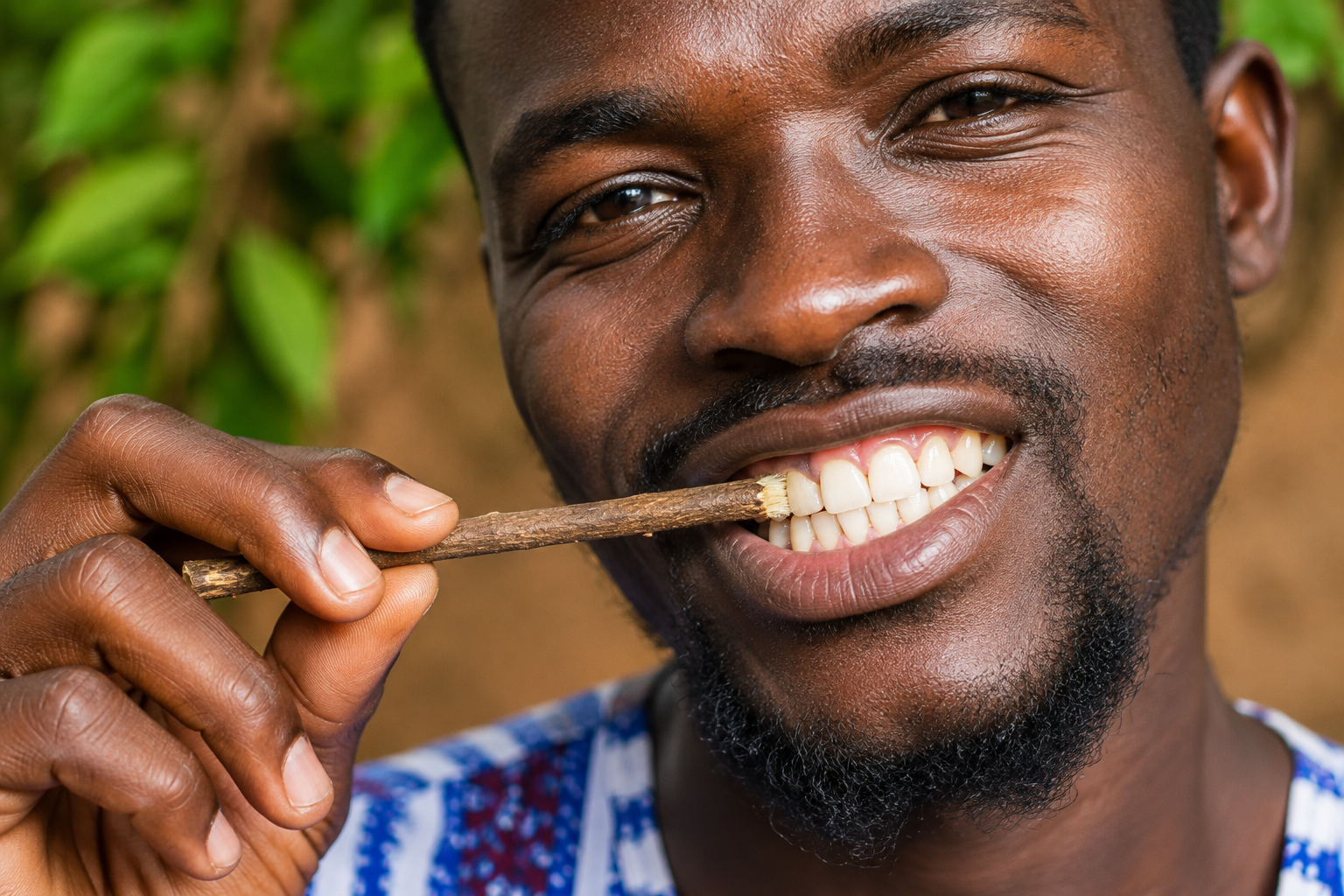
I chewed one end until it softened into natural fibres, creating a brush-like tip. Then I gently cleaned my teeth, gums, and tongue with it.
Yes, it was bitter.
Very bitter.
But bitterness wasn’t new to me.
I continued using fresh neem branches every day.
What began as an experiment gradually became my normal routine. Even after leaving Malindi, I carried several neem twigs with me whenever I travelled because I had become accustomed to using them instead of a conventional toothbrush.
A couple of months passed.
Then one day I suddenly realized something: the swelling had disappeared. The pain was gone.
I pressed against the area where the toothache had once been.
Nothing.
No tenderness.
No inflammation.
No discomfort.
The toothache that had troubled me for weeks had completely disappeared.
To this day, it has never returned.
A Personal Testimony, Not Medical Advice
It is important to make one thing absolutely clear.
This is not medical advice, nor is it a recommendation that anyone replace professional dental care.
It is simply my personal experience.
I cannot say that neem will produce the same results for everyone because every person’s health situation is different. Persistent tooth pain should always be properly assessed by a qualified dental professional, especially if there is severe pain, infection, fever, or swelling.
What I can honestly say is that this experience opened my eyes to the value of traditional knowledge that has been preserved for centuries.
Sometimes we overlook wisdom simply because it has become too familiar—or because it comes from our own cultures.
Ancient Knowledge Worth Remembering
Interestingly, my experience is not unique.
For thousands of years, communities across Africa and Asia have used neem for a wide variety of purposes. In India especially, neem has long been valued for oral hygiene, skin care, digestive health, and immune support. Modern scientific studies have also begun exploring its antibacterial properties and its potential role in reducing plaque and supporting gum health, although research is still ongoing.
That growing scientific interest does not replace traditional knowledge.
Rather, it reminds us that many indigenous practices deserve thoughtful study instead of immediate dismissal.
Perhaps the greatest lesson from my experience was not simply that a neem branch helped relieve my toothache.
It was that nature still has much to teach us.
Across Africa, generations carefully observed plants, experimented with them, and passed their discoveries from one generation to another. Long before laboratories existed, people developed remarkable knowledge of the natural world through careful observation and lived experience.
Not every traditional remedy will prove effective.
Not every plant should be used without proper understanding.
But neither should centuries of accumulated knowledge be ignored simply because it does not come packaged in a bottle.
For me, a simple branch growing outside my balcony in Malindi became an unexpected reminder that some of nature’s greatest gifts have been quietly waiting beside us all along.