

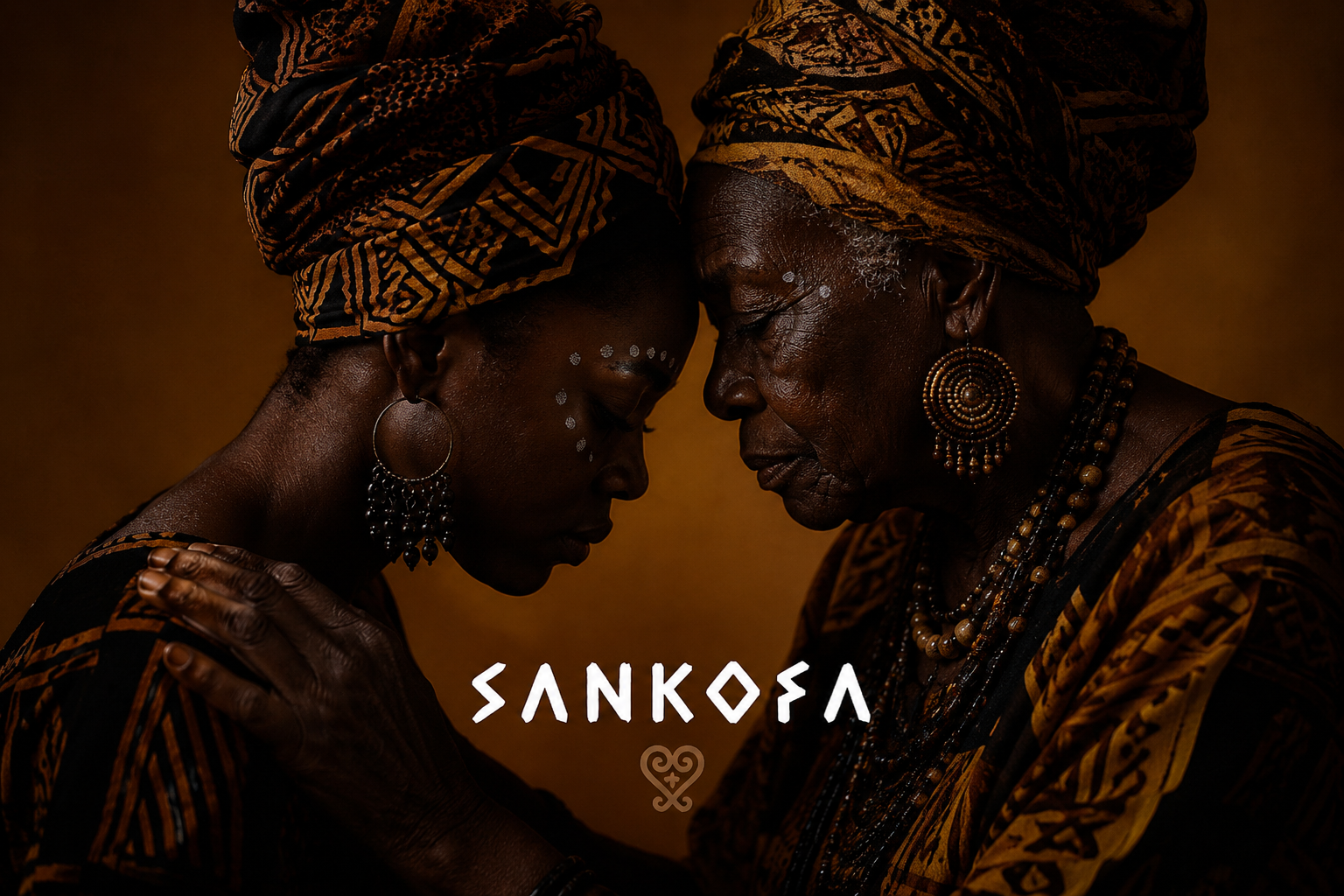

“The future is just the past in repeat, and there is nothing new under the sun.”
Across the African continent, ancient wisdom traditions have long taught that progress is not merely about moving forward. True progress requires remembering where we came from, understanding the lessons of our ancestors, and carrying those lessons into the future. Few concepts capture this philosophy better than Sankofa.
Originating among the Akan people of present-day Ghana, Sankofa is often represented by a bird looking backward while moving forward, carrying an egg on its back. The message is simple yet profound: it is not wrong to go back and retrieve what has been forgotten. And neither is it impossible to restore that which was broken.
In today’s world, where humanity faces climate change, environmental destruction, declining public health, social fragmentation, and growing economic inequality, Sankofa offers more than cultural symbolism. It offers a practical framework for survival.
A Civilization That Forgot How to Learn
Modern society prides itself on innovation. Every year brings new technologies, new products, and new systems designed to improve human life. Yet despite these advancements, many of the world’s most pressing problems continue to worsen.
Climate change intensifies. Natural ecosystems disappear. Communities become increasingly disconnected. Chronic diseases rise even as medical technologies become more sophisticated.
The problem may not be a lack of innovation. It may be a failure to remember.
For centuries, indigenous societies across Africa and around the world developed ways of living that were deeply integrated with nature. They built homes from local materials, produced food through regenerative methods, managed water sustainably, and maintained social systems rooted in collective responsibility.
These societies were not perfect. However, they possessed forms of knowledge that enabled them to live within the ecological limits of their environments.
Modernity largely dismissed these systems as primitive.
Today, many of the solutions being promoted under the banners of sustainability, regenerative development, ecological restoration, and climate resilience are strikingly similar to practices that indigenous communities have used for generations.
Sankofa challenges us to ask a difficult question: What if the future humanity seeks is hidden within the wisdom it abandoned?
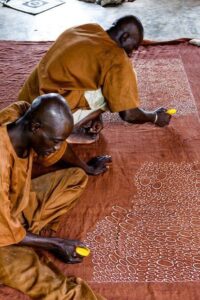
Local hand-made fabric makers at work. Image: Pinterest.com
The Climate Crisis and Ancient Knowledge
One of the most urgent challenges facing humanity is climate change.
According to global environmental assessments, the construction sector is responsible for 37% of greenhouse gas emissions. In the construction industry, cement, steel, and aluminum production contribute heavily to the carbon footprint of modern development.
Yet for thousands of years, people built durable homes without relying on these materials.
Across Africa, traditional architecture evolved according to local climates and ecological conditions. Earth, stone, timber, lime, reeds, and thatch were transformed into homes that naturally regulated temperature, required minimal external energy, and blended harmoniously with their surroundings.
The philosophy behind these buildings was fundamentally different from contemporary development models.
Instead of attempting to dominate nature, traditional builders worked with it.
Instead of extracting resources from distant locations, communities used what was locally available.
Instead of designing structures for short-term economic gain, they built for generations.
This is Sankofa in practice: revisiting ancestral knowledge not out of nostalgia, but because it contains solutions for contemporary challenges.
Beyond Housing: Rediscovering Indigenous Systems
The lesson of Sankofa extends far beyond architecture.
Across Africa, indigenous communities developed sophisticated systems for agriculture, healthcare, conflict resolution, education, and environmental stewardship.
Traditional food systems emphasized biodiversity, seasonal eating, and local production. These practices maintained soil fertility while producing nutritious foods adapted to local conditions.
Traditional healing systems relied heavily on plant-based medicine and preventive approaches that recognized the relationship between health, environment, and community.
Water management systems captured and conserved scarce resources through methods refined over centuries of observation.
Many of these systems were marginalized during colonialism and later overshadowed by imported models of development.
Yet today, researchers, environmentalists, and policymakers increasingly recognize the value of indigenous knowledge in addressing modern challenges.
The world is beginning to rediscover what many traditional communities never forgot.

Terracotta red, a fiery hue born of earth and kiln fire. Image: Pinterest.com
Learning Without Romanticizing
Embracing Sankofa does not mean rejecting all aspects of modern life.
The philosophy does not call for a return to the past. Rather, it calls for the recovery of useful knowledge from the past.
Modern medicine has saved millions of lives. Advances in communication have connected people across continents. Scientific research has expanded our understanding of the natural world.
The challenge is not choosing between tradition and modernity.
The challenge is creating a meaningful dialogue between them.
Ancient wisdom and modern science are often strongest when they work together.
Traditional building methods can be combined with modern engineering. Indigenous farming systems can benefit from contemporary ecological research. Local knowledge can inform global sustainability efforts.
Sankofa invites us to take the best of both worlds.

Afrocentric home décor. Image: Pinterest.com
Reimagining Progress
One of the most important contributions of Sankofa is its challenge to conventional definitions of progress.
For generations, development has often been measured through industrial output, urban expansion, and economic growth.
Yet many societies that achieve these goals also struggle with environmental degradation, social isolation, and declining quality of life.
Perhaps progress should be measured differently.
Perhaps a successful society is one that creates prosperity without destroying ecosystems.
Perhaps development should strengthen communities rather than fragment them.
Perhaps advancement should improve human well-being while preserving the ability of future generations to thrive.
These are not new ideas.
They are ancient ideas.
And that is precisely the point.
The Wisdom We Need
Humanity stands at a crossroads.
The environmental and social crises of our age cannot be solved solely through technological innovation. They also require wisdom.
Sankofa reminds us that wisdom is cumulative. Every generation inherits lessons from those who came before.
When societies forget those lessons, they often repeat old mistakes.
When they remember, they gain access to a reservoir of knowledge that can guide them through uncertainty.
The future does not belong exclusively to what is new. It also belongs to what is remembered.
As humanity searches for sustainable ways of living, the philosophy of Sankofa offers a powerful reminder: sometimes the most revolutionary step forward begins with looking back.