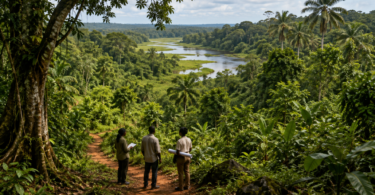


As climate change accelerates and concerns about sustainability grow, architects, builders, and homeowners around the world are searching for alternatives to conventional construction methods.
The search for greener building solutions has led many people to rediscover something surprisingly old: natural building.
For thousands of years, communities across Africa, Asia, the Americas, and other regions constructed homes using materials found directly within their local environments. Earth, straw, stone, timber, lime, and clay provided shelter that was durable, comfortable, and environmentally responsible.
Today, these ancient techniques are attracting renewed attention because they address many of the problems created by modern construction.
Natural buildings typically require less energy to produce, generate fewer greenhouse gas emissions, create healthier indoor environments, and connect people more closely with the landscapes they inhabit.
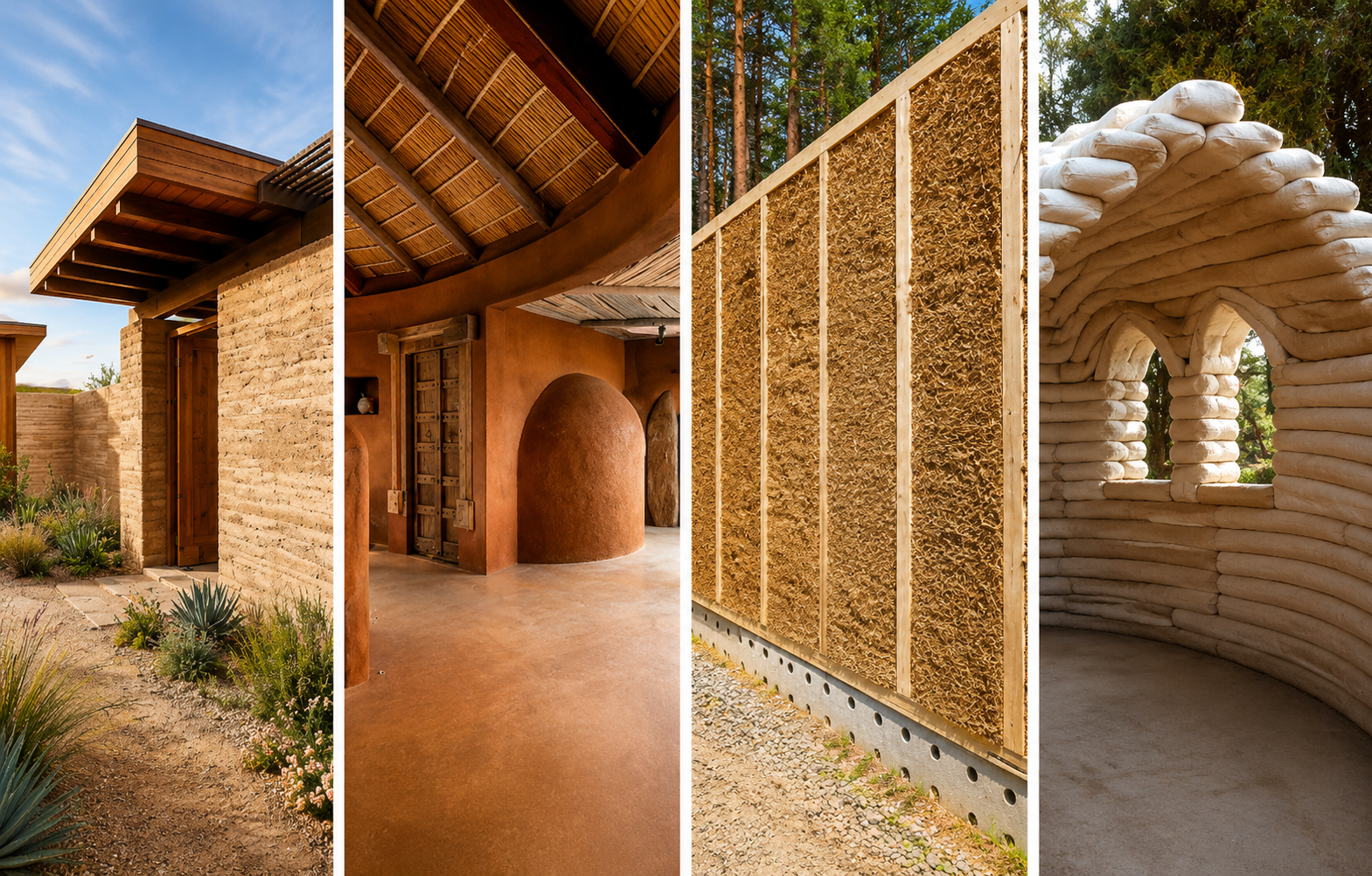
Among the many forms of natural construction, four techniques stand out as some of the most practical and widely used: straw bale construction, earthbag construction, cob construction, and rammed earth construction.
Why Natural Building Matters
Before exploring the individual techniques, it is important to understand why natural building has become increasingly relevant.
Modern construction relies heavily on cement, steel, and industrially manufactured materials. While these materials have enabled rapid urban development, they also carry high environmental costs.
The production of cement alone is one of the world’s largest sources of carbon emissions. Combined with steel and other industrial materials, the building sector contributes substantially to global greenhouse gas output.
Natural building offers an alternative approach.
Instead of depending primarily on energy-intensive materials, these methods use resources that are often locally available, renewable, biodegradable, or minimally processed.
The result is housing that works with nature rather than against it.
Straw bale construction
- Straw Bale Construction
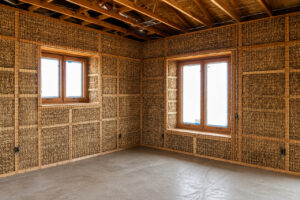
Straw bale construction uses compacted straw bales as the primary building material for walls and, in some cases, other structural elements.
Although many people associate straw with temporary shelters, modern straw bale buildings can be remarkably durable, beautiful, and efficient.
The process typically involves stacking straw bales on a raised foundation. Moisture barriers are installed to prevent water damage, while bamboo, timber pins, or wire mesh help secure the structure. The walls are then covered with plaster or stucco finishes.
Benefits of Straw Bale Construction
Excellent Insulation
Straw bales provide exceptional thermal insulation. Homes remain cooler during hot weather and warmer during colder seasons, reducing energy consumption.
Superior Acoustic Performance
The dense walls absorb sound effectively, creating quieter and more peaceful living spaces.
Carbon Storage
Straw captures carbon during plant growth. When used in construction, that carbon remains stored within the building rather than being released into the atmosphere.
Affordability
In many agricultural regions, straw is readily available and inexpensive, making it an attractive option for cost-conscious builders.
Environmental Sustainability
As an agricultural by-product, straw is renewable and biodegradable, making it one of the most environmentally friendly construction materials available.
Earthbag construction
- Earthbag Construction
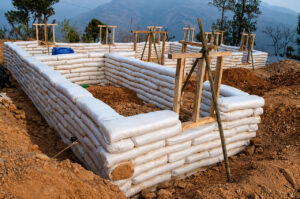
Earthbag construction involves filling durable bags with soil, sand, gravel, or other natural materials and stacking them in layers to create walls and structural forms.
The bags function much like giant building blocks. Each layer is compacted, and barbed wire is often placed between courses to provide additional strength and stability.
Earthbag construction has gained popularity in regions prone to natural disasters due to its resilience and adaptability.
Benefits of Earthbag Construction
Earthquake Resistance
The flexible nature of earthbag walls allows them to absorb and distribute seismic forces more effectively than many rigid structures.
Flood Resilience
Properly designed earthbag buildings can withstand flooding and erosion better than many conventional structures.
Low Cost
Most of the material comes directly from the construction site, significantly reducing material expenses.
Minimal Resource Requirements
Earthbag construction requires relatively few industrial materials and can often be completed using local labor.
Accessibility
Because the technique is straightforward, communities can participate directly in the building process, increasing local ownership and skills development.
Cob construction
- Cob Construction
Cob is one of the oldest natural building techniques in the world.
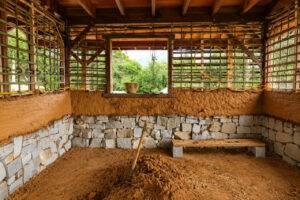
It consists of a carefully balanced mixture of clay, sand, straw, and water. The mixture is shaped by hand and layered to create walls and structural elements.
Unlike brick construction, cob is sculptural in nature. Builders can create curved walls, rounded corners, niches, benches, and artistic forms directly within the structure.
The result is architecture that feels organic and deeply connected to the landscape.
Benefits of Cob Construction
Aesthetic Beauty
Cob allows for unique designs that are difficult to achieve with conventional building materials.
Fire Resistance
Properly constructed cob buildings offer excellent fire resistance.
Seismic Performance
Cob structures can perform well during seismic activity when appropriately designed.
Low Environmental Impact
The primary ingredients are natural, locally available, and require minimal processing.
Affordability
Material costs are often very low, making cob attractive for community-driven housing projects.
Challenges
Cob construction can be labor-intensive and time-consuming. Each layer typically needs to dry before the next is added, requiring patience and careful planning.
Rammed Earth construction
- Rammed Earth Construction
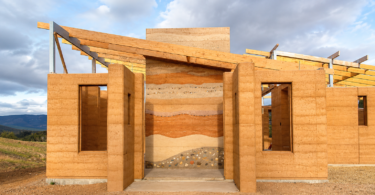
Rammed earth is among the most impressive and durable natural building techniques.
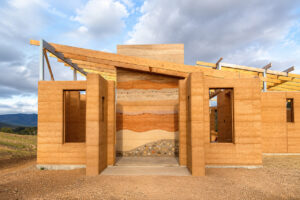
The process involves placing damp soil mixtures into forms and compressing them using manual or mechanical tampers. Layer by layer, the earth is compacted into solid walls of remarkable strength.
The finished walls often display beautiful natural patterns created by variations in soil composition.
Many architects consider rammed earth one of the most elegant forms of sustainable construction.
Benefits of Rammed Earth Construction
Exceptional Thermal Mass
Rammed earth walls absorb heat during the day and release it gradually at night, helping regulate indoor temperatures naturally.
Durability
Many rammed earth structures have lasted for centuries, demonstrating extraordinary longevity.
Fire Resistance
The compacted earth is highly resistant to fire.
Pest Resistance
Rammed earth walls are generally unattractive to insects and termites.
Low Environmental Impact
Most of the primary material comes directly from the earth itself, reducing transportation and manufacturing emissions.
Architectural Beauty
The layered textures and natural colors create visually stunning buildings that require little additional finishing.
Building a Better Relationship with Nature
Beyond their practical advantages, natural building techniques offer something increasingly rare in modern society: a renewed relationship with the environment.
Many contemporary buildings isolate people from natural processes. Artificial climate control, synthetic materials, and industrial systems often separate occupants from the ecosystems around them.
Natural buildings encourage a different perspective.
They remind us that homes can be part of nature rather than interruptions of it.
Materials are sourced locally. Construction generates less waste. Buildings often integrate rainwater harvesting, passive cooling, natural ventilation, renewable energy systems, and ecological waste management.
The result is not merely sustainable housing. It is a more thoughtful way of living.
Natural Building and the Future
Climate change has forced humanity to reconsider many assumptions about development.
The challenge is no longer simply building more structures. It is building responsibly.
Natural construction techniques demonstrate that sustainability does not require sacrificing beauty, comfort, or durability. In many cases, these methods provide superior environmental performance while creating healthier and more inspiring living spaces.
The lessons are clear.
The future of housing may not depend entirely on new inventions. It may depend on rediscovering proven methods that have existed for generations.
As communities around the world seek solutions to environmental degradation and rising carbon emissions, natural building offers a powerful reminder that the answers we need are often found in a deeper relationship with the earth itself.
By embracing straw bale, earthbag, cob, and rammed earth construction, humanity has an opportunity to build homes that honor both people and planet—homes that reflect not only technical ingenuity, but also ecological wisdom.