

Before most of us can have an honest conversation about traditional medicine, we must first correct a misunderstanding.
Traditional Medicine and Classical Herbalism are not the same thing, even though many people use the terms interchangeably.
Let me start with a confession about a misunderstanding, because I think that is where the whole conversation goes wrong.
When most people hear “traditional medicine,” or “traditional healer,” they hear a story about ignorance stemming from category bias or what Francis Bacon calls Idols. For those who don’t know, before you think it’s arusi/agbara or Idol worship that we are talking about. Francis Bacon in his 1620 work Novum Organum, identified four categories of intellectual biases or fallacies known as the idols of the mind – that distort human understanding: the idols of the tribe (inherent human limitations), idols of the cave (individual personal biases), idols of the marketplace (misuse of language), and idols of the theatre (dogmatic philosophical systems).
Building on that backdrop, when you mention traditional medicine or healing, people imagine something without dosage, without method, without proof. They picture an old man in a hut, throwing leaves into a pot, muttering words nobody can verify. And so they conclude that it is superstition dressed up as healing. And for them it’s a fluke or primitive way of thinking; some even would say it’s folklore.
I want to say this plainly, as one of your own: what people do not understand, they are quick to call nonsense. It is easier to dismiss a thing than to sit with it long enough to learn its grammar.
I am an Igbo man. I grew up close to this knowledge, and I have spent years going back to it — sitting with elders, asking questions, watching how healing actually happens in our communities and outside. I have done fieldwork with dibias in Igboland, Babas in Yoruba and Sangoma and Gogo in South Africa.
So let me take you through what I have come to understand. Not to romanticize it, and not to defend everything done in its name, but to give it the honest hearing it has rarely received.
The first mistake, even among people who mean well, is to treat “traditional medicine” and “herbalism” as one and the same. They are not.
Herbalism — classical herbalism, the kind you now find standardized in clinics and supplement bottles — is concerned mainly with the plant as a chemical object. It asks: what compounds are in this leaf, what do they activate in the body, at what quantity, for what condition. It is the study of medicinal properties and their activation. That is valuable work. It has saved lives. But notice how narrow its lens is. The plant is a delivery system, and the human is a machine to be corrected.
Traditional medicine is a wider thing. It looks at the herb, yes — but it also looks at the herb’s existential footprint and its locus: where it grew, in what soil, under whose care, near what other living things. It holds both the medicinal and the spiritual properties of the plant as real. And, most importantly, it takes seriously the relationship between the plant, the one who administers it, and the one who receives it. In traditional medicine, healing is not a transaction between a chemical and a body. It is a relationship between beings.
So when someone reduces our medicine to “just herbs,” they have already amputated most of what it is. They are grading a language by its vocabulary alone, ignoring its grammar, its tone, and everything it was built to say.
Now to the accusation that traditional medicine has no method.
I want you to understand something that took me a long time to fully respect: in our system, the plants hear. They listen. They communicate. I know how that sounds to an ear trained only in laboratories. But before you close the door, consider what it is actually describing. It is describing the belief — and the practice built around that belief — that a plant’s medicinal power is not fixed and inert. Its energy, its frequency, its efficacy, depends on who administers it and to whom it is handed over. The same leaf, in two different hands, is not the same medicine.
In Igbo traditional medicine, especially among the Isu and Ututu people, there is what we call igobe ogwu — the fortification of the herbs before they are administered. This is the moment when the medicine is prayed upon, appealed to, spoken with, prepared not just physically but relationally.
And here is the part that most outsiders miss entirely: it is only onye asanyere ogwu, the one to whom the medicine has been properly entrusted and handed, who carries the power of igobe ogwu. Which means you can know the herbs — every name, every property, every part — and still find that the medicine does not work in your hands as it is supposed to.
By the above I mean, KNOWLEDGE OF THE PLANT IS NOT THE SAME AS AUTHORITY OVER IT. I know most of you won’t believe this one because it doesn’t make sense. But it need not make sense to be true.
Sit with what that implies. Beyond the plants themselves, there are herbal combinations and herbal activations. There is a chain of custody. There is a gatekeeping of who may prepare and administer, and under what conditions. Tell me: what is that, if not a model built to prevent abuse? What is that, if not a method?
This is the great irony.
The people most eager to subject our medicine to “the scientific method” are often the ones most ignorant of the method already inside it.
They arrive assuming there is nothing there to measure, and so they never learn what our forebears were measuring all along — potency, timing, readiness, relationship, restraint. The safeguards were never written in journals. They were written into who was allowed to hold the knowledge, and how.
Here is where I want to slow down, because this is the heart of it.
We have been taught to treat the scientific method as the only legitimate way of knowing.
Form a hypothesis, run a controlled trial, measure the result, publish, replicate. It is a powerful tool.
Excellent!
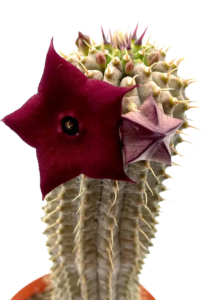
The Hoodia gordonii plant
I am not here to insult it. But I want to place another method beside it — not beneath it, beside it — and I want you to consider that our ancestors were running an experiment of a scale that no laboratory can match. Call it the intergenerational method.
Think about what tradition actually is, epistemologically. It is knowledge that has been tested by being lived, generation after generation, for centuries. Every generation is a round of testing. When a remedy harmed people, it was dropped, or hedged with taboo, or restricted to particular hands. When it healed reliably, it was kept, refined, passed on. What survives to reach you is not a random inheritance. It is the residue of an enormous, uncontrolled but relentless process of trial — a selection pressure acting on knowledge the way selection acts on a species. This is why I call it a genetic and evolutionary method. Practices that killed did not reproduce. Practices that healed were carried forward in the memory of a people.
The discipline that reads this inheritance is critical ethnography — the patient, careful study of how a community actually knows what it knows, spanning generations, taking the practices seriously on their own terms before judging them. It is not folklore collection. It is the reconstruction of a centuries-long dataset that was never written down but was faithfully transmitted through bodies, rituals, restrictions, and hands.
Now here is my claim, and I want to make it without flinching: the intergenerational method has already passed through its own verification and falsification — not in months, but across lifetimes. A clinical trial runs for eight weeks on sixty people. A tradition runs for four hundred years on a whole nation. On that scale, the scientific method is the newcomer, and a narrow one. It can fail precisely where the intergenerational method is strongest: in capturing slow effects, rare harms, context, sequence, and the long tail of what a substance does to a people over generations rather than to a subject over a season.
So when a study finds “no significant effect” from a herb after a few weeks, I do not automatically conclude our fathers were fools. I ask whether the study was even built to see what they saw. A short experiment can miss what a long tradition has already settled. That is not superstition talking. That is a bigger sample size talking.
Let me be honest, though, because honesty is what earns this argument its weight: the intergenerational method is not infallible. Some things were carried forward that should have been dropped — practices rooted in fear or discomfort rather than healing. I will come back to that.
A tradition can preserve error as faithfully as it preserves truth. But the same is true of science, which has its retracted papers and its confident mistakes. Neither method is sacred. Both deserve respect, and both deserve scrutiny. My only demand is that we stop pretending one of them started at zero.
Now let me bring all of this down to the ground, to the place where you actually live it.
When someone says, “I tried that herb, but it didn’t work,” the problem isn’t always the herb. Sometimes it’s the dose. Sometimes it’s the context. And sometimes, it’s the body that wasn’t ready.
Herbs work in layers. They aren’t quick fixes. And adaptogens, in particular, speak slowly to the body. They whisper. They regulate. They don’t rush. So when it comes to dosage, precision matters, but flexibility is often necessary.
In traditional African settings, dosage wasn’t calculated in grams or milliliters. It was intuitive. A handful of leaves. A three-day boil. A morning-only dose when the body is cool. In the hands of a skilled herbalist, this was a form of pattern recognition — built over decades. Not always replicable, but often reliable.
Today, clinical herbalism has tried to make sense of this ancestral fluidity. Ashwagandha, for instance, is commonly used in the range of 300–600 mg daily of extract standardized to its withanolide content; in one controlled trial, Lopresti and colleagues (2019) found that 240 mg of a standardized extract taken daily for sixty days significantly reduced morning cortisol and anxiety in stressed adults.
Rhodiola is often dosed between 200–400 mg per day, depending on salidroside content. Eleuthero (Siberian ginseng), a common adaptogen in some clinics, may range from 1 to 2 grams of root powder daily (Panossian & Wikman, 2009).
But there’s a catch. These figures are drawn mostly from European and North American populations. They may not always reflect what is optimal — or even safe — for African bodies exposed to different diets, climates, pathogens, and stressors. We are not the reference population in these studies. We are the afterthought. That alone should make us cautious about importing numbers as if they were laws.
This is where synergy comes in. In traditional Igbo medicine, an adaptogen is rarely taken alone. Utazi (Gongronema latifolium) might be paired with Ose oji (Piper guineense) or infused in fermented pap (akamu) to “open the body” first. In some cases, bitter leaf is used to “clear the blood” before the main herb is introduced. These aren’t superstitions. They’re sequencing strategies — ensuring the herbs don’t just enter the body, but meet it where it’s ready. This is the same logic as igobe ogwu, working at the level of the body instead of the spirit: prepare the ground before you plant.
In South Africa, Sutherlandia frutescens, also known as cancer bush, is often brewed with rooibos or honeybush. Not just for taste, but because rooibos reduces gastric irritation and helps with assimilation. These pairings reveal how deeply local people understood synergy long before the term entered a textbook.
Modern herbalism tends to isolate compounds. Traditional systems built relationships between them. And that is exactly where we must be careful, because the same knowledge that heals can harm when it is broken from its context. An adaptogen taken in the wrong combination can become antagonistic. Combining high doses of ginseng and licorice, for example, can lead to overstimulation, and licorice on its own is known to raise blood pressure in sensitive people. Taking Rhodiola with stimulant medication could lead to sleep disturbances. And Ashwagandha combined with sedatives can deepen fatigue.
These aren’t theoretical warnings. I’ve seen people report palpitations after mixing maca with energy supplements. Or women with fibroids worsening their condition after taking estrogenic herbs like dong quai or red clover — without proper screening.
Then there’s the question of pharmaceutical interaction. Many adaptogens modulate liver enzymes, particularly the CYP450 pathways. That affects how drugs are broken down in the body. Someone on antiretrovirals or antihypertensives needs to know that certain adaptogens might reduce, or intensify, their effects (Fugh-Berman, 2000). This is not a small thing in our part of the world, where many people are on ARVs or blood-pressure medication and reaching for herbs at the same time, often without telling anyone.
Yet, we also need to resist the fear narrative. Not all interactions are negative. Some herbs protect organs from drug-induced damage. Milk thistle (Silybum marianum), for instance, has long been studied for its ability to shield liver cells during long-term medication use (Flora et al., 1998). The point isn’t to abandon pharmaceuticals. It’s to understand where herbs can buffer, support, or even enhance therapeutic outcomes.
Still, dosage and synergy without context is risky. A pregnant woman shouldn’t just copy what her friend took for burnout. A hypertensive patient shouldn’t experiment with adaptogen teas from YouTube. And a diabetic person using Gongronema or bitter melon should be monitored for hypoglycemia.
There’s one final point here. Many adaptogens build over time. Their effect isn’t always felt in the first week. That doesn’t mean they’re ineffective. It means they’re asking the body to shift gradually. And the more unstable the system, the slower that shift might be.
This is why herbalism requires relationship. Not just with the plants, but with one’s own body. Watch. Adjust. Pause. Resume. That’s the rhythm. And when in doubt, ask. Because sometimes, the difference between healing and harm is not the herb. It’s the conversation that wasn’t had.
Sometimes herb heals not just because of what’s inside it, but because of how it’s taken, and what surrounds that act.
In many African communities, healing is rarely a private affair. It often involves timing, gestures, spoken words, and relationships between people, plants, and ancestors. And while that might sound unscientific, this context, this rhythm, is part of the medicine.
Adaptogens, by their very nature, work slowly and subtly. Their effects are cumulative, not immediate. You don’t take Sutherlandia today and wake up tomorrow with your stress gone. Instead, the body gradually recalibrates. Stress hormones soften. Sleep deepens. Fatigue retreats. But only if the rest of life allows that softening.
Now, imagine trying to do this while rushing through Lagos traffic, skipping meals, scrolling doom-laden headlines, and sleeping under artificial light. No herb, no matter how adaptogenic, can work well in that rhythm. The herb is being asked to undo, in a cup, what an entire way of living is doing all day.
That’s where ritual enters. In Igbo traditions, herbs were often taken early in the morning, before the body was stirred by the world. The user might face the rising sun, or speak a word of thanks to the spirit of the plant. In some villages, certain herbs are never taken during menstruation. Others must be chewed in silence. These aren’t idle rules. They are ways of aligning the body’s intention with the herb’s purpose — the same instinct as igobe ogwu, expressed in the small choreography of daily use.
You see this too among the San of southern Africa, where plants like Hoodia gordonii were used not just to blunt hunger but to calm the mind before long hunts. They would chew it slowly, sometimes in silence, under the weight of expectation. There’s healing in the waiting. In the breath between bites.
Western pharmacology has little room for this kind of slowness. It measures what is active, what is passive, and what shows up in serum concentration. But in our contexts, a plant might also be taken because it was offered by a trusted elder, because it came from a particular tree, or because the body needed not just chemical support, but reassurance.
And maybe that’s still part of why people heal. There is a growing field called psychoneuroimmunology that explores how expectation, mood, and ritual affect immunity and hormonal balance (Ader et al., 1995). It may explain why people who believe a herb will work sometimes feel better faster — not because they imagined the herb’s action, but because their mind allowed the body to relax into healing. This isn’t placebo. It’s participation.
One of the elders I spoke with during my fieldwork in Abia said this: “If you eat a bitter leaf and quarrel in your heart, it turns more bitter. But if you greet the plant and let go of your anger, the bitterness leaves with your breath.” That may not be testable in a lab, but it speaks to something we shouldn’t dismiss so easily — emotional synergy.
Still, we should be honest. This is the return I promised. Not every ritual makes sense. Not every practice is safe. Some traditions restrict herbs from menstruating women not for any protective reason, but out of an old cultural discomfort with blood. Some blend plants with fear or coercion. We must be willing to separate the protective rituals from the harmful ones. This is exactly the scrutiny the intergenerational method deserves, and can withstand. But rejecting all ritual out of scientific rigidity would be its own kind of arrogance.
And notice: even in the hospital, we ritualize. Think of how we expect the doctor’s white coat, the ticking clock of the clinic, the formality of the prescription sheet. These are scripts too, just less obvious ones. Ritual exists in both traditions. We just call them by different names.
So what does this mean for the herbs you might reach for?
It means they should not just be swallowed. They should be entered into. You prepare your body to receive them — maybe by breathing, maybe by eating slower, maybe by choosing silence during the first days of use. That’s not mysticism. It’s respect for rhythm.
Some people say, “ritual doesn’t matter.” But what if ritual is exactly what helps the herb cross from body to self?
That, in the end, is what I want you to carry away.
Our medicine was never nonsense. It was a method you were never taught to read — a method tested not in a season but across generations, held by particular hands for particular reasons, and answerable, like all real knowledge, to honest scrutiny. Bring the science. Bring the questions. But come humble. You are not correcting an empty tradition. You are meeting a very old, very patient one.