
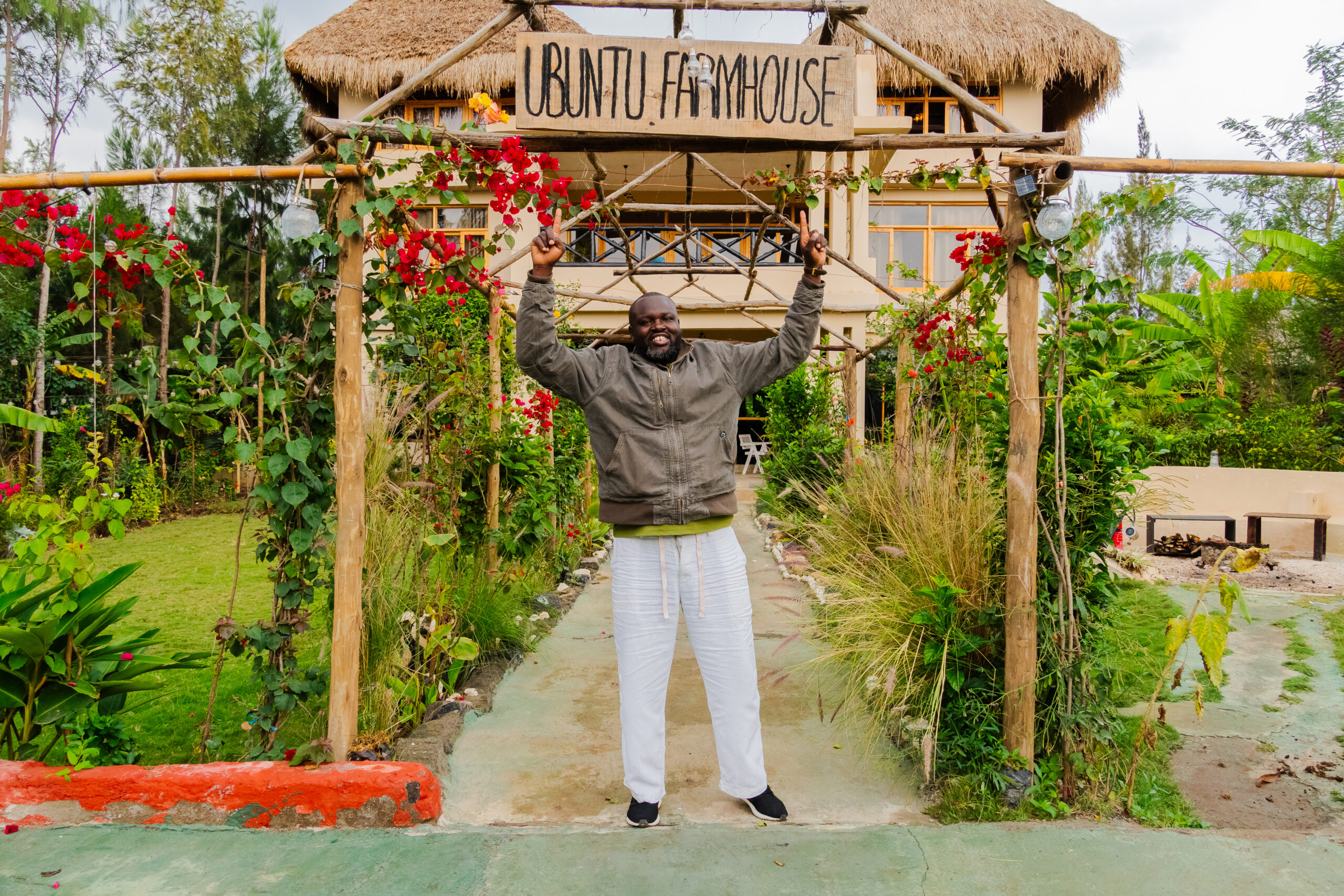

Samuel Phillips, the creative director of Wendur Magazine, joined Elijah Oenga in his Ubuntu Kreative Village in the Tuala area of Kajiado County, Kenya. Below is the interview. (Slightly edited for grammar, flow, and readability). You can watch the interview on YouTube via the link at the end of this conversation.
Wendur Mag: Thank you for giving us this opportunity to speak with you. Please tell us the story of Ubuntu Creative Village. How did you start, and what inspired it?
Elijah Oenga: Thank you. Ubuntu is actually a gift from my father, Engineer Isaac Oenga. He gave it to me when I was in high school. At first, when I received this “gift” in Kajiado, it felt thorny, dusty, and dry. I kept wondering what I would ever do with it.
Later, I went abroad for my university studies, and while traveling, I saw what the rest of the world was doing. I read about Dubai reclaiming land, and even saw deserts being reclaimed in China. I thought to myself, Wow, this is not just an inheritance—it’s a beautiful challenge.
And I felt the best way to honor my father was to till the land so that his grandchildren—my children—could inherit something meaningful. So, I started with just one tree. Today, as you can see, it has grown into something like a mini-forest. At last count, I had planted over 10,000 trees. Not all have survived, but the effort has been far greater than I imagined.
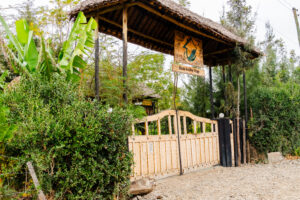
Ubuntu has become a pillar of hope—not just for me and my family, but also for the community. Many neighbors around Kajiado have started their own transformation journeys after seeing what we’ve done here. Every day, I host guests who want to learn. Some come from Kenya, others from Uganda, and even as far as Cameroon. The Ubuntu story is spreading, and I like to joke that maybe in 100 years, there will be “Ubuntulets”—like little piglets—not just in Kajiado or Kenya, but across Africa.
Wendur Mag: That’s inspiring. When you first decided to turn this dry land into a forest, what were your first steps?
Elijah Oenga: I began with just a few trees. When I returned from the UK in 2013, I started working at Kabarak University, which belonged to the late President Moi. The campus was beautiful, and it reminded me that even with a small gift of land from my father, I could start something meaningful.
Every holiday, while working at Kabarak, I would load my car with seedlings and drive here to plant. Over time, I added a greenhouse and began farming—starting with capsicums, then chickens, goats, and more crops.
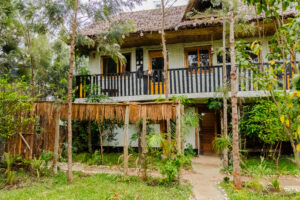
As friends visited, they often said, “We love the ambiance. I wish you had a small chalet.” That’s how the accommodation side began. I never planned to create a farm resort. It has been a journey of hope and faith—one tree at a time, one idea at a time. If you ask me for a master plan, I’ll tell you there wasn’t one. I’ve simply used this arid land as my canvas and painted it with every tree, every flower, and every project.
Wendur Mag: Amazing. The last time we spoke, you mentioned the pressures of urbanization in Nairobi, particularly its impact on sewage systems. Could you share your perspective on what’s happening with Nairobi’s growth?
Elijah Oenga: Nairobi is a beautiful city—one of the only cities in the world with a national park. But it is caving under pressure. Originally designed for about two million people, it now hosts between four and six million.
This rapid rural-urban migration has strained the city’s systems. Sewage lines, for example, were built for far fewer people and are now bursting. As a result, some unscrupulous developers channel raw sewage into rivers like the Nairobi and Mbagathi, causing pollution. I walked along the Arboretum recently, and the Nairobi River was unbearable.
We owe our great-grandchildren a duty of care. Other cities, like London, are already planning for 2075—even though the planners won’t be alive then. That shows the importance of long-term vision.
Instead of everyone crowding into Nairobi, we should ask: Can we build meaningful lives in rural areas? Ubuntu is proof that you can. From here, 23 kilometers away, we’ve built a life. You can farm, keep goats, or even sell products globally online. We must rethink this dependency on cities and embrace sustainable growth.

Wendur Mag: That’s true. Now, let’s talk about Africa’s indigenous knowledge systems. What role do they play in addressing climate change, and how do we encourage people to return to those practices?
Elijah Oenga: When you reflect on the so-called advancements of modern life, you begin to wonder whether we’ve really moved forward. Our great-grandfathers lived in mud-thatched houses plastered with cow dung. These homes regulated temperature naturally—no need for air conditioning. They used locally available materials and integrated farming systems: cowsheds, goats, chickens, and manure for the land.
Today, half of a man’s life is spent building houses of concrete—chemical structures that harm our health and environment. Meanwhile, many young men in Nairobi’s slums own land in the village but abandon it to slave in the city for 500 shillings a day. That’s the poverty of the mind.
Africa has some of the most sustainable ecosystems in the world, yet we’ve abandoned indigenous practices. We should be teaching the world about rainwater harvesting, sustainable farming, and how to live in harmony with nature. Our future may depend more on looking back than looking forward. Indigenous systems created happiness—for the earth, for animals, and for humans. Perhaps it’s time we give “backwards” a chance.
Wendur Mag: That’s powerful. Finally, if someone wanted to visit Ubuntu Creative Village, what should they expect?
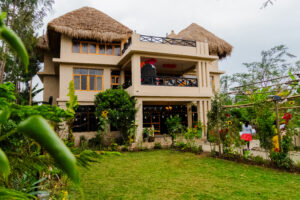
Elijah Oenga: More than anything, I want people to experience Ubuntu for themselves. May it feel like a comfortable home where you can pause, reflect, and connect. Here, you’ll find warm hearts, meaningful conversations, and opportunities to learn about the Ubuntu spirit—“I am because we are.”
We don’t claim to have a monopoly on knowledge. At Ubuntu, we share stories, food, and experiences—and we learn from our guests, too.
This is not a commercial hotel or resort. It’s a farm designed to feed the soul as much as the body. We have accommodation, fresh food, a spa, solar power, a farm, a dam, and even a conference room. But more importantly, we offer a space for the mind to pause, to dream differently, and to reconnect with the wisdom of those who came before us.
Wendur Mag: Thank you very much.
Elijah Oenga: Thank you—and welcome.