

Sustainability is often discussed in terms of environmental conservation, renewable energy, agriculture and the construction industry. Yet, its meaning extends far beyond these familiar areas. It also concerns the preservation of knowledge, the education of future generations, the protection of indigenous resources and the development of industries that can sustain communities economically and culturally.
For Liberia, a country still rebuilding important aspects of its national infrastructure following decades of civil conflict, these conversations present an opportunity to rethink the meaning of development. Rather than simply following established Western models, Liberia can draw from its environment, history, and indigenous knowledge to create solutions that are relevant to its people and that won’t take many decades to implement.
In a recent conversation with Onike Sherman, a Liberian educator and author based in Delaware, USA, we explored how sustainability could influence education, natural building, indigenous agriculture and tourism. Her perspectives offer an interesting starting point for reconsidering how Liberia can build a future without losing the knowledge and resources that make it unique.
Sustainable education in Africa
For Sherman, sustainable education begins with a simple principle: using what is already available in the environment to teach children.
Across many African villages, access to electricity, properly equipped classrooms, and modern educational infrastructure remains limited. However, Sherman argues that these challenges should not prevent children from receiving an education. Learning does not necessarily have to begin inside a conventional classroom. It can begin under a tree, beside a river, or along the coastline.
A cotton tree, for instance, can become a practical teaching resource for understanding the life cycle of plants. A visit to the beach can introduce children to mathematics and science through counting rocks, observing waves and measuring the time it takes for the tide to come in. Similarly, studying a breadfruit tree can introduce lessons in biology, food production and the different uses of plants.
The important distinction, she explains, is that children in rural communities should not receive an inferior curriculum compared with those in cities. The curriculum should be consistent, but the resources and methods used to deliver it can differ according to the environment.
This approach also challenges the tendency to measure educational progress primarily through technology and physical infrastructure. Technology has its place, but African communities should not have to wait for electricity, computers, and modern school buildings before meaningful learning can begin.
Sherman also highlights the importance of developing educational systems that can survive beyond the involvement of external organizations. Rather than importing curriculum models that disappear when international partners leave, African countries should invest in their own educators and curriculum developers.
For her, sustainability means teaching teachers how to teach. The knowledge acquired by one generation of educators should be passed on to another, creating a system capable of renewing itself.
Liberia Reads
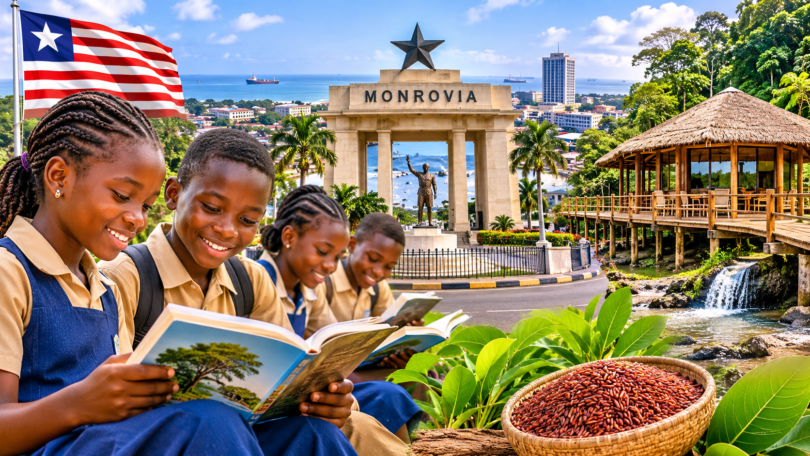
One of Sherman’s practical contributions to this vision is a project she calls Liberia Reads. The initiative is intended to develop educational resources for Liberian children while providing professional development opportunities for teachers.
Her particular concern is the educational experience of children in rural communities, who are often overlooked when educational programs are designed around the needs of urban populations.
The initiative recognizes that developing a curriculum is only one part of the process. Teachers must also receive the training necessary to deliver it effectively. Sherman therefore envisions a model in which an initial group of educators receives training and subsequently becomes responsible for helping other teachers acquire the same knowledge.
This creates an opportunity for the curriculum to become self-sustaining rather than remaining dependent on its original developers.
Interestingly, Sherman does not believe that meaningful educational reform must always begin with government institutions. She suggests starting with practical interventions, such as offering free tutoring services to children preparing for important examinations. Demonstrating that a particular teaching approach produces results can create the confidence and interest necessary to expand the initiative.
Her commitment to culturally relevant education also extends into children’s literature. She is developing a series called Nyene-Plu, intended for children aged five to nine. It follows a young Liberian girl who moves from her village to Monrovia for the first time to attend school.
Through the experiences of this young character, children encounter Liberian customs, culture and everyday life while exploring themes that are relevant to children everywhere.
She is also developing a fantasy series inspired by Liberian folklore, with stories designed to encourage courage, identity, emotional development and personal responsibility.
These projects reflect an important dimension of sustainable education: children should see themselves, their communities and their histories represented in the knowledge they receive.
Listening to the land and natural buildings
Another important aspect of sustainability discussed during our conversation was natural building, particularly the need to understand the land before beginning construction.
Sherman describes the land as an elder and a teacher. Her argument is that architects and prospective homeowners should spend time observing a building site before making decisions about what to construct and where.
In Liberia, where the seasons are broadly divided into wet and dry periods, the behavior of the land can change considerably throughout the year. A small stream during the dry season might become a dangerous river during heavy rainfall. A seemingly suitable building site could therefore become vulnerable to flooding if construction begins without sufficient observation.
Sherman even suggests waiting a full year before building on a newly acquired piece of land, allowing enough time to understand its seasonal characteristics.
This philosophy also extends to the historical and cultural significance of land. Communities often possess knowledge about places associated with ancestral histories, important events, and past tragedies. Such knowledge deserves consideration rather than being dismissed as outdated superstition.
Natural building, therefore, is not simply about using mud instead of concrete. It involves understanding the relationship between architecture, climate, materials, history, and the environment.
Sherman expresses particular interest in compressed earth blocks and traditional mud buildings. Having grown up observing these structures in Liberia, she remembers their beauty and ability to maintain cooler indoor temperatures.
In a hot country where electricity and air conditioning can be expensive or unreliable, building materials that help regulate indoor temperatures offer practical advantages.
There is also no reason why natural buildings must look primitive or outdated. Modern architectural designs can incorporate earth-based construction techniques while producing beautiful, functional, and contemporary homes.
Africa has a wealth of architectural knowledge that can inform this transition. Architects such as Francis Kéré demonstrate how indigenous building principles can inspire innovative contemporary architecture.
The challenge is partly a matter of mindset: recognizing that traditional knowledge is not necessarily incompatible with modern design.
Protecting Africa’s indigenous seeds
Food sustainability was another important subject in our conversation, particularly the need to preserve indigenous seeds and the knowledge associated with them.
Sherman’s interest in this area began with memories of a particular Liberian red rice that her father would bring home when travelling around the country. Although it was not commonly consumed in the capital, she remembers it as particularly delicious.
Her subsequent research into food sustainability raised an important question: why should Liberia spend substantial amounts importing food when it possesses the land, agricultural knowledge and indigenous varieties needed to produce more of its own food?
One of the challenges she identifies is the absence of adequate processing infrastructure. Increasing the production of indigenous red rice, for example, requires processing facilities that can support farmers beyond the cultivation stage.
The issue is therefore not always an inability to grow food, but a failure to invest in the infrastructure needed to make local production commercially viable.
Beyond food production, indigenous seeds represent generations of agricultural knowledge. Traditional varieties, cultivation practices, and the ability of farmers to save and exchange seeds are important parts of Africa’s agricultural heritage.
Sherman also raises concerns about the appropriation of indigenous resources and the growing commercial interest in African plants. The baobab tree, for example, has long been part of African communities, providing food and other valuable resources. Yet, its nutritional properties are increasingly marketed internationally as a discovery under the fashionable label of superfood.
The danger is that Africa could lose control of resources and knowledge that have sustained its communities for generations.
Protecting indigenous seeds must therefore involve more than storing varieties in seed banks. It requires supporting farmers, protecting their traditional practices, investing in local agricultural processing and ensuring that communities retain access to their biological heritage.
As Sherman emphasizes, sustainability means ensuring that knowledge about farming, fishing, plants and food remains available to future generations.
Investing in Liberia’s tourism for a more global audience
Perhaps one of the most compelling opportunities for Liberia lies in tourism.
Sherman believes that Liberia has enormous tourism potential but remains insufficiently known internationally. She recalls researching Costa Rica after friends invited her to a vow renewal ceremony there. What struck her was the country’s natural beauty and climate, which she felt could be comparable to Liberia’s.
Her conclusion was that Liberia could develop a similarly strong tourism identity, particularly through ecotourism, if it placed the industry at the centre of its national development strategy.
Costa Rica offers an interesting reference point because of the prominence it has given to nature-based tourism. Liberia, with its own natural landscapes and ecological heritage, could explore a development model that places conservation and community participation alongside tourism investment.
Sherman acknowledges the efforts of Liberia’s National Tourism Authority, led by Princess Eva Cooper, particularly its interest in connecting tourism with education.
This connection is important. Tourism should not only bring visitors into the country; it should also create opportunities for Liberians to learn about their history, environment, and cultural heritage.
Developing Liberia’s international tourism profile will require more than promoting beautiful destinations. It will require sustained investment, effective storytelling, stronger tourism infrastructure and opportunities for local communities to participate in the industry.
Sherman also identifies women- and youth-led industries as another important investment priority. Young people and women have historically faced economic and educational disadvantages, and tourism could provide opportunities for entrepreneurship, employment and the development of locally owned businesses.
Ultimately, Liberia’s future should not be measured simply by how closely it resembles other developed nations. Its greatest opportunities may lie in recognizing the value of what it already possesses.
From education that begins beneath a tree to architecture that respects the land, from indigenous seeds to ecotourism, sustainability offers Liberia an opportunity to build on its own knowledge and resources.
The question is not simply how Liberia can move forward, but how it can do so without abandoning the very things that could make its future stronger.