
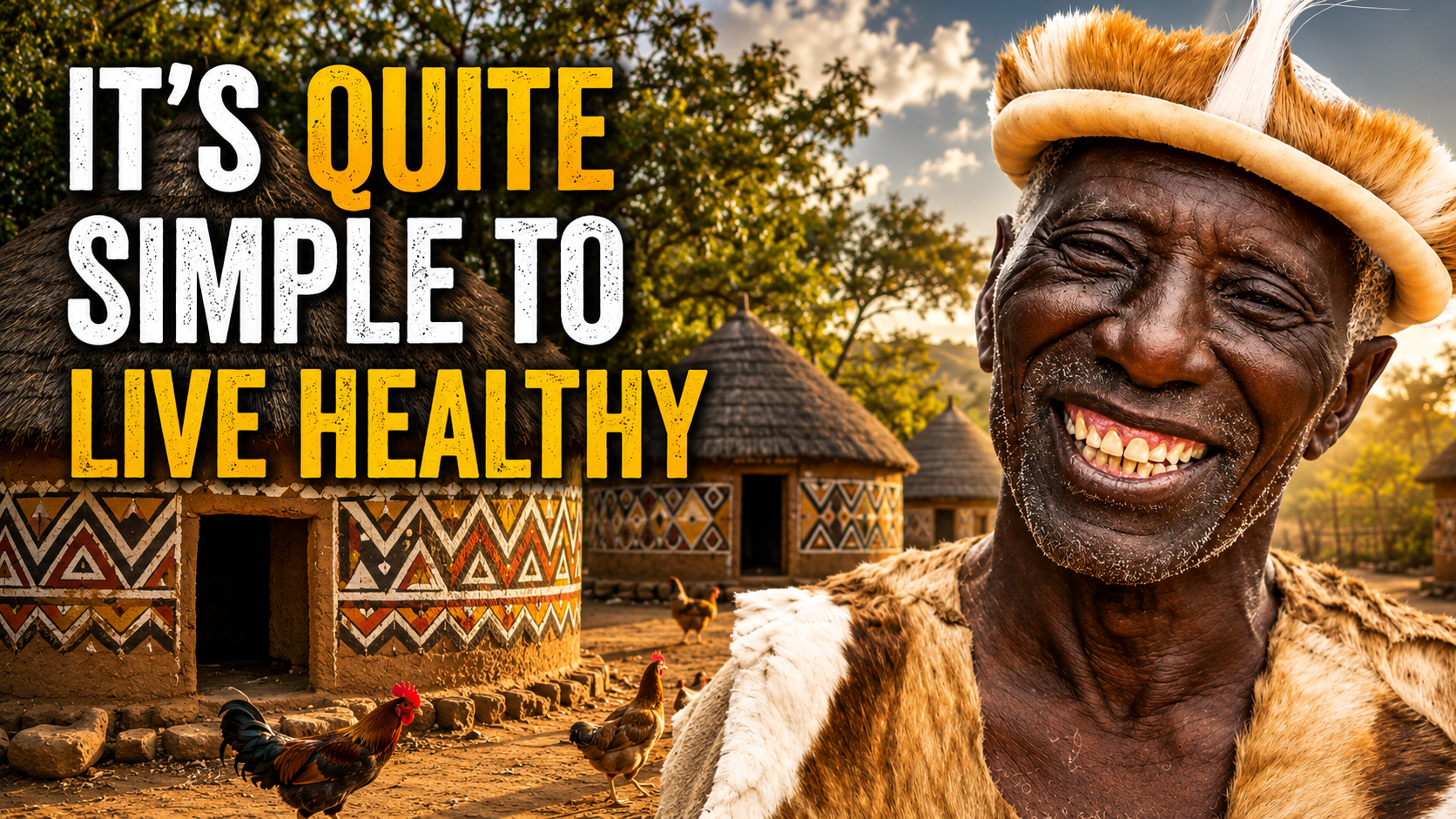

In a small village of Kompisi in rural Zimbabwe, far from the noise of highways, shopping malls, and concrete skylines, an elderly traditional healer sat beneath the African sky and shared what may be one of the most important lessons of our age: humanity’s health depends on its relationship with nature.
At nearly eighty years old, the healer, Elder Impisi, radiates a vitality that many people decades younger would envy. His smile is bright, his energy is contagious, and his worldview is rooted in something that modern society increasingly seems to have forgotten—living in harmony with the natural world.
When asked about the secret to his health and longevity, his answer was immediate and uncomplicated.
“Good food. Organic food. Always happy. No problems.”
That response may sound simple, but behind it lies an entire philosophy of life.
The Forgotten Power of Indigenous Food
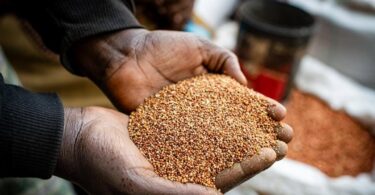
Elder Impisi grows much of his own food. He listed sorghum, millet, pumpkins, watermelons, peanuts, beans, and maize among the crops produced in his community.
These are not merely crops. They are part of a nutritional heritage that sustained African societies for centuries before industrial agriculture and heavily processed foods became dominant.
For the elder, food is medicine.
He sees a direct relationship between what people eat and how they age. While urban populations increasingly depend on packaged foods, preservatives, synthetic additives, and chemically intensive agriculture, he believes health begins with food grown close to the earth and free from excessive chemical intervention.
His lifestyle offers a living example. Approaching eighty years of age, he remains active, engaged, and physically vibrant.
The lesson is not merely about avoiding chemicals. It is about rediscovering indigenous foods that evolved alongside local communities and environments. Foods such as sorghum and millet are not only culturally significant but also highly nutritious and resilient.
In many ways, Elder Impisi’s message challenges modern assumptions about progress. He suggests that true advancement may not lie in increasingly processed food systems, but in recovering knowledge that previous generations already understood.
A World Drowning in Chemicals
One of the strongest themes in the conversation was concern about the growing chemicalization of everyday life.
The healer spoke critically about modern dependence on chemicals, not only in food but also in clothing, household products, and consumer goods.
“We use natural food,” he explained. “Which heals.”
His concern reflects a broader global debate about synthetic chemicals, environmental pollutants, and their long-term impact on human health.
Today, chemicals are embedded in nearly every aspect of modern living—from pesticides and fertilizers to cosmetics, cleaning products, synthetic fabrics, food packaging, and industrial manufacturing.
For Elder Impisi, this dependence has come at a cost. He believes people have become disconnected from the natural systems that once sustained them.
His philosophy is not anti-technology for its own sake. Rather, it is a warning that convenience should never come at the expense of health, awareness, and ecological balance.
The Difference Between Village Life and City Life
Perhaps the most striking part of the conversation came when the discussion turned toward cities.
The healer was asked about urban living and whether he would ever choose to move to a city.
His answer was emphatic.
“I shall never live there in my lifetime.” Even when I am dead, my body must not be taken to the city”. He added emphatically.
Why such a strong response?
According to him, cities have lost something essential to human well-being.
“There is no peace. There is no love in the cities.”
For Elder Impisi, rural life offers more than fresh air and open space. It provides a sense of belonging and community that he believes has largely disappeared in urban environments.
He contrasted village life with city life in a way that many people will find familiar.
“If you live here, when you make noise, everybody rushes to come and help.”
In the village, people know one another. They share food. They support each other in times of need. Community is not an abstract concept; it is part of daily life.
By contrast, he described urban living as isolated and stressful.
“People don’t have a social life to interact with other people.”
According to the elder, many city residents spend their lives pursuing money, working long hours, and carrying enormous levels of stress. In the process, they neglect relationships, community, and even their own health.
Happiness Is Found in Community
When asked about the secret to happiness, Elder Impisi’s answer once again returned to human connection.
“Come together with other people. Be together and enjoy.”
He described gatherings where people share food, dance, celebrate, and welcome strangers into their homes.
This communal spirit remains one of the defining characteristics of many traditional African societies. Hospitality, generosity, and collective responsibility are woven into the social fabric.
The elder believes that happiness is not primarily created by wealth, possessions, or status. Instead, it emerges from meaningful relationships.
His philosophy echoes findings from numerous studies on well-being, which consistently show that strong social bonds contribute significantly to happiness, health, and longevity.
Living Alongside Nature
Another fascinating aspect of the conversation involved wildlife.
The village exists in close proximity to wild animals, including elephants. Yet Elder Impisi does not see wildlife as separate from humanity.
“Animals enjoy us. They love us.”
He argues that many conflicts between humans and wildlife arise because people invade animal habitats, disrupt migration routes, and alter ecosystems.
Rather than viewing nature as something external, he sees humans as participants within a larger living system.
This perspective reflects a traditional African worldview in which people, animals, land, water, and forests exist in relationship rather than opposition.
A Different Definition of Wealth
The elder’s perspective on money was equally revealing.
“Money is money. But human beings are taking advantage of money to destroy their lives.”
He criticized excessive consumption and encouraged people to use resources wisely.
Instead of spending money on destructive habits, he suggested investing in productive assets such as livestock, poultry, and food production.
For him, real wealth is not measured by luxury but by self-reliance, health, and the ability to sustain one’s family and community.
Ancient Wisdom for Modern Times
Perhaps the most remarkable thing about Elder Impisi’s message is its simplicity.
He was not speaking about obscure spiritual practices or hidden mysteries. He was talking about food, community, nature, health, and common sense.
Yet these basic principles may be precisely what modern society needs most.
His counsel invites us to reconsider our relationship with food, our communities, and our environment. It challenges us to ask whether convenience, speed, and consumption have come at too high a price.
In a world increasingly defined by stress, pollution, and disconnection, the elderly healer’s message remains profoundly relevant: eat natural food, stay connected to nature, value community, and live in harmony with the world around you.
Sometimes the deepest wisdom is also the simplest.
Watch the full video below: