

Our planet is in a mess because we want everything fast. We created fast food because we want food without going through the process of cooking. We created GMO crops because we want our farms to produce faster. And because we cannot satisfy our hunger for consumerism, we created fast fashion. But how fast can we go until the consequences of our misbehaviors catch up with our beaches, environment, our farms, the atmosphere, and our lives?
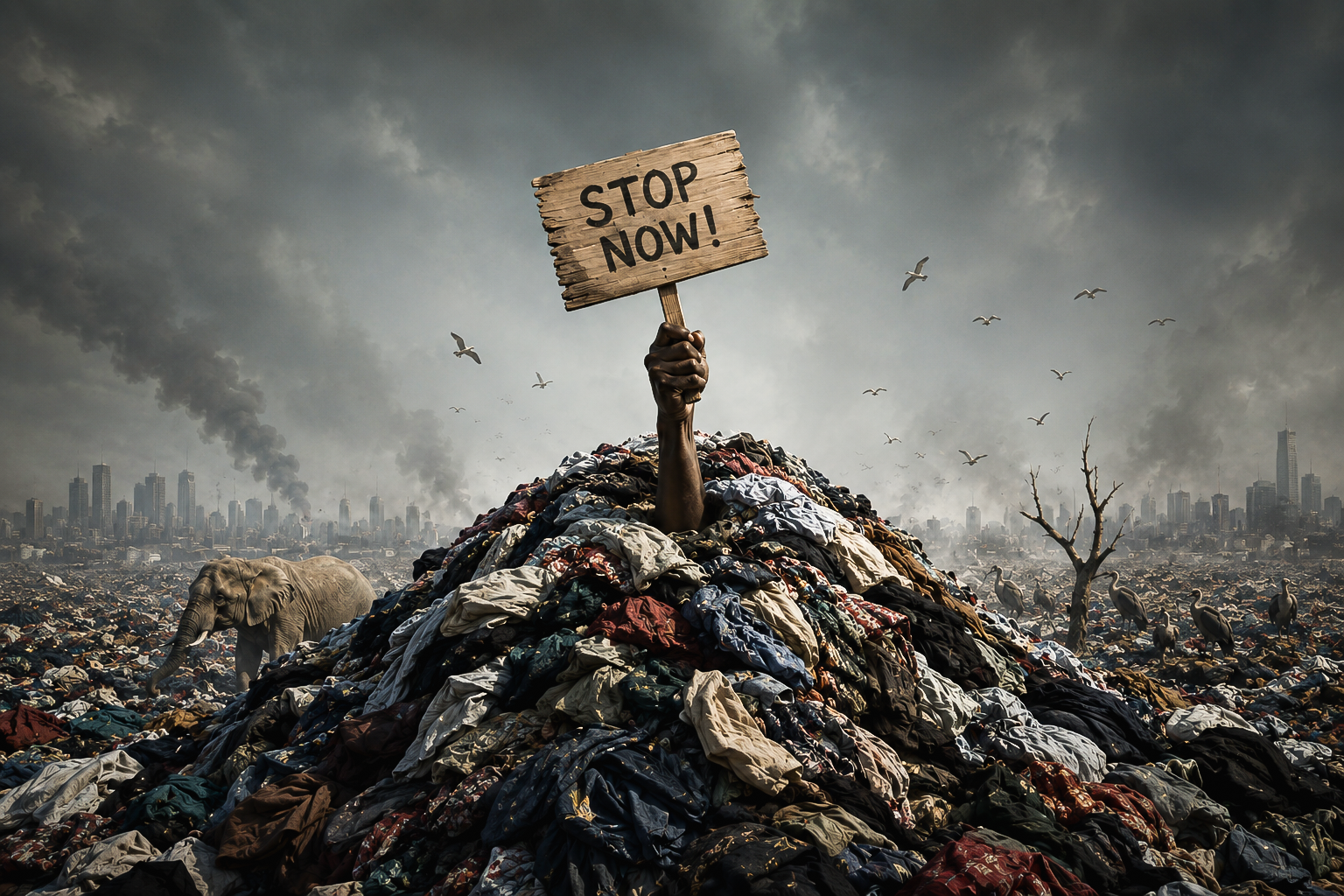
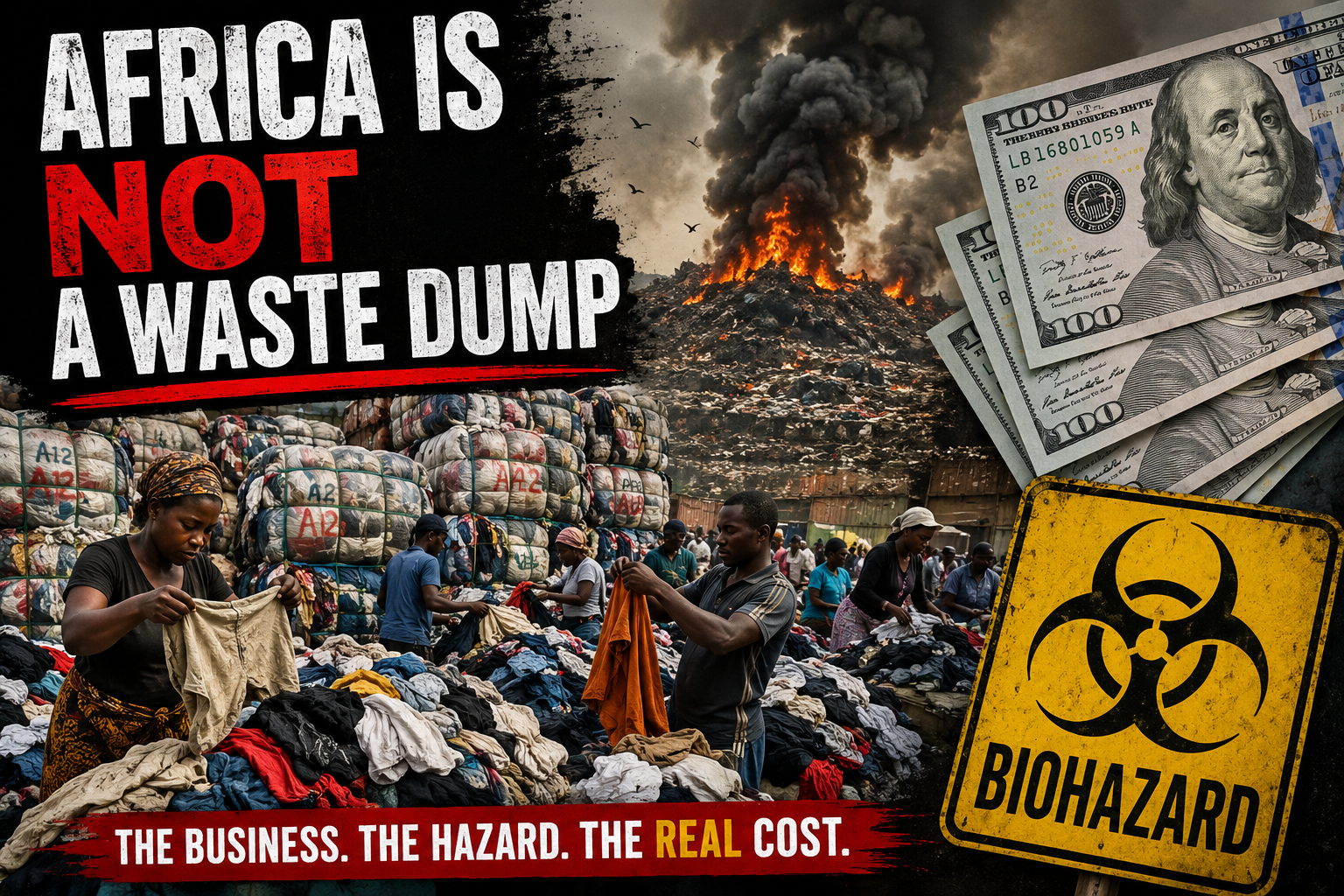
Kenya alone imported around $200 million worth of used clothing in 2023, while Ghana receives an estimated 15 million garments every week. Research suggests that up to 40% of these items are unsellable waste, and where do they end up? Beaches, rivers, and landfills where they are burnt, releasing toxic fumes into the atmosphere. This is not just a case of importation of used clothes into Africa; it’s a 5.6-billion-dollar global distribution machine whose effects is both positive and negative.
Across the continent, these clothes go by different names. In East Africa—Kenya, Uganda, and Tanzania—they are known as mitumba, a Swahili word meaning “bundles.” In Ghana, it is commonly called the secondhand or bale trade, while in Nigeria, terms like okrika or bend down boutique are popular.
Most of these garments originate from the United States, the United Kingdom, Europe, and increasingly, China. They begin as donations—clothes given to charities with the assumption of reuse. Yet only a small portion is resold locally in those countries. What may appear charitable on the surface is, in reality, a multi-billion-dollar global industry, estimated at around 5.6 billion dollars.
On the African side, the trade is built on uncertainty. Traders purchase tightly packed bales without knowing exactly what is inside. Some bundles yield high-quality, fashionable items that sell quickly; others contain damaged or unusable clothing, resulting in losses.
Despite these challenges, the industry sustains millions of livelihoods. In exporting countries, it provides jobs for charity workers, warehouse sorters, textile graders, logistics providers, and recycling firms. Across Africa, it supports an even broader ecosystem—importers, wholesalers, market traders, street vendors, tailors, laundry workers, and upcyclers who creatively repurpose discarded pieces. In Kenya alone, roughly two million people depend on this sector for survival.
Yet beneath this economic lifeline lie deeper concerns. Beyond health and environmental concerns, there is a more difficult, often unspoken issue—the question of dignity. What does it mean for a society to rely heavily on clothing once worn, used, and discarded by others? What does it mean for our African women to be wearing imported used underwears? And is Africa at risk of some biowarfare using these clothes as carriers?
While there is no concrete evidence that imported used clothing today is used as a biological weapon, the question itself reveals a broader anxiety about safety, transparency, and control over what enters African markets.
While this trade provides affordable clothing to millions, supports informal economies, and offers access to global fashion trends that would otherwise be out of reach for many, these gains come at a cost. The influx of secondhand clothing has contributed to the collapse of local textile industries, weakened domestic manufacturing, and created a dependency on imports. Local producers struggle to compete with the low prices of used garments, leading to job losses and suppressed growth in the sector.
Environmentally, the impact is severe.
In the end, the story of imported used clothes in Africa is not a simple one. It is a complex system—one that feeds millions, clothes millions, but also burdens millions. It raises critical questions about global inequality, sustainability, and the future of African industry.
My five concerns
- What about the Dignity of Africans, especially our women? And why are women reps of African countries not making a move? Should Africans be subject to such humiliation of using imported used clothes because they are left with not so many options?
- What about Environmental effects: With 20% to 40% of imported clothing ending up as waste, African countries are left to manage a problem they did not create. These discarded textiles clog landfills, pollute rivers, and are often burned, releasing harmful toxins into the air. When you wash 1.5 billion pounds of clothes loaded with preservatives and toxic chemicals, where do you pour that water? In the very soil where we make our food and where we get our drinking water. Think about that. And besides, what kind of economic gamble are Africans taking when they buy bales of clothes with no prior knowledge of whether what is inside those bales is sellable or not? It’s like the Visa gamble that Africans go through in the hands of Western nations. Close to 70% of visa applications of Africans are rejected, and the visa fees are never refunded. Should we call that diplomatic stealing or robbery by the book?
- Can we think about the issue of biowarfare: One of the most noticeable features of imported used clothes is their distinctive smell—an odor familiar across African markets. This scent is not accidental; it comes from a mix of industrial disinfectants, formaldehyde-based preservatives used to prevent mold, pesticides applied during shipping, and the effects of long-term compression in tightly sealed bales. While these chemicals serve logistical purposes, they raise important health questions. If not properly cleaned, these clothes can carry fungal infections. Chemical residues may cause skin irritation, and the burning of textile waste releases toxic fumes into the environment. Synthetic fabrics contribute to microplastic pollution, adding another layer to an already growing ecological crisis.
- What about the killing of textile industries in Africa? President Kagame of Rwanda effectively banned the importation of used clothing in 2018 by drastically increasing tariffs to make them prohibitive, aiming to boost the local textile industry. In response, the US government, following a complaint from the Secondary Materials and Recycled Textiles Association (SMART), suspended Rwanda’s duty-free privileges for apparel exports under the African Growth and Opportunity Act (AGOA) in June 2018. In 2016, the East African Community (EAC) agreed to ban used clothes, but after US pressure, only Rwanda followed through, increasing import duties to per kilogram. The US responded by announcing a 60-day notice in March 2018, which led to the suspension of Rwanda’s AGOA benefits for apparel. President Paul Kagame did not backtrack, stating the ban was necessary for Rwanda’s dignity and industrialization (part of the “Made in Rwanda” initiative). While other EAC nations backed down to retain US market access, Rwanda accepted the loss of duty-free status (which affected roughly ($43) million in exports in 2016) to promote its own manufacturing sector.
- The issue of fast life: Our planet is in a mess because we want everything fast. We created fast food because we want food without going through the process of cooking. We created GMO crops because we want our farms to produce faster. And because we cannot satisfy our hunger for consumerism, we created fast fashion, and we are fast becoming a people who cry over climate change, but we don’t change our appetite for foolishness.
What Africa are we creating for our young people? By 2050, one out of every four young people in the world will be an African youth. We have to make policies that prioritize the health and wealth of Africans at all costs.