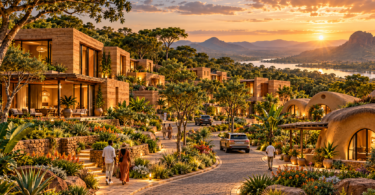


Why Ancient African Building Wisdom Is Becoming the Future of Sustainable Construction
For decades, concrete, steel, and glass have dominated conversations about modern architecture. Across Africa, towering cement structures became symbols of development and progress, while traditional building methods were often dismissed as relics of the past. Today, that perception is rapidly changing.
As climate concerns intensify and the search for sustainable construction solutions accelerates, architects, engineers, and environmentalists are rediscovering a material that has existed for thousands of years: earth.
Among natural building methods, rammed earth has emerged as one of the most exciting and visually striking techniques. So compelling is its appeal that I refer to it as the “golden boy” of natural building.
Ugandan sustainable construction expert John Lee Sekitoleko shared with me in an episode of The Bridge Podcast that the growing global interest in rammed earth is not the emergence of a new technology. Rather, it is humanity returning to a wisdom that never truly disappeared.
Why the World Is Returning to Natural Buildings
When asked what is driving the new global push toward natural building, Sekitoleko points to three factors above all others: climate change, the rising cost of modern building method, and the need to build sustainably.
“The major factor that is playing this role is the conversation around climate change,” he explains.
Around the world, governments, institutions, and industries are searching for ways to reduce carbon emissions and create more environmentally responsible infrastructure. Construction has become a major focus because conventional building materials—particularly cement—are responsible for significant greenhouse gas emissions.
Natural building methods offer an alternative. But in m view, what is better should not be called alternative, it should be the real thing.
However, Sekitoleko emphasizes that these techniques are not new inventions. They are ancient systems that modern society is only now beginning to appreciate again.
Historic examples can be found everywhere. The old quarters of Zanzibar were built primarily from natural materials. Many of the world’s oldest structures were created using earth, stone, lime, and other locally sourced resources.
Even across Africa, traditional communities built homes using mud, earth, grass, timber, and other natural materials long before industrial construction methods arrived. Fort Jesus in old town Mombasa was built more than five hundred years ago and it is still standing as a tourist destination. It was built with limestone, rocks, wood, sea shells, and jaggary as binder.
According to Sekitoleko, the world is revisiting these approaches because people are increasingly asking an important question:
Why did previous generations often live in closer harmony with nature and create buildings that remained comfortable without consuming vast amounts of energy?
The search for answers is leading many architects back to indigenous building knowledge.
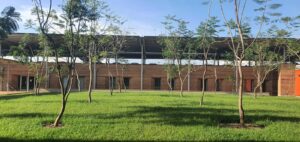
Made with Rammed Earth. Entebbe children surgical hospital Entebbe Uganda.
What Makes Rammed Earth Different?
Rammed earth differs significantly from traditional mud construction.
In conventional earthen building, wet soil mixtures are molded or packed into forms to create walls. Rammed earth, by contrast, uses engineered techniques that compact carefully prepared soil mixtures within formwork, producing dense, durable walls with remarkable strength and longevity.
The result is a building material that combines ancient wisdom with modern engineering.
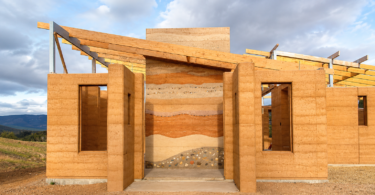
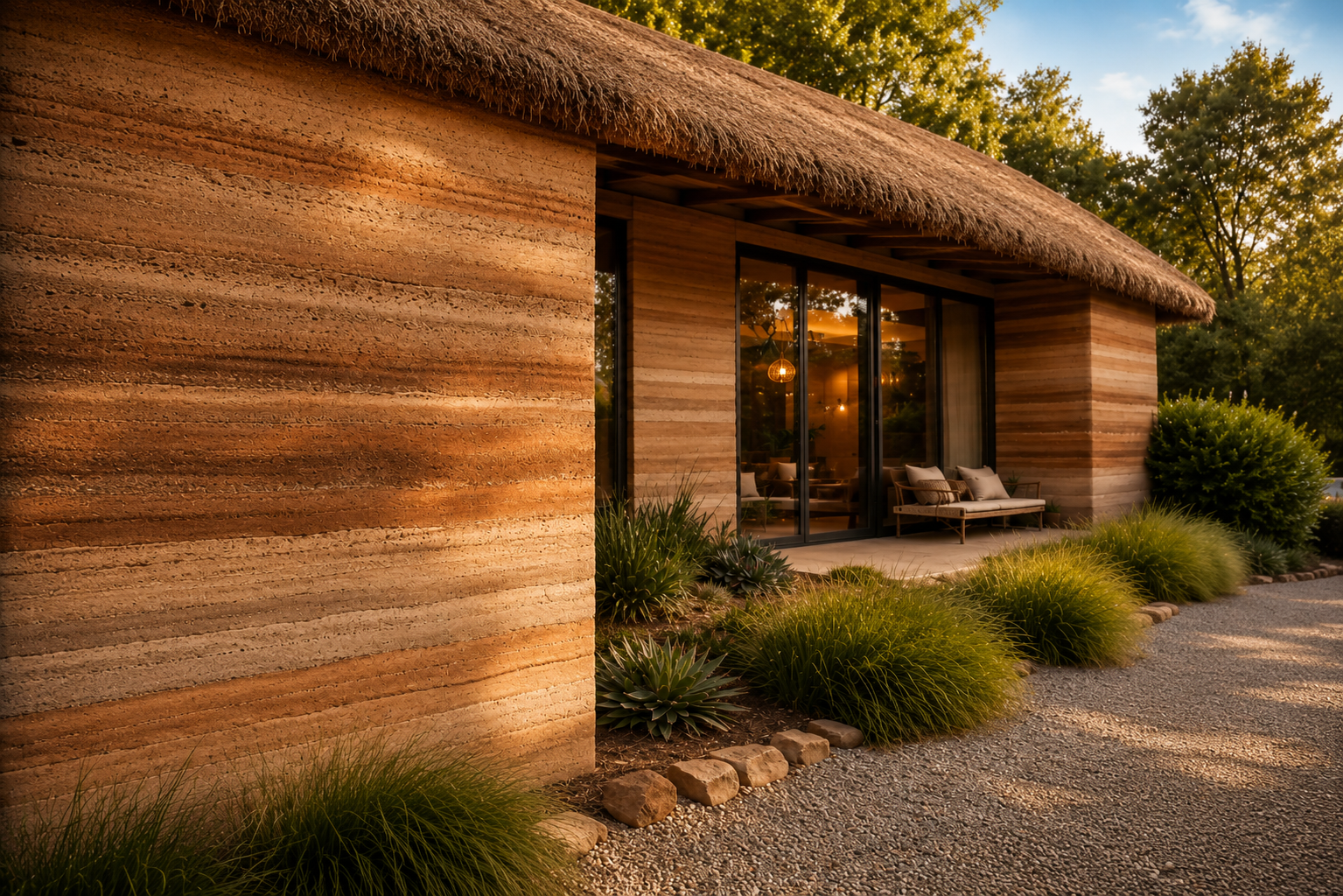
Rammed earth walls reveal beautiful horizontal layers of earth, creating natural patterns and textures that cannot be replicated by industrial materials.
Every wall becomes a work of art.
Beyond aesthetics, rammed earth delivers exceptional thermal performance. During hot weather, interiors remain cool. During cold conditions, interiors stay warm. The walls effectively regulate indoor temperatures, reducing dependence on mechanical heating and cooling systems.
For this reason, rammed earth buildings are often described as “breathable.”
Indigenous Principles Every Natural Builder Must Understand
One of the most important discussions in the interview centered on the indigenous principles and design considerations that people should understand before beginning a natural building project.
Sekitoleko emphasized that successful rammed earth construction requires much more than simply compacting soil.
- Respect the Material
The first principle is understanding the material itself.
Natural building begins with a deep appreciation of local soils and their properties. Builders must carefully evaluate available earth materials, understand soil composition, and conduct appropriate tests before construction begins.
Unlike temporary mud structures, rammed earth buildings are intended to be permanent. This demands a scientific approach to material selection.
- Design Specifically for Rammed Earth
According to Sekitoleko, many design failures occur because people attempt to force conventional designs onto natural materials.
Rammed earth requires its own architectural language.
Wall thickness is particularly important. He recommends walls generally ranging between 250 mm and 450 mm depending on structural requirements.
The design team must understand how rammed earth behaves structurally and aesthetically before construction starts.
- Prioritize Proper Compaction
Compaction is at the heart of rammed earth construction.
The process of ramming must be thorough and consistent to achieve the required wall density and strength.
Whether performed manually or with pneumatic equipment, proper compaction ensures structural integrity and durability.
Inadequate compaction compromises performance and undermines the advantages of the system.
- Build With the Landscape
Traditional African builders rarely worked against nature.
Instead, they built with it.
Sekitoleko stresses the importance of designing structures that visually and environmentally integrate with their surroundings. The colors, textures, and materials of rammed earth naturally reflect the landscape from which they originate.
This creates buildings that feel rooted in place rather than imposed upon it.
- Use Local Materials Whenever Possible
One of the strongest indigenous principles is reliance on local resources.
Rammed earth allows builders to utilize soil excavated directly from construction sites. In many cases, the primary building material is literally beneath one’s feet.
This reduces transportation costs, lowers environmental impact, and strengthens community participation.
As Sekitoleko explains, in some projects almost everything required for construction can be sourced directly from the land itself.
- Understand Stabilization
Not every rammed earth project requires the same mixture.
Smaller projects may use pure earth without stabilizers. Larger or more demanding structures often require modest amounts of cement or lime to improve performance.
Importantly, stabilization should be approached thoughtfully rather than automatically.
The goal is to preserve the environmental benefits of earth construction while ensuring durability and safety.
- Integrate Traditional Knowledge With Modern Engineering
Perhaps the most important principle is recognizing that traditional and modern systems must work together.
Sekitoleko notes that rammed earth walls still require well-designed foundations. Traditional materials cannot simply replace engineering; they must be integrated into sound structural systems.
The future of sustainable architecture lies not in rejecting modern knowledge but in combining it with indigenous wisdom.
Scalability: Can Rammed Earth Build Africa’s Future?
One of the most common criticisms directed at natural building concerns scalability.
Can rammed earth accommodate Africa’s growing housing demand? Sekitoleko believes the answer is yes.
He points to projects already being developed with multiple stories, including three-story rammed earth buildings. Because rammed earth walls are exceptionally strong and load-bearing, they can support substantial structures when properly designed.
At the same time, the technique often reduces overall construction costs because walls serve as both structure and finish.
There is no need for extensive plastering, painting, or decorative treatments. The finished wall is the final product. And just like a good work of art, rammed earth requires a clear picture of the end even before the foundation is laid.
This efficiency makes rammed earth increasingly attractive for affordable and sustainable housing developments.
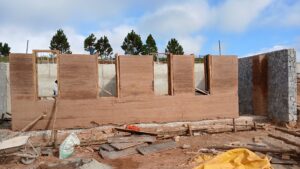
Rammed earth building under construction
Changing Perceptions
Despite its advantages, rammed earth still faces a cultural challenge.
Many people continue to associate earth construction with poverty while viewing concrete as a symbol of success.
Sekitoleko believes this perception must change. He believes the issue is not the material itself but how it has been presented.
Concrete was successfully marketed as modern. Natural building must now be communicated in a way that helps people recognize its beauty, performance, and environmental value.
As more high-quality projects emerge, public attitudes are beginning to shift.
The Future Is Beneath Our Feet
Perhaps the greatest lesson from the renewed interest in rammed earth is that innovation does not always mean inventing something new.
Sometimes innovation means rediscovering what was forgotten.
The growing movement toward natural building reflects a broader realization that many traditional African construction practices were not primitive at all. They were sophisticated responses to climate, ecology, and human well-being.
And in my view, natural buildings are not some backward knowledge that we need to go back and learn. No. Natural buildng methods went ahead of us and modernity is just catching up now.
As the world searches for solutions to climate change and sustainable housing, the answers may already exist in the soils beneath our feet.
Rammed earth—the golden boy of natural building—is proving that the future of architecture may be rooted in the wisdom of the past.