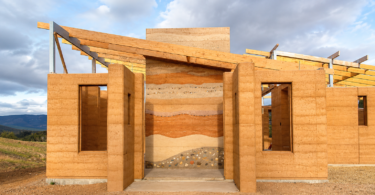

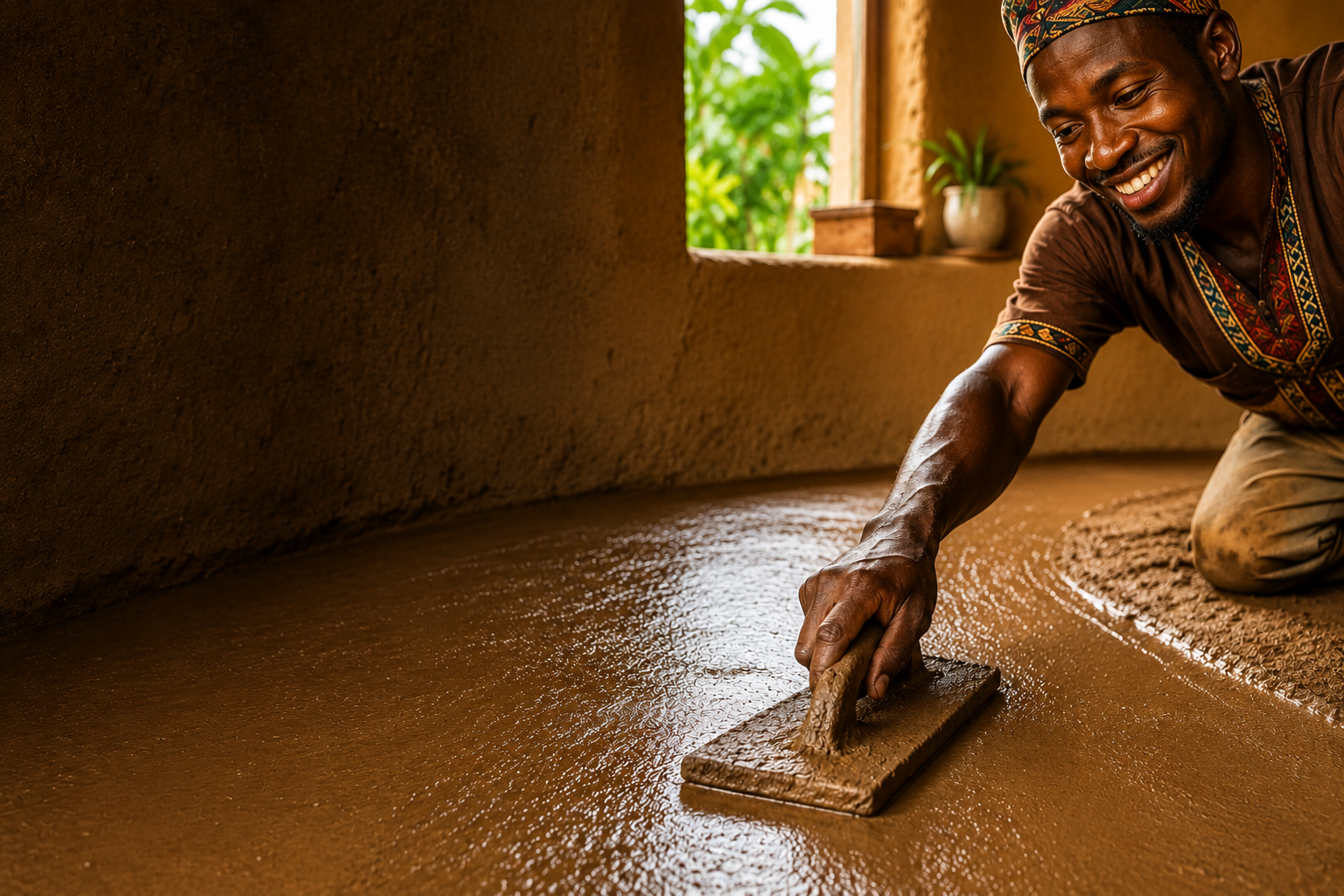

One of the most important parts of natural buildings that we don’t often talk about, like we should, is the floor. We often talk about the building itself, the roofing, the design, and everything else.
Traditional African natural flooring styles are deeply rooted in sustainability, utilizing readily available materials like earth, animal byproducts, and indigenous hardwoods to create durable, climate-appropriate surfaces.
Here are the primary traditional African natural flooring styles:
- Cow Dung and Clay Flooring
- Earthen/Mud Floors
- Traditional Polished Lime (Neeru) Floors
- Indigenous Hardwood Flooring
- Stone and Pebble Paving
- Thatch/Woven Floor Mats (Ukhukho)
Natural floors in traditional African buildings offer significant health benefits, including antiseptic properties that “sterilize” living spaces, pest repulsion, and thermal regulation. These floors provide natural cooling in hot weather and warmth at night, while being eco-friendly and easily maintained, creating comfortable and hygienic indoor environments.
Various parts of Africa use different flooring methods, but in this article, I will be talking about the Earth Flooring or Mud Flooring
Also, the Masai of Kenya use cow dung for smearing their floors. It’s like refreshing your floor with cement plaster. But their reason is definitely healthier than that of using cement.
What is earth flooring?
Earth flooring (or an earthen floor) is a sustainable, natural floor made from a carefully measured blend of clay, sand, gravel, and finely chopped straw. Troweled into place like concrete, it cures into a hard, breathable, and leathery surface that retains warmth and provides a rustic, organic aesthetic.
How It’s Built
Earthen floors are typically installed in a layered system over a stabilized subfloor.
- The Base: A compacted gravel layer is laid for drainage, followed by an insulating layer of straw-clay.
- The Core: A thicker mixture (often called cob) containing larger aggregate and rocks is applied.
- The Finish: A refined paste of clay, sand, and fibers is poured or troweled over the top, then smoothed.
- The Seal: Once fully dry, the floor is saturated with natural drying oils (such as linseed oil) and sealed with beeswax to make it water-resistant and easy to clean
Benefits of Earth flooring
- Cow Dung Antiseptic and Antibacterial Properties: Cow dung mixed with mud creates a tough, smooth, and antibacterial layer. that acts as a hygienic, antiseptic barrier. Antiseptic simply means anti-infection, or prevents infection.
- Natural Insect Repellent: The flooring acts as a pest repellent, keeping floors free from termites and reducing insects like flies.
- Thermal Comfort: The mixture of earth and manure offers natural thermal insulation, keeping houses cool in hot weather and warm during cold nights.
- Maintenance & Hygiene: These floors are easily maintained by re-plastering, maintaining a dry, sterile, and comfortable, dust-free environment.
- Environmental & Cultural Sustainability: Using local natural materials reduces carbon footprints and ensures sustainable, cost-effective, and safe building practices.
- There is also the concept of grounding that sheds static electricity from the body by walking barefoot outside or something like. Earth flooring within the house allows that to happen naturally, even without going out. Also called “vitamin G” or electronic nutrition, it involves direct skin contact with soil, grass, sand, or water. Proponents believe the Earth has a negative electrical charge, and when touched directly, it allows the body to absorb electrons, neutralizing free radicals and reducing inflammation.
Depending on what the owner of the earth building wants, natural oils are also used to seal the mud or earth floors. The Masai are known to use cow dung for floor smearing.
Benefits of using Natural oils for flooring
Using natural, polymerizing oils (such as linseed or tung oil) to seal earth floors transforms a soft clay-sand mix into a durable, leathery, and water-resistant surface. These oils are favored for their ability to harden over time, enhancing the floor’s strength while maintaining a breathable and eco-friendly home environment.
Key Benefits of Natural Oils for Earth Floors
- Significant Hardening and Durability: Linseed and tung oils are hardening oils that polymerize—linking long-chain molecules upon exposure to oxygen—to create a solid, leathery, and high-strength finish that prevents the clay from being easily damaged or dented.
- Waterproofing and Stain Resistance: Properly oiled earthen floors become water-resistant, allowing liquids to bead up on the surface. This makes them suitable for high-traffic areas and kitchens, enabling them to be mop-cleaned without damage.
- Non-Toxic and Eco-Friendly: Unlike synthetic sealers, natural oils contain little to no volatile organic compounds (VOCs). This ensures better indoor air quality and a safe, non-toxic environment for families and pets.
- Breathability: Natural oils allow the earthen floor to “breathe,” which is crucial for managing humidity and moisture within the floor structure, reducing the risk of trapped dampness.
- Easy Maintenance and Repair: Oiled floors are easily maintained. Minor dents or scratches can be repaired by mixing new clay with oil and blending it into the damaged area, which then cures to match the surrounding floor.
- Enhanced Aesthetics: Natural oils deepen the color of the earth, producing a rich brown hue and a warm, matte to satin finish that feels comfortable underfoot.
- Anti-Dusting: The oil seals the fine particles of the clay-sand mixture, preventing the floor from creating dust.
Most Common Natural Oils Used
- Linseed Oil: The most common choice; it penetrates deeply to provide a durable seal.
- Tung Oil: Known for its high strength, it creates a very hard, water-resistant surface, though it can be more expensive.
- Citrus Solvent: Often mixed with oils to help them penetrate deeper, especially in the first few coats.
Important Tips for Application
- Ensure 100% Dryness: The earthen floor must be completely dry before oiling to avoid trapping moisture, which can cause future issues.
- Multiple Coats: Typically, 4 to 6 coats of oil are applied to reach full saturation, with the first coats heavily thinned.
- Safety Note: Oily rags can be flammable; they should be allowed to dry in a safe, open space to prevent spontaneous combustion.
These practices, which are common in many rural African communities, highlight the efficient use of local natural resources to improve indoor health.
Watch the full documentary on YouTube: