

Across Africa, traditional architecture has never been merely about shelter. Every shape, material, orientation, and design choice carried meaning. Long before the arrival of modern housing styles with their square rooms, sharp corners, and concrete walls, African communities built homes that reflected their understanding of life, spirituality, family, and the universe itself.
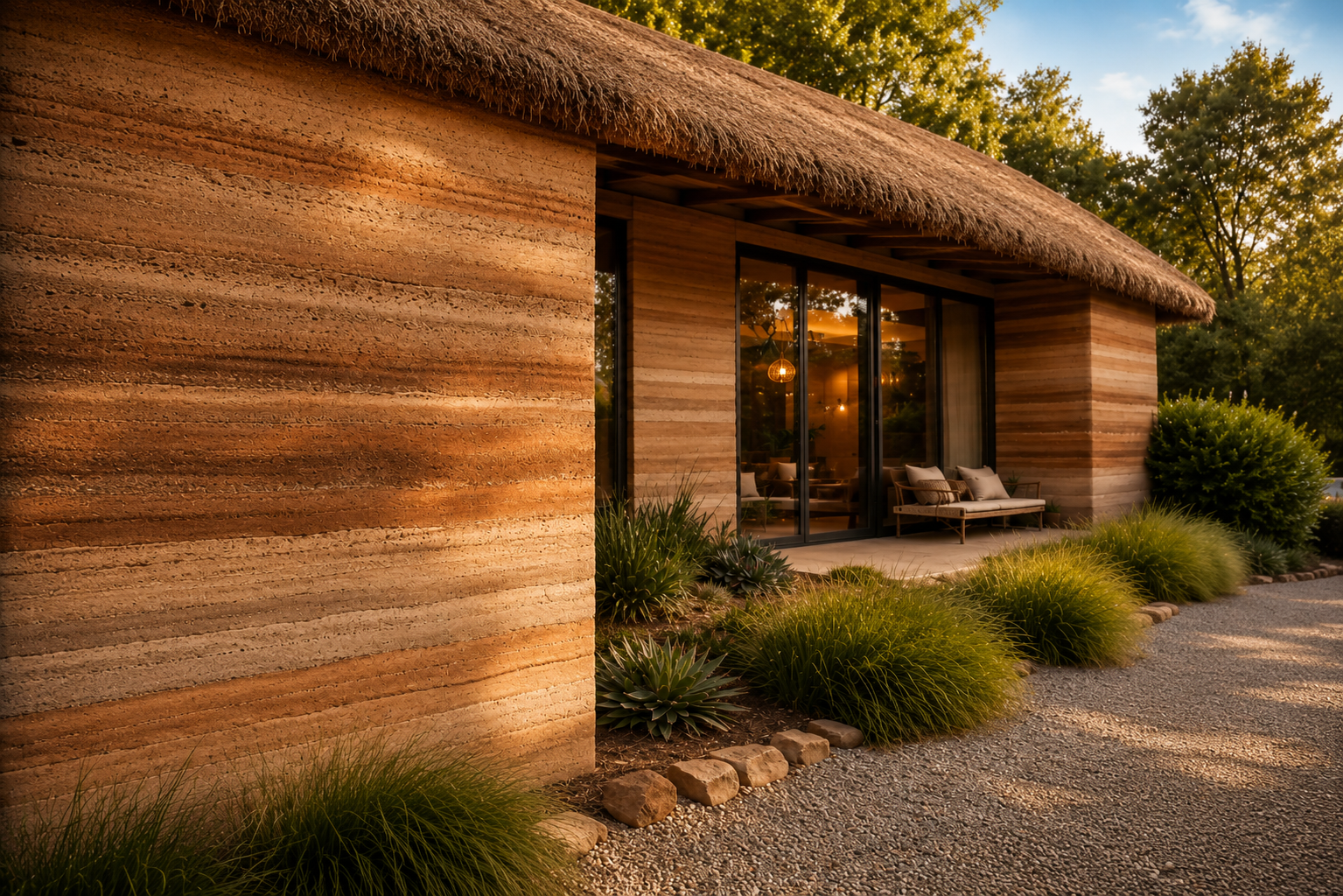
Among the most recognizable of these structures are the circular natural buildings commonly known as rondavels, or round huts. Found in various forms across Southern, Eastern, Central, and Western Africa, these buildings were constructed from locally available materials such as earth, clay, stone, timber, and thatch. To the modern observer, they may appear simple. Yet beneath their apparent simplicity lies a sophisticated worldview that connected architecture with community, spirituality, environmental harmony, and the very essence of being human.
Today, as Africa rapidly urbanizes and modern construction increasingly dominates the landscape, there is a growing need to revisit the deeper wisdom embedded within these traditional structures. The round house was never just a building. It was a philosophy made visible.
Architecture as a Reflection of Life
In many African societies, the circle symbolizes completeness, wholeness, continuity, and interconnectedness. Unlike a straight line, which begins and ends, a circle has no visible beginning and no ending. It represents the endless cycle of life, birth, death, renewal, and continuity.
This understanding shaped not only African spirituality but also African architecture.
The circular home became a physical expression of how communities understood themselves and their place within creation. The structure reminded people that life is not a collection of isolated individuals competing against one another. Rather, life is a continuous circle in which every person is connected to family, community, ancestors, nature, and the Creator.
The shape itself communicated a profound message: what affects one affects all.
This worldview aligns closely with the African philosophy of Ubuntu, often summarized as, “I am because you are.” In this understanding, individual fulfillment cannot be separated from communal well-being. The health of the community determines the health of the individual.
The circular house embodied this philosophy long before it was ever written down.
A Symbol of Unity and Equality
One of the most significant meanings associated with circular buildings is their symbolism of equality.
In a rectangular room, there is often a head of the table. Certain positions appear more important than others. Hierarchies become visually reinforced by the arrangement of space.
A circle changes that dynamic completely.
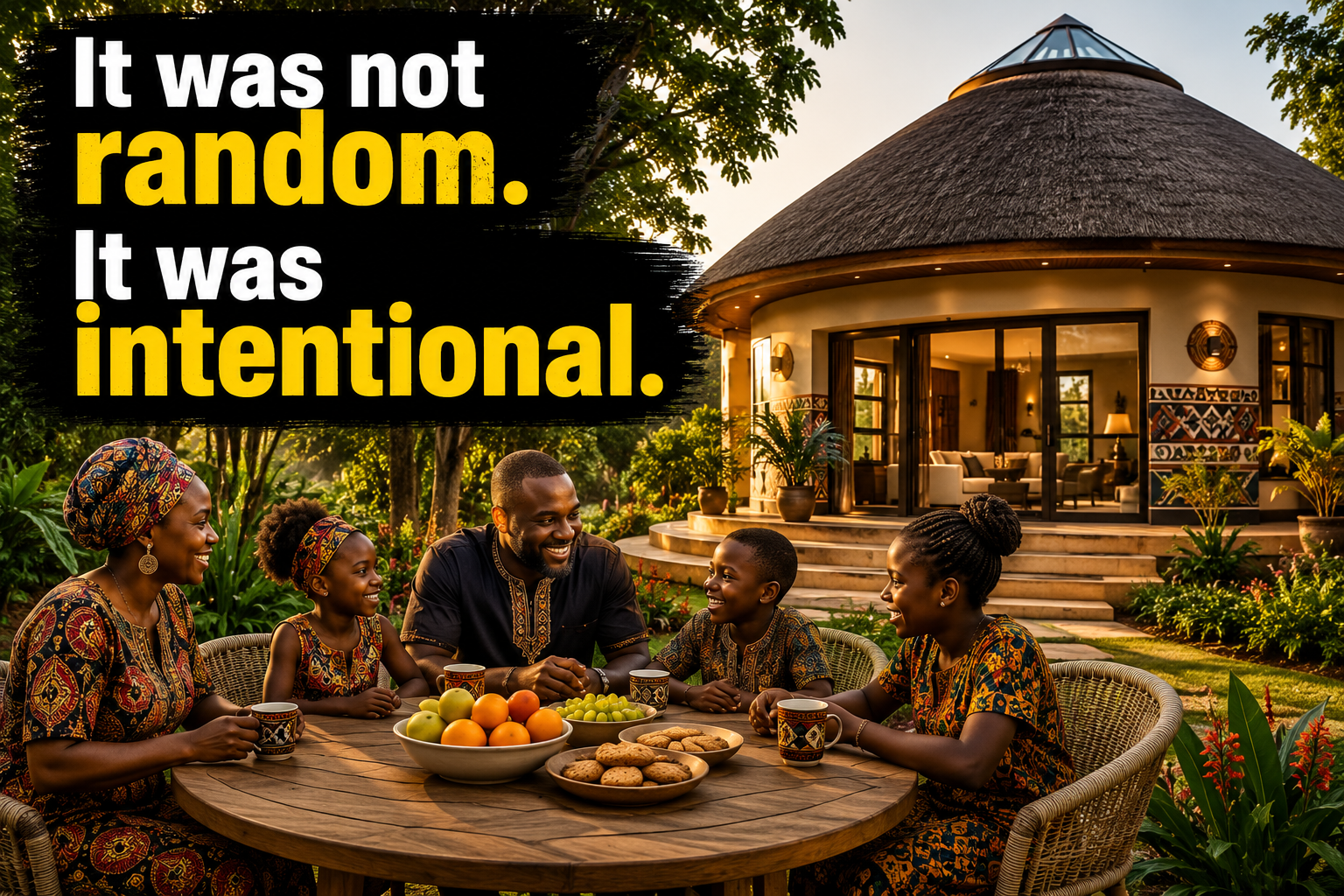
When people gather in a circular space, everyone occupies an equal position. No one sits at the head. No one dominates the conversation by virtue of where they are seated. Every person can see every other person. The architecture itself encourages participation, dialogue, and mutual recognition.
This design principle reflects a deeper cultural value. Traditional African communities understood that social cohesion depends upon people being able to see one another, listen to one another, and engage with one another as human beings rather than as strangers.
In many modern homes, family members may spend entire days isolated in separate rooms, connected digitally but disconnected relationally. The circular house encouraged the opposite. It naturally drew people together around a common center—often a fire—where stories were shared, wisdom was transmitted, and relationships were nurtured.
The building itself became a teacher of community.
The Spiritual Meaning of the Circle
The late South African scholar Dr. Bhengu Imfuniselwa offered one of the most profound explanations of the significance of the circle in African spirituality.
According to Dr. Bhengu, the image of the circle permeates every aspect of traditional African life because it symbolizes completeness, fullness, unity, and the source of all existence.
He described the circle as representing the primal source of energy and wisdom—the Creator from whom all life emerges and through whom new possibilities continue to arise.
This understanding helps explain why so many aspects of traditional African culture follow circular forms.
Homes are circular. Ceremonies are often conducted in circles. Communal gatherings frequently take place in circles. Traditional dances often move in circular patterns. Initiation rites involve circular spaces. Even social interactions often reflect the symbolism of interconnectedness represented by the circle.
For Dr. Bhengu, these were not random cultural preferences. They were expressions of a spiritual understanding that all life originates from, participates in, and returns to a greater unity.
The circle therefore became a visible reminder of humanity’s connection to both the Creator and creation.
The Rondavel as a Sacred Space
Dr. Bhengu further argued that the shape of the rondavel carries deep spiritual significance.
The rondavel symbolizes the origin of creation, the unity of life, safety, and fullness. It aligns the household with a larger cosmic order and reflects humanity’s relationship with the divine.
In this sense, the home becomes more than a private dwelling. It becomes a sacred space.
The walls do not simply protect people from rain and wind. They also remind those who live within them that life itself is sacred.
Every time a person entered the circular home, they entered a space that reflected deeper truths about existence, belonging, and interconnectedness.
The architecture continually reinforced cultural values without requiring formal instruction.
The building itself taught the lesson.
The Concept of Sawubona: Seeing Beyond Appearances
One of the most powerful ideas connected to the symbolism of circular spaces is the Southern African concept of Sawubona, meaning “I see you.”
At first glance, the phrase appears to be a simple greeting. Yet its meaning goes far deeper.
Sawubona is not merely an acknowledgment of physical presence. It is an invitation to recognize the full humanity of another person.
It means seeing beyond appearances. Seeing beyond status.
Seeing the deeper reality of another human being, beyond masks and social performances.
The circular house physically supports this philosophy.
Within a circular space, there are fewer opportunities to hide. Everyone faces one another. Everyone becomes visible.
The symbolism extends beyond architecture and into human relationships. Just as a round house contains no hidden corners, a healthy community should contain no hidden barriers between people.
The goal is not merely proximity but genuine recognition.
In a world where loneliness, anxiety, and social fragmentation are increasingly common, the wisdom of Sawubona carries renewed importance. Many people today are surrounded by others yet remain unseen.
Traditional African architecture reminds us that true community begins when we learn to see one another fully.
Protection from Evil and Hidden Intentions
In many African traditions, circular homes are believed to offer spiritual protection because evil spirits are thought to hide in dark corners. While modern readers may interpret this symbolically rather than literally, the underlying wisdom remains powerful.
Corners create places where things can be concealed. The circle eliminates hidden spaces.
Metaphorically, this principle extends to human behavior or the human heart.
A community built on openness leaves less room for hidden agendas, resentment, division, and deception. The circular house becomes a reminder that healthy relationships require transparency, honesty, and self-reflection. The symbolism encourages individuals to examine their own hearts as carefully as they examine the spaces around them.
Harmony with Nature
Traditional African architecture also reflects a remarkable understanding of environmental design. Round houses are naturally aerodynamic. Strong winds move around them rather than striking flat walls directly. Their conical thatched roofs efficiently shed rainwater and provide excellent weather protection.
The thick earth walls regulate temperature naturally, keeping interiors cool during hot days and warm during cold nights.
These structures were designed to cooperate with nature rather than dominate it.
This philosophy stands in contrast to many modern building approaches that attempt to impose rigid designs upon the environment regardless of local conditions.
Traditional builders understood that true sustainability emerges from working with nature.
The round house, therefore, represents not only cultural wisdom but ecological wisdom as well.
Respect, Humility, and the Low Doorway
Many traditional African homes feature low entrances that require visitors to bow as they enter.
This practical design also carries profound symbolic meaning.
The act of bowing becomes an expression of humility and respect.
It reminds visitors that they are entering a space that belongs to others and that they should do so with honor.
The gesture acknowledges the dignity of the household, its ancestors, its traditions, and its values.
In a broader sense, the doorway teaches an important lesson about human relationships.
Respect must precede meaningful connection. One cannot enter another person’s space—physical, emotional, or cultural—without humility.
Conclusion
The circular natural buildings of Africa are far more than relics of a bygone era. They are repositories of cultural memory, spiritual insight, and social wisdom.
As Dr. Bhengu Imfuniselwa observed, the circle symbolizes life, completeness, unity, and humanity’s relationship with the Creator. The rondavel, therefore, becomes more than a shelter. It becomes a living expression of African philosophy.
Its shape teaches Ubuntu. Its openness reflects Sawubona. Its design promotes equality. Its structure encourages community. Its symbolism reminds us that life is interconnected.
In a rapidly changing world, these traditional buildings invite us to look beyond architecture and rediscover the values they represent. The true significance of the African round house is not found only in its walls or roof, but in the vision of humanity it embodies—a vision in which every person belongs, every voice matters, and life itself is understood as an unbroken circle connecting us all.
Watch the video via the link below: