Africans: Who and what are we building?
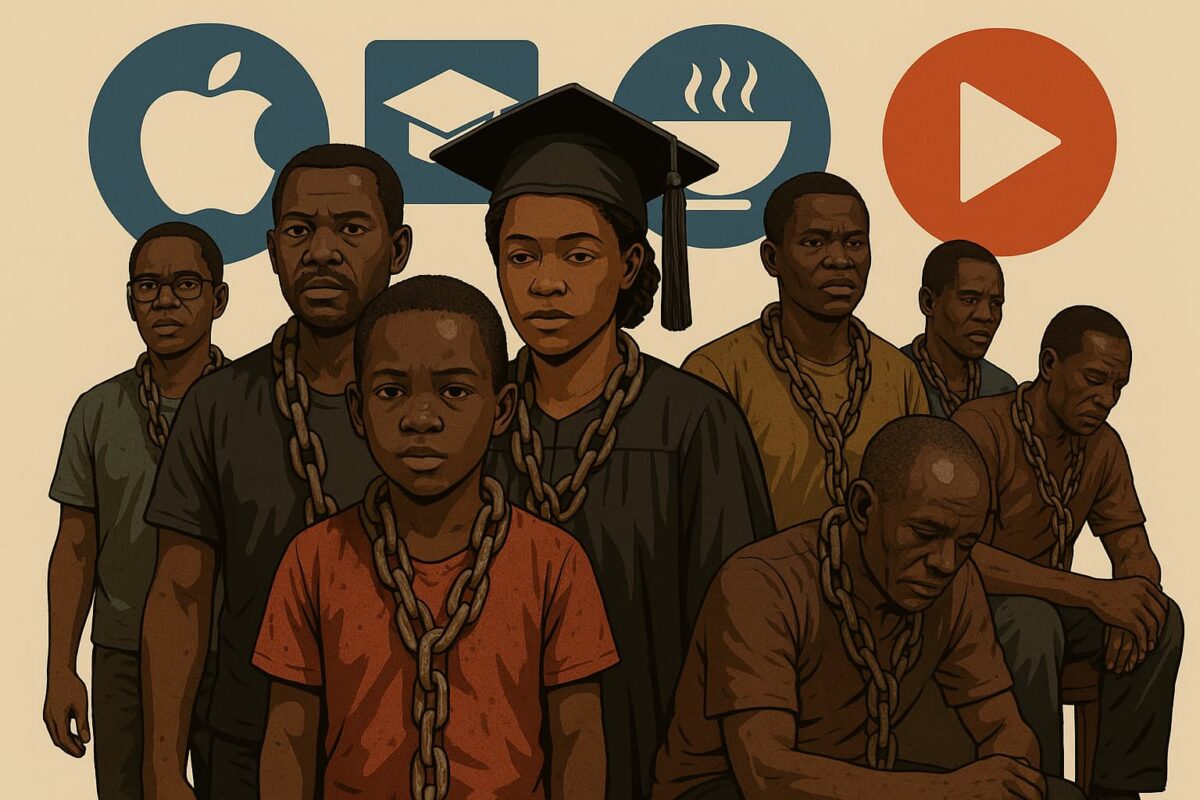
“Fellow South Africans of different demographics, please excuse me for a moment. Let me say this to my people. Us, as a people, must be the only people that measure our success, not by how many successors we create, but by how many failures we see around us. We make money, we move out, and we buy fancy cars. Then every Saturday we go back to the places from which we come. We find our friends who couldn’t make it out. We stand with them at the Shisanyama so that we can show the little we have amassed. And until we create the mindset where we go back to build those who need to be built, we will not create a better South Africa.” Vusi Thembekwayo
Vusi Thembekwayo, a South African public speaker and entrepreneur, has become a major face of change and forward-thinking, not just for South Africa, from where he comes, but for Africa and indeed the globe. I like his depth of thought and the way he carries himself as a true, unapologetic African. If you ask me, no African should live less than that, as a matter of speaking.
Now, I used this statement from Vusi deliberately to start a conversation for my African people, just maybe we can start to see where we keep failing as people who are supposed to be the global head and not the tail we find ourselves struggling to even maintain pace.
Yes, Mr. Vusi’s statement was originally for his South African people, but from what he said, is that not also one of the problems of the entire continent of Africa? Definitely, it is. And if you ask me, I think that, once we are able to narrow down what the similarities of the problems of Africa are, from the perspective of each country state, then proffering a more holistic solution will be easy.
And like I wrote in a recent article published on this website, Africa’s multitude of skilled experts have not been able to proffer solutions to the problems of Africa simply because they spend more of their time and skills working so hard to remove themselves from the queue of those called poor Africans, so they really are not interested in creating solutions for the African people, but just to remove themselves from the queue. But how long will we do that, seeing that we have not gotten anywhere as a people, because we have not allowed ourselves to tell ourselves the truth about how and from where the rain started beating us? In other words, we have more people who are only conscious of their own personal and family success than they even care to think of what’s happening in Africa. And we have seen this over and over again. But one thing such people don’t pay attention to is this: when the world looks at Africa, they do not see the individuals or families in it, that’s way too insignificant; they see a continent of people called Africans. Meaning that, since our problems are similar, definitely, our solutions will likely be in the same boat. But why are we so frail in providing solutions to the African problem, while we get very agile in creating the same solutions to the problems outside of Africa? I still cannot wrap my head around that.
Why don’t Africans support Africans?
Note that by this question, I do not mean that Africans have not been supporting themselves or that there are no Africans who are working together to create solutions for the African people. I mean that there are more cases of Africans destroying Africans than there are those building the continent. And this happens in various ways. Ways like when a state officer, for the sake of his own stomach, allows a particular product that was rejected in Europe because of whatever safety issue or issues it has, in his own country in Africa. Or ways like when someone makes you a huge promise because of the work you do regarding Africa, but doesn’t come true with their promise. This last one may sound like it does not matter much, but it does. And as a media house doing both the magazine and video content for African issues, we have come across a lot of such promises that were never fulfilled, and it breaks the heart and can be quite discouraging. But why does it make for an issue if someone makes a promise and doesn’t keep it? Should it not be on their head? In a simple statement, even though it may make sense not to be bothered about who makes a promise and does not keep it, it actually shows a deeper problem in the African psyche. That Africans are becoming too self-centered and individual success-oriented, that we are forgetting that if all is well with a hundred people among a thousand people, for whom nothing is working, then all is not well with all of the thousand. I will not stretch the issue more than this.
There is a video going around on social media about a boy named Rushawn who did a song about six years ago. The title of the song is “It’s a beautiful day,” which was originally done by Jermaine Edwards. As grace may have it, a guy called The Kifness on Facebook did a remix of that song that Reshawn did six years ago, and boom, it went viral. A month after the song went viral on the internet, The Kifness shared this post on his Facebook page:
“Hi everyone! It’s been a month since I released this video. A lot has happened that I’d like to share.
Rushawn (who is now 17) has been signed to Sony Music alongside Jermaine Edwards who wrote the song. This remix also charted at no. 6 on Spotify’s Global Viral 50 chart, meaning it was the 6th most viral song in the world this week, all thanks to you guys! It still continues to rack up an insane amount of streams every day, so thanks for listening.
I pray God continues to have his hand on Rushawn’s life, and that he may have a long & prosperous career in music through rain & sunshine. Thank you Lord for music, for the message of this song & the power it has to change lives & bring people together.
Rushawn’s now on Instagram, so you can follow his journey there: @rushawn.ewears
Where am I going with all these
There is a lot of miracles and goodness to pull out of the story of Rushawn and the new page that has opened up for his music career, but one thing I really want to point out is the attitude of the man whose remix gave his music the wings to fly. Not Jermaine Edwards, the original writer of the song, even though his part in the entire drama is also important, but the man called The Kifness. His heart of selflessness and an attitude of I am happy for your success just stand out for me like an open heaven of love and maturity. Rushawn is now signed with Sony, which is a big milestone, but The Kifness didn’t in any instance ask anything for himself in all of the good things that have happened to Rushawn, instead, his prayer was that God continues to have his hand on Rushawn’s life and that he may have a long & prosperous career in music through rain & sunshine. Imagine such a heart and selfless attitude for a moment. Interestingly enough, The Kiffness is an artist from Plettenberg Bay, South Africa. Meaning he is an African. But what does that tell you?
We can do well and even better as Africans
I only found out that The Kifness is an African only when I searched for his page to copy the post that I shared in this article.
Here is something I want to talk about, which I have seen almost everywhere. Even though The Kifness is a popular music artist on social media, you won’t necessarily call him a world superstar like you will call others who are doing music on the global stage. But with the little or much that he has gotten for himself in the form of social media followership and the good things that come with it, he has made room for someone else to rise in their own music career. This puts a sign of approval on what Vusi said in his statement, “And until we create the mindset where we go back to build those who need to be built, we will not create a better South Africa”. But in this case, Africa and the world.
If you are not faithful…
Have you ever read this scripture in the Bible in which Christ said, “And if you have not been faithful in what is another man’s, who will give you what is your own? Luke 16:12.
The one thing that caught my attention in this word of scripture is the fact that Christ did not compare faithfulness to someone else’s thing to you getting faithfulness to yours as a reward. No. He says who will give you yours when you have not been faithful to what belongs to others. Meaning that faithfulness to what belongs to others does not just make you a recipient of faithfulness from others, but it opens doors for your own to be given to you.
But what does that even mean in our daily lives?
There are times when we get stuck about what we should do with our lives, or which career to go into or how to increase in our work output. And it’s normal to be in this place. But do you know that the answer to your own personal problem is found in being able to help others get what they need and by that, yours will be provided? This may not sound like a principle of business you learn in business school, but it works. As you wait for your unique door to open, why not help someone else open theirs if you have the means to do so? It’s pretty simple and probably will cost you nothing much.
Imagine the Africa that we will have if we all have The Kifness attitude towards the success of others, expecting nothing in return.