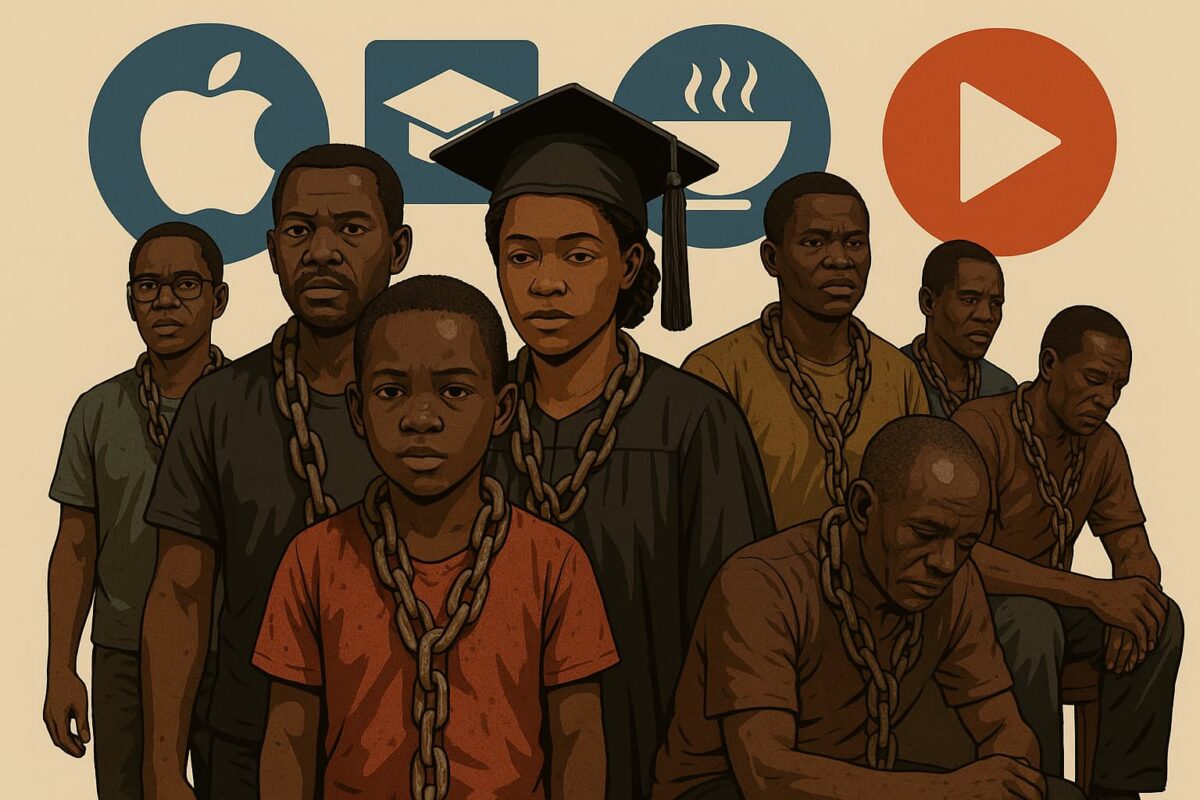
THE COGNITIVE DISSONANCE IN CELEBRATING IMMORAL AWARDEES- A Call to Rethink Our Values
Morality seems to be a word that has lost meaning when you wake up and get a news update, “President Ruto Receives Golden Plate Award for Exemplary Leadership.”
Our society should hold awards in high regard, seeing them as symbols of excellence, achievement, and the contributions individuals or institutions make toward humanity’s betterment. Yet, time and again, we find ourselves confronted with the troubling reality that some of these awards are bestowed upon figures whose actions have caused significant harm, eroded the social fabric, and perpetuated injustices across the globe. The American Achievement Golden Plate Award given to Kenyan President William Ruto and the Nobel Prize in Economics awarded to Milton Friedman are just two examples that illustrate this cognitive dissonance—celebrating individuals whose impact is, at best, morally dubious.
At its core, cognitive dissonance refers to the mental conflict that occurs when a person’s beliefs and actions are at odds with one another What is Cognitive Dissonance? When we glorify those who have promoted harmful policies or actions, we perpetuate this dissonance on a societal level. We cling to the prestige of the award while ignoring the very real consequences of the awardee’s behavior, leading to a dangerous normalization of actions that undermine the well-being of humanity.
The American Achievement Golden Plate Award and Ruto’s Legacy
In December 2022, the American Achievement Golden Plate Award was conferred upon President William Ruto, a decision that raises serious questions about the moral framework that governs such accolades 2022 Summit. Ruto, whose political career has been marred by allegations of corruption, human rights violations, and electoral fraud, represents the very antithesis of what such an honor should signify The Prosecutor v. William Samoei Ruto and Joshua Arap Sang. His presidency has been criticized for deepening divisions within Kenya, exacerbating inequality, and fostering a culture of impunity Why is President Ruto in a row with Kenya’s Judiciary?
How can we reconcile the celebration of a leader whose legacy is tarnished with ethical failings and governance failures? The dissonance becomes evident when we consider that this same award claims to recognize individuals who “inspire others to achieve success.” What success, then, are we celebrating when it comes to Ruto? His achievement in maintaining power despite widespread disapproval, or his ability to sidestep justice in the face of grave accusations? The award, rather than honoring the well-being of a people or advancing social progress, rewards power, regardless of how that power is wielded.
Milton Friedman and the Nobel Prize in Economics: The Dark Legacy of Profit Maximization
The 1976 Nobel Prize in Economics awarded to Milton Friedman exemplifies another egregious case of cognitive dissonance. Friedman, one of the architects of the “Chicago School of Economics,” was a staunch advocate for free markets, unbridled capitalism, and a minimalist role for government. His work shaped economic policies that prioritized profit maximization over social or environmental concerns, fundamentally altering the global economic landscape What is the Friedman Doctrine?
Friedman’s assertion that the sole responsibility of business is to increase profits, irrespective of the social and environmental costs, has had far-reaching and devastating effects. His philosophy laid the groundwork for neoliberal policies that have widened income inequality, eroded public services, and accelerated environmental degradation. The rise of corporate greed, the weakening of labor rights, and the destruction of natural ecosystems can all be traced back, in part, to the ideologies Friedman championed Milton Friedman Was Wrong.
Yet, despite these consequences, Friedman was lauded with the highest honor in economics. The Nobel Prize, intended to recognize those whose work has benefitted humanity, was instead awarded to someone whose economic philosophy has undermined collective well-being. This dissonance—celebrating an economist whose policies have contributed to widespread human suffering—forces us to question the values that underpin such awards.
The Danger of Normalizing Harmful Ideologies and Actions
By valuing these awards and the individuals they celebrate, we run the risk of normalizing harmful ideologies and actions. The accolades bestowed upon individuals like Ruto and Friedman send a message that their behavior, decisions, and policies are not only acceptable but commendable. In doing so, we tacitly endorse their actions, regardless of the harm they have caused.
This normalization is especially dangerous when it comes to figures in positions of power or influence. The celebration of a president who has been accused of human rights violations legitimizes the erosion of democratic values. The glorification of an economist who advocated for profit over people’s and the environment’s well-being entrenches corporate greed and exploitation as acceptable norms. In both cases, the cognitive dissonance of celebrating these figures perpetuates systems of injustice, inequality, and environmental destruction.
A Call to Rethink Our Values
The time has come for us to rethink the values that underlie the awards and honors we bestow. If awards are meant to celebrate the best of humanity, then they should reflect contributions that truly advance the well-being of all people, not just a select few. They should honor those who work to reduce inequality, protect human rights, and safeguard the environment—values that are essential to the long-term survival and prosperity of humanity.
We must also recognize the power of these awards to shape public perception. When individuals like Ruto or Friedman are celebrated, it sends a signal to the world that their actions are worthy of emulation. Instead, we should be highlighting figures who challenge unjust systems, uplift marginalized communities, and promote sustainable practices.
This is not merely a call for better criteria in selecting award recipients—it is a call for a deeper examination of our collective moral compass. We must ask ourselves what kind of society we want to create and whether the individuals we are celebrating are helping us build that society. If we fail to do so, we will continue to perpetuate the cognitive dissonance that allows us to celebrate those who, in reality, contribute little to the well-being of humanity.
Conclusion
The dissonance between the values we claim to hold and the individuals we choose to honor with prestigious awards is stark. Figures like William Ruto and Milton Friedman, whose legacies are fraught with moral and ethical failings, should not be held up as exemplars of achievement. Instead, we must recognize the harmful impact of their actions and challenge the systems that continue to reward those who harm society. Only then can we begin to align our values with the individuals we celebrate, ensuring that awards truly honor those who contribute to the betterment of humanity.
Article by Nduku Mulumba.