Natural Additives – Enhancing strength, durability and sustainability
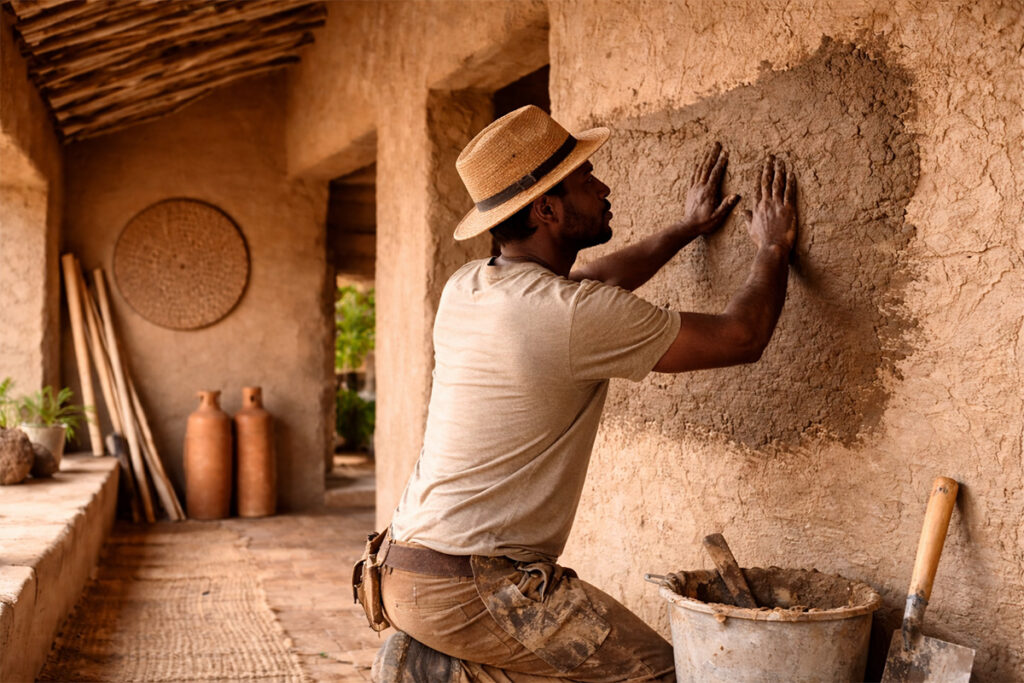
In the quest for more sustainable construction methods, builders, engineers, and researchers are turning to age-old knowledge systems—unearthing how natural additives can significantly improve the strength, durability, and sustainability of construction materials. These additives—sourced from agricultural by-products, organic matter, and minerals—are increasingly proving themselves not only in laboratories but on real project sites worldwide.
Why Natural Additives?
Natural additives help lower environmental impacts by:
- Reducing embodied carbon
- Improving mechanical properties
- Enhancing workability and resilience
- Supporting circular and local economies
Let’s explore how ancient wisdom is inspiring modern practice—with examples of construction projects that have used these natural materials effectively.
🌾 Rice Husk Ash (RHA)
Used in: Auroville Earth Institute, India
RHA has been used in stabilised earth blocks to enhance strength through pozzolanic activity, making it ideal for sustainable housing projects in humid climates.
Outcome: Improved water resistance and compressive strength in eco-structures, while using an agricultural by-product that would otherwise be burnt.
🥚 Egg Whites & Animal Glue
Used in: Restoration of the Great Wall of China
Historic sections of the Great Wall employed a mixture known as “sticky rice mortar,” blending lime and glutinous rice soup (which mimics the protein behavior of egg whites).
Outcome: Bonding and water resistance that have preserved parts of the wall for centuries.
🐄 Cow Dung & Urine
Used in: Hunnarshala Foundation housing projects, India
In post-earthquake housing reconstruction in Bhuj, Gujarat, cow dung was used in earthen and lime plasters. It offered antimicrobial properties and enhanced plasticity.
Outcome: Affordable, locally appropriate, and culturally relevant housing with long-lasting finishes.
🏝️ Sugarcane Bagasse Ash
Used in: Sustainable low-cost housing in Brazil
In several public housing prototypes across northeast Brazil, sugarcane bagasse ash has been blended with lime and clay for floor screeds and mortars.
Outcome: Reduced cost and carbon footprint, while improving compressive strength by up to 30% compared to standard lime mortars.
🪨 Volcanic Ash & Natural Pozzolans
Used in: Heritage restoration in Naples, Italy and Eco-concrete development in the Philippines
The city of Naples uses local pozzolans (from nearby Mt. Vesuvius) for restoring old masonry. In the Philippines, LafargeHolcim has developed “Pozzolanic Concrete” incorporating volcanic ash in public infrastructure.
Outcome: Increased durability in marine and tropical conditions; slower setting but longer-lasting structures.
🧱 Crushed Brick (Brick Dust)
Used in: Rehabilitation of Fort Jesus, Kenya
During conservation works on Fort Jesus, a UNESCO site in Mombasa, crushed bricks and coral stone were blended into lime mortars to match historical construction and improve strength. Outcome: Authentically restored walls with better weathering resistance in coastal conditions.
🌿 Plant Fibers (Hemp, Straw, Sisal)
Used in: ModCell Straw Panel Housing, UK and Makuti Roofing in Kenya
- In the UK, ModCell’s straw bale panels, bound with lime and clay, are used in modern passive housing.
- In Kenya, dried long straws are increasingly used in Makuti thatched roofing, now treated to last up to 30 years. Outcome: Renewable insulation and roofing options that sequester carbon and maintain vernacular aesthetics.
Building Forward with Nature
These projects underscore a crucial truth: natural additives are not relics of the past—they are tools for the future. They show that high performance doesn’t have to come at high environmental cost. By integrating these materials into design and construction practices, we’re not just building structures—we’re building resilience.
Final Thoughts
Natural additives are proving that “low-tech” is not low-value. From lime mortars in ancient walls to straw panels in modern housing, these materials are helping shape a more regenerative, culturally-rooted, and affordable built environment.
We’re only scratching the surface of what’s possible when we learn from the past, innovate in the present, and build with the future in mind.
ARticle by RONALD MBIU, NAIROBI, KENYA