African Judaism
Children of a Lesser God?
“The study of Judaism has long been associated with expertise in scholarly writings,” writes Harvey Goldberg.
“Today, anthropologists often begin their analyses with close attention to the exegesis offered by members of the society with which they are concerned. Phrased differently, anthropology now takes the views that a group of people have of themselves and their traditions seriously.” Frankly, that’s not been our experience. In rebuffing skeptical interlocutors.
Wuriga, a Lemba, pleads the 5th (Commandment, not Amendment): “My father told me I am a Jew. To whom am I going to listen? I am going to listen to my father.”
Renato Rosaldo’s “Lone Ethnographer” epitomizes the old paradigm— the “classic norm”—of anthropological study, in which the observer was “willy-nilly complicit with the imperialist domination of his epoch”. Rosaldo warns that “We should not impose our categories on other people’s lives because they probably do not apply, at least not without serious revision”.
The need for baselines aside, Judaism is a conundrum without peer: Is Jewishness a religious or ethnic identification? As Goldberg posits, “Can one speak of the ‘the Jews’ in the absence of a centralized authority with the power to determine ‘what Judaism is’, and when scholars writing about ‘Jewish tradition’ now recognize that they are dealing with phenomena whose contents and boundaries are fluid?” What, then, are those contents and boundaries…and from whence comes the authority to impose such definitions?
A Well-Crafted Narrative?
Narratives present us with a framework in which historical and cultural evidence is assembled, often painstakingly, impartially reviewed and determined to render the hypothesized scenario plausible or implausible; however, predetermined ideas can render the investigator virtually blind to what is before her/him.
Generalization, according to sociologist Eva Illouz, “is a crucial strategy for thinking and making arguments”. Only via an incessant and often painful probing—and the subsequent cleansing of infected tissues (thinking) and organs (practices) in the diseased body (academia)—are we enabled to uncover that most elusive of treasures: Truth.
Neusner employed this strategy of generalization to conclude that the Mishnah was responsible for “starting a new Judaism as a matter of fact”, the consequences of which “will require a wide-ranging reconsideration of how we shall describe, analyze, and interpret—and therefore also define what we mean by—“Judaism”.
Rabbi Aharon Wexler, quoting Neusner, says in fact that “there is no Judaism per se; what we have are Judaisms, of which ‘rabbinic Judaism’ is the one that survived”. With one qualification—that rabbinic Judaism is not the only Judaism to have survived—let me now summarize these scholars’ findings: rabbinical Judaism (another creation entirely) emerged to become the default Judaism that now holds sway over all of the older, more obscure—but ostensibly more authentic—Judaisms. These Judaisms were not dead but dormant; rather, because of their African origins, they were rendered invalid…and invisible. We are obliged to seriously consider these new-old pieces of the Judaic puzzle.
Border Scuffles: Egypt and Israel
From whence came the idea that the ancient Israelites were White (a fanciful notion at best)? Count Arthur de Gobineau’s Essay on the Inequality of the Human Races (1853) asserted that “All civilizations derive from the whiterace and none can exist without its help”. Gobineau, “the master of racial science”, enjoyed “an honored place among all writers on anthropology and history”. To situate the development of modern Judaic studies outside of the reigning Eurocentric mindset, philosophy, and system would be intellectually dishonest and scurrilously irresponsible.
In fact, the academy often incubated such ideas. Anthropologists organized the sadistic exhibitions of Ota Benga (the Congolese “Pygmy in the Zoo”) and Saartjie Baartman (the “Hottentot Venus”). While the prejudices of social scientists of the 1800s are understood in context, the stubborn residual bias cannot be. It is a deeply ingrained bias, as deeply offensive as it is deeply flawed, and it can no longer accompany any serious foray into African Judaism.
The refusal to seriously entertain, let alone accept, another narrative has run its course. Why? Because the existing baseline for the study of African Judaism is rooted in the sordid underpinnings of a White-supremacist politic. Renato Rosaldo speaks of “academic warfare” as a “raging battle” of “competing political and intellectual visions”—strong language to describe the usually pleasant decorum that governs the exchange of ideas. “These are legitimate grounds for conflict,” says Rosaldo, “but one wonders at the intensity of debate. What is really at stake?”
Ancient Egypt is an appropriate reference point for any discussion about the racial/ethnic identity and origin of ancient Israel. Preserving the whiteness of ancient Egypt looms large in Egyptology, and is the source of great consternation. A pathological resistance to define ancient Egypt as a part of what is now called “Black Africa” leaves Egypt situated outside of Africa. When the truth was reluctantly acknowledged, it was qualified: “Yes, Egypt is a part of Africa, but they (its ancient inhabitants) weren’t Black like that”!
There is still much work to do in bringing to the world a new vision of the Black African origins of civilization. Yet if we buttress the theory with solid, current research and exploration, and if we look at the evidence with open minds free of prejudice and bias, progress of this notion of origins is gaining momentum. For many centuries the Black race of the world has either been exploited by its White counterpart or looked upon as inferior. Although many in the Western world have advanced a great deal in curbing such an attitude, the truth is that racial prejudice is still very much rampant…. Black Genesis thus becomes not only a scientific thesis but also a testament ofrespect and admiration of all whose skin happens to be black and who have a direct ancestral line to Black Africa.
A minor broadening of the scope of their work—to include neighboring ancient Israel—will help to reveal its relevance here. Consider this passage:
This book is a product of a deep and strong desire to use the best of our intellect, knowledge, and abilities to put right an issue that has long beleaguered historians and prehistorians alike: the vexed question of the Black African origins of the ancient Egyptian [Israelite] civilization. In spite of many clues that have been in place in the last few decades, which strongly favor a Black African origin for the pharaohs [the Hebrews], many scholars and especially Egyptologists [biblical historians] have either ignored them, confused them, or, worst of all, derided or scorned those who entertained them. It is not our business to know whether such an attitude is a form of academic racism or simply the blindered way of looking at evidence to which some modern Egyptology [Judaica] has become accustomed, but whatever the cause, this issue has remained largely unresolved.
Inconvenient Truth
Ancient legacies were essentially pilfered, and Martin Bernal argues on “Egyptian problem” as follows:
If it had been scientifically “proved” that Blacks were biologically incapable of civilization, how could one explain ancient Egypt–which was inconveniently placed on the African continent? There were two, or rather, three solutions. The first was to deny that the Ancient Egyptians were black; the second was to deny that the Ancient Egyptians had created a “true” civilization; the third was to make doubly sure by denying both.
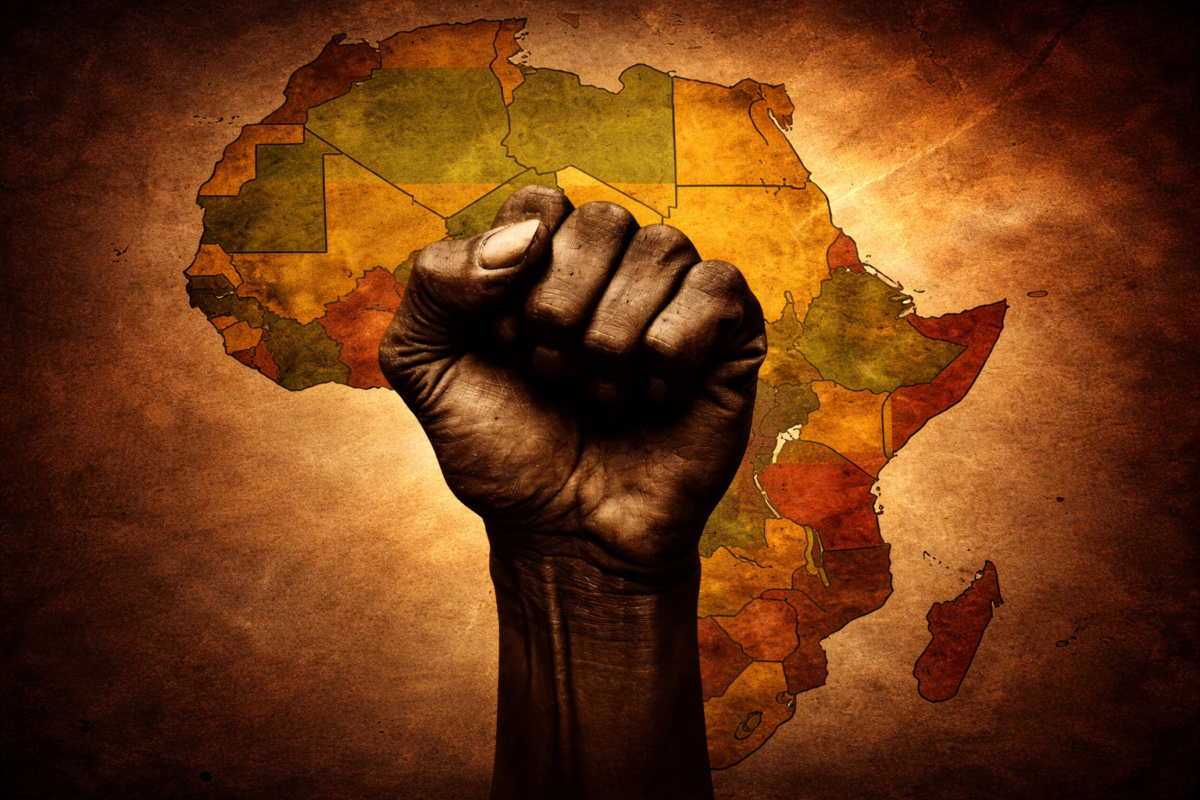
Jerusalem too—the geo-spiritual center of the world—was “inconveniently placed on the African continent”. A fourth “solution” also existed: to effectively remove Egypt from Africa altogether, at least mentally, accomplished in two masterstrokes. First, the Suez Canal facilitated much more than Europe’s access to the East. It essentially decapitated Africa by rendering the Red Sea as a boundary of the African landmass, despite the fact that the African tectonic plate encompasses all of modern Israel/Palestine and beyond. Second, the imaginative term “Middle East” was applied to the region. The phrase carried some geopolitical (not geographical) plausibility: it was the middle of the route to imperial Britain’s east.
Such evidence is strangely inadmissible, though, where ancient Israel’s ethnicity or racial identity is concerned. A Eurocentric academy appears determined to continue to ignore this while maintaining its claims, however tenuous. In the 1980s and 1990s, as African American theologians began to argue for the identification of biblical figures as Africans, logically included as part of the spoils that “Afrocentrism” had fought for (and won, at least in their own minds) over Egypt, such claims were attacked as “the most absurd distortion”. Charges that our current claims are “Afrocentric” (and implicitly lacking sound historical facts and methodology) may be countered by Bauval and Brophy’s suggestion that “drawing such a conclusion need not be labelled Afrocentric or anti-Eurocentric—it may be thought of simply as accurate.” How novel an idea. The truth would provide scholars with the tools necessary to breach the intellectual dam that currently exists and help to regenerate Judaism with a reconstituted image of its original self.
Existing Paradigm: Wrong! Wrong! Wrong!
Psychiatry is another arena in which the status quo has been challenged. “Psychiatric practice today continues to reflect assumptions that come from the past or permeate into psychiatry from society at large,” writes Suman Fernando. “Such cultural arrogance which sees pathology in deviation from (assumed) white nuclear family structures is a reflection of racist ideology within psychiatry and allied social work.” Fernando finds an “ethnocentric arrogance amounting to racism…close to the surface” of practitioners in which “experiences of non-Western people are dismissed as ‘anomalies’ presumably because they are from ‘primitive cultures’”.
Fernando’s deconstruction of psychiatry serves our purposes here: “When a black group is compared to a white group, characteristics of the latter are assumed to be the norm” and will “merely reinforce the racist model which sees black people as requiring a psychiatry that would ‘educate’ them into white norms”. Must African Hebrew Israelites/Jews (AHI/Js) be “educated” into the norms of a Eurocentric Judaism? With conversion put forth as a “solution”, the answer is apparently “yes”.
Surely, the new paradigm presents a monumental challenge. In response, the field might take a cue from our colleagues in astronomy: a review of new evidence challenging Pluto’s status as a planet determined that Pluto just didn’t measure up, and it was downgraded accordingly. Of course, anthropology is not subject to the same dynamics governing astronomy, but things do need to make sense. For the cultural norm of white turbans and long robes (Ethiopian) to be replaced by shtreimels and knickers (Russian)—and all of its cascading implications—does not make sense. It is, in fact, absurd. To the extent that “anomalies” reveal flaws and demand re-evaluations, longstanding benchmarks across the societal spectrum are called into question, recalibrated, and even discarded daily. Pluto’s relegation went scarcely noticed; who knew or cared? This paradigm shift, however, would erode the very foundations of Western civilization, which is daily imploding.
In 1985, former Ashkenazi Chief Rabbi Shlomo Goren told his Yom Kippur minyan that “When the first Ashkenazi Jews [followers of the Lithuanian Vilna Gaon] came to the Land of Israel early in the last century, they appealed to the Jews of Ethiopia for spiritual guidance… asking them to send three of their rabbis to Jerusalem to ordain the rabbis of the Land of Israel”.
These Ethiopian “rabbis” were from an entirely different Judaic world, from an entirely different historical paradigm. Though clearly acknowledged as being an authentic source from which the now-reigning “mainstream” Judaism sought its early validation, conversion of the Ethiopians was demanded. Are we really expected to endure the old paradigm in the face of such countervailing evidence? Rabbi Goren’s candid admission alone would seemingly be sufficient to determine that the old paradigm is invalid. I have much more similar evidentiary material.
The controversial Shlomo Sand asks—and proceeds to answer—a most pertinent question:
Is there no chance that a new historiography would invite those ancient Jews, who have been forgotten by their descendants, to reappear in the legitimate sphere of public memory?…For now, it is difficult to predict whether the Israeli politics of identity will permit, in the early twenty-first century, the emergence of fresh paradigms for the investigation of the origins and history of Jewish faith communities.
Experience suggests that no invitations are forthcoming. Is there no chance that “those ancient Jews” have already reappeared but have gone unrecognized, by virtue of arrogance or ignorance? They have reappeared in the person of the Bayt Israel and the Lemba, as well as the Igbo and Yoruba of Nigeria, the Ashanti, Ga, and Ewe of Ghana, the Bassa of Cameroon, and the African Hebrews from the West, to name but a few. They have all gone unrecognized, based upon preconceived notions (i.e., prejudices). To suggest that these ancient cultures have “recently discovered Judaism” is an egregious affront, and correlates to perceiving Christopher Columbus as a hero. Contrary to Brotz’s assessment that they were “different and unrelated to each other”, this new paradigm finds the African and Judean worlds inextricably linked. The tendency incumbent under the old paradigm to render such linkages as “easily dismissible” is easily dismissible.
Rosaldo rails against exclusivist paradigms that claim “a monopoly on truth that excludes other ways of thinking about the world” and that “simply ignore the views of people they never invited to the meeting”. Invisible men are never invited to such meetings; we often invite ourselves, knowing full well that our presence lends our reluctant hosts an essential legitimacy. But whether such “fresh paradigms” will emerge into the mainstream of our debate is of greater importance than that these “emerging” groups find their way into the “mainstream” of Judaism…or even that they find their way to Israel.
Who is a Jew?
A New York Times columnist warned in 1965 that “there will be an ugly streak of bigotry in Israel as long as the rabbinate can say who is a Jew and who is not”. Indeed, his assessment was accurate, as skirmishes in recent years between normative Judaism’s various streams—particularly over Jewish identity—have brought Judaism to the brink of a crisis. Jewishness had been rather nebulous prior to the 1969 arrival in Israel of African Hebrew Israelites from America via Liberia. A 1962 Bible dictionary concluded that “perhaps the best that can be said is that he is a Jew who says he is”.What precipitated the change in Israel’s Law of Return in 1970—from “every Jew” to the halakhic definition of those who can provide proof of a Jewish mother or maternal grandmother? The definition of Jewishness now excluded us, along with a substantial segment of “normative” Jews, who, in the eyes of Israel’s gatekeepers, are today deemed “not Jewish enough”. Are they “collateral damage” in the campaign to keep AHI/Js at bay? (The new law also ran diametrically opposite the Hebraic/biblical cultural norm of patriarchal lineage.) That the rabbinate doesn’t recognize us is fine: we don’t recognize them either!
According to Alfred Bodenheimer, in an op-ed supportive of Igbo, “the definition of Jewish affiliation is increasingly escaping the control of those authorities that declare themselves responsible for it”; he finds it “symptomatic of how, in both ethnic and religious contexts, the concept of Jewishness is beginning to break down and to be deconstructed”. It is all, in his words, “an increasingly unsustainable muddle”. In 1958, Israeli Prime Minister David Ben-Gurion asked the hachmei Israel (wise men of Israel) for their “statements of opinion” on the “Who is a Jew?” matter.
One respondent saw problems looming on the horizon should biological markers be applied to the question of Jewish identity: “The aberration of racism exists sometimes among certain Jews,” wrote Henri Baruk in a footnote, “as if the fact of being Jewish were especially a fact of blood, or race. This attitude, not unlike the Hitlerian racism of blood, is the very negation of the principles of Judaism”. Baruk capitulated: “The problem of the identity of the Jews in Israel cannot be solved at the moment; it necessitates new studies”.
What have studies shown us? In contrast to the genetic testing of the Lemba (which lends credibility to their migration saga), another study weighs heavily in the argument against the old paradigm:
Most Ashkenazi Jews are descendants of European women who converted to Judaism, possibly around the time of the early Roman Empire, concludes a new genetic study that casts doubt on many prevailing theories about the origins of Ashkenazim…. The finding flies in the face of previous research
and the commonly accepted wisdom that European Ashkenazim are descended from ancestral mothers of Jews who left Israel and the Middle East some 2,000 years ago, or in later migrations. The study suggests instead that large numbers of European women converted to Judaism and points to the European women and the Jewish community of the early Roman Empire as the possible sources of the Ashkenazi ancestors.
Consider, alongside the above, the findings of rabbi and Judaic scholar
Burton Visotzky:
What is now called “Judaism” was invented in the matrix of Roman culture. Even as some rabbinic texts depicted Rome as the enemy, there is overwhelming evidence that Judaism took root in Roman soil, imbibed its nourishment, and grafted the good and pruned the bad from the Roman Empire, until a vibrant new religion—Judaism—arose from the wreckage of Israelite religion and the Temple cult, nurtured by the very empire that had destroyed it.
Are such important, albeit controversial, artifacts to be ignored, or are they to be placed on the table for serious consideration? Even the most cursory probe into this field will conclude that “rabbinical” Judaism has strayed from the “original intent” of Moses and the Hebrew prophets. Rabbinical Judaism hardly qualifies as the measuring rod for approaching the study of African adherents to Hebraic identity.
What, then, makes rabbinical Judaism superior to the Judaisms of Guershon Nduwa or Rabson Wuriga? Of those “ancient Jews” that Sand referred to? Of those “historical Jews” that Rabbi Jo David so quickly dissociated herself from? What authority, save that of a sacrosanct sense of Eurocentric privilege, makes halakha the legitimating norm for ontological Jewishness? Five hundred years of European global hegemony?
Lies, Outliers and Outright Lies
Social Darwinism is enshrined in Western social thought, and it comprises the core of Eurocentrism. “From the very first encounter, the Europeans established as a principle their superiority over the Black race,” wrote Basil Davidson.
“They affirmed it by a profound contempt for the inferior race.” Like a trailer in tow, anthropologists and ethnographers investigating AHI/J and their intersections, interactions, and influences, have faithfully followed the trajectory of the lead vehicle. Noam Chomsky claims that intellectuals are inherently “servants of power” whose biases and interests often overshadow honest inquiry. While not accusing Euro-American scholarship of overt bigotry, stealthiness is the very hallmark of contemporary “dog-whistle” racism. Its olfactory nature belies its presence.
These circles are then, to quote Fernando, just “another way of marginalising the experience of Black people and relegating it to an inferior position”. Those on center stage in the “surge” of interest in African Hebraic identity—AHI/Js themselves—take serious umbrage to being ignored and/or marginalized. After all, what means our “re- emergence” if not that we are no longer invisible? No matter how numerous or asthetically arranged these circles might be, normative Judaism remains at the center. It is no more accommodating than Israel’s rabbinate. Africans are simply left on the outside. The current paradigm forever relegates AHI/Js—indeed all Jews of color—to being the subaltern outliers of Judaism.
Failure to adjust the paradigm will only perpetuate and prolong the reigning power dynamic with all of its inherent flaws and unpleasant outcomes. Isaac framed the challenge succinctly: “If scholars and researchers can reveal their prejudices more honestly and accurately, then the value of their work can improve. But such improvement will stand at a nadir if scholars continue to impose categories onto human subjects of study without admitting and addressing a variety of biases and prejudices that inform the social worlds attendant to any scholarly enterprise.” Sadly, the colonial mindset (deemed prematurely dead) would doom studies of AHI/Js to being “premised on ignoring what [they] said about themselves”—hardly a prudent ethnographic approach.
“The head-in-the-sand anthropologist of yesteryear,” says Jackson, was “a fiction created, among other reasons, to justify the discipline to itself”.
Included among the “other reasons” is the need to buttress the fictional superiority of that discipline’s fundamental paradigms. As when the tools and instruments required for building walls evolve and are abandoned, obsolete paradigms give way as well. Perhaps a retooling is underway.
No better examples of “arbitrary boundaries” exist than those which have marginalized AHI/Js. Moreover, juxtaposed against a global diaspora, transnational slavery, and subsequent centuries of oppression, there can be no better example of “international connections”, “mobile capital”, and “hard-journeying peoples” than those associated with AHI/Js. As diligently and efficiently as they were utilized to rearrange landscapes and erect walls, perhaps now those tools may be applied in the building of bridges to a mentality in which the discredited social constructs of race and racial superiority have no place.
Article by: Sar Ahmadiel Ben Yehuda. Courtesy of Dr Mfuniselwa Bhengu.